
Vinci 's blog
2086-ի ապագայալիր արշալոյսին, Իսահակին պատահական հանդիպումը աստուածային կերպարի մը հետ հանդարտ փողոցի մը վրայ կը վառի վերափոխիչ ճամբորդութիւն մը։ 2013-էն 2014 թուականներուն գրուած «Ճշմարտութեան Ճամբուն Վրայ» (նախապէս հայերէնով) վեպը կը միահիւսէ մարգարէական յայտնութիւններ եւ հրաշալի շրջադարձեր՝ հոգեւոր յայտնագործութեան, միսթիկ իրադարձութիւններու եւ Փերուի ճամբորդութեան պատմութեան մը մէջ, որ կը բացայայտէ գաղտնի ճշմարտութիւններ։ Արդարեւ, կը համարձակիք արդեօք ուսումնասիրել աշխարհ մը, ուր հաւատքը կը դիմագրաւէ անծանօթը։
Ճշմարտութեան Ճամբուն Վրայ
Փողոցի անկիւնը կը կանգնէր պատռտուած շորերով աղջիկ մը։ Ան հին լաթեր հագած էր, եւ մենք կը զբօսնէինք փողոցի լայնքով, ուրախ ու աշխոյժ, բառերով ու ծիծաղով, կարծես հարբած՝ ոչ թէ գինիէ։ Գորշ առաւօտ մըն էր, եւ ճանապարհը կաթնագոյն կ՚երեւէր։ Աղջիկը, կամ գուցէ կինը, հին լաթերով, շիտակ աչքերուս մէջ կը նայէր։ Այդ նոյն պահուն, ընկերս՝ կողքիս, ըսաւ. «Նայեցէք այդ Հին Լաթերուն հիմա. շիտակ աչքերուս մէջ կը նայի»։ Մեզի հետ քալող աղջիկներէն մէկն ալ նկատեց. «Զաւակնե՛ր, այս Հին Լաթերը շիտակ աչքերուս մէջ կը նայի։ Կրնա՞յ անոնցմէ մէկը ըլլալ»։ Եւ ծիծաղի պայթիւն մը անցաւ բոլորիս միջով։ (Իրականութեան մէջ, այդ կինը կրնար բոլորիս աչքերուն մէջ միաժամանակ նայիլ. իրաւամբ, ան Աստուած էր, եւ ո՛չ մէկս, ո՛չ մէկը եւ ո՛չ միւսը, զայն չէինք գիտակցեր։) Ես ալ ըսի. «Հիմա թող տուէք երթամ տեսնեմ ո՛վ է այդ Հին Լաթերով աղջիկը, կարծես ան շիտակ ինծի կը նայի», եւ արագօրէն հասայ տեղը (կարծես արագ հասայ, որովհետեւ Աստուած արագացուց ժամանակը եւ քայլերս) եւ ըսի. «Հե՜յ, աղջի՛կ, հայրիկիս պէս կ՚երեւիս. հայրիկի պէս շիտակ աչքերուս մէջ կը նայիս»։
Այնուհետեւ լսեցի մարդու ձայն մը՝ ոչ թէ կնոջ՝ խռպոտ, բայց փափուկ ու նոյնիսկ հաճելի։ Ան ըսաւ. «Ողջո՜յն, Որդեա՛կս, Ես Տէրն եմ, Աստուածը։ Եկած եմ քեզ փրկելու»։ Այն հին լաթերը, զորս Աստուած հագած էր, սեւ էին, բայց նոր կ՚երեւէին, ոչ թէ մաշած, մանրակրկիտ կերպով կարուած, եւ անոնք այնքան հաճելի բոյր մը կ՚արձակէին կնոջմէ, որ ան բացաւ շունչս ու բարձրացուց տրամադրութիւնս։ Կինը նաեւ դիմագիծ մը ունէր, որ կարծես միայն Աստուծոյ համար կը համապատասխանէր՝ գեղեցիկ մօտէն եւ ապշեցուցիչ հեռուէն։ Անոր մաշկը սպիտակին, ոսկիին եւ կանանչին խառնուրդն էր. անոր մազերը նուռի կարմիր էին, եւ ան անբացատրելի, շօշափելի աուրա մը կը տարածէր՝ Աստուած։ Իր գեղեցկութեան պատճառով, կարծես Աստուծոյ դիմագծերը կնոջ մը նման էին՝ ժպտերես ու ծիծաղուն՝ մինչ անոր մարմինը կը յիշեցնէր ինծի տղամարդու մը մարմինը։ Անոր կեցուածքը ցոյց կու տար, որ անոր ուժը անփոփոխ էր՝ անկէ աւելին, ինչպէ՞ս կարելի է նոյնիսկ Աստուծոյ ուժը չափել։ Անոր ետեւը օդին մէջ կախուած էր թափանցիկ դուռ մը, կիսաբաց, որ կը տանէր դէպի անվերջութիւն մը՝ լեցուն աստղախումբերով։ Այդ անվերջութենէն հրաշալի երաժշտութիւն կը հնչէր՝ միայն ինծի համար։
Զգացի, որ փրկութիւնը արդէն տեղի ունեցած էր։ Սակայն, սարսափով ալ զգացի, որ ուրիշ բան մը դեռ պէտք է պատահէր՝ ինծի, ինծի հետ եղողներուն, եւ անոնց՝ որոնք ինծի հետ չէին՝ կարծես դժոխքը կը մռնչէր ոտքերուս տակ եւ ինծի կը կանչէր։ Աստուած ըսաւ ինծի. «Երբ վախնաս, քեզի ուրախութիւն եւ սփոփանք պիտի ղրկեմ»։ Ես հարցուցի Աստուծոյ. «Իսկ եթէ ձանձրանա՞մ։ Գիտեմ, որ ձանձրոյթը վախէն աւելի վատ է»։ Աստուած պատասխանեց. «Երբ ձանձրանաս, գիտցիր որ խաչին վրայ ես, առանց մեխերու, առանց փայտի, խաչուած։ Խաչը ձանձրոյթին նշանն է, եւ գիտցիր, որ մարդիկ քեզ դիտումնաւոր կերպով ձանձրացուցած եւ խաչած են»։ Կրկին, Աստուած խօսեցաւ եւ ըսաւ. «Վերադարձիր ընկերներուդ։ Ես պիտի ելլեմ Երկինք, Իմ անտեսանելի գահիս։ Երբ տուն հասնիս, սեղանին վրայ կը գտնես մէկ բաժակ կաթ՝ մեղրով։ Զայն պիտի խմես, եւ ինը ամիս ո՛չ ոք պիտի կարենայ քեզ ձանձրացնել։ Դուն պարզապէս պիտի բանաս բերանդ եւ հա-հա ծիծաղիս անոնց վրայ։ Անունդ ալ Ծիծաղ պիտի ըլլայ։ Ինը ամիս ետք, անոնք մէկ օր պիտի ունենան քեզ ձանձրացնելու։ Անկէ ետք, Սուրբ Գիրքը մուրճի պէս պիտի իջնէ անոնց գլուխներուն վրայ՝ անոնց գլուխներուն, որոնք քեզ ձանձրացուցին, եւ պիտի ծակէ անոնց գլուխները։ Ան պիտի իջնէ նաեւ քու գլուխիդ վրայ, բայց պիտի չծակէ։ Ինչպէս որ կ՚ըսեն, թէ բարին ընողին գլուխը կը ծակուի, նոյնպէս ալ չարը ընողին գլուխը պէտք է ծակուի»։ Աստուած ըսաւ. «Գրպանդ փող կայ։ Բոլորը ինծի տուր, եւ զայն պիտի գտնես նոյն սեղանին վրայ, ուր կաթը պիտի ըլլայ։ Ընկերներուդ ըսէ, որ մուրացկան մը փող խնդրեց։ Հիմա գնա՛, եւ մինչեւ դուն չերթաս, Ես հոս պիտի մնամ»։ Եւ ես այդպէս ըրի։ Մենք մեկնեցանք, եւ ես ետքը տուն հասայ։
Այդ օրը ամառ էր։ Օրը ինքնին ամառ կը թուէր. կը պատահի։ Ենթադրենք ամիսը ամառ է, բայց օրը ձմեռ կը թուի, կամ ամիսը ձմեռ է՝ ցուրտ՝ բայց օրը ամառ կը թուի, կամ գիշեր է, բայց ցերեկ կը թուի։ Ցերեկ է, բայց խաւար կը թուի։ Կրնաս կուշտ ըլլալ, բայց զգալ, թէ սոված ես, ինչպէս գազան մը, որ կը իջնէ լեռնէն՝ առանց հացի կամ ջուրի։ Կը պատահի, որ սոված ես, բայց կը զգաս, թէ կուշտ ես։ Լուռ ես, բայց բոլորը քեզի համար ծափ կը զարնեն։ Կը խօսիս, բայց կը պարզուի, որ մրմնջած ես։ Այդ օրը ալ ամառ էր։ Ամիսը ալ ամառ էր, եւ ես տան դռան մօտ էի։ Դուռը կողպուած էր բանալիով։ Ձեռքս գրպանս դրի եւ գիտակցեցայ, որ բանալին հոն չէր։ Մտքիս մէջ ըսի. «Կա՛մ կորսնցուցի զայն, կա՛մ Աստուծոյ տուի փողերուն հետ»։ Կրկին, մտքիս մէջ ըսի. «Դէ՛հ, աւելի լաւ։ Տունս եւ փողերս ապահով են Երկինքի մէջ»։ Նկատեցի, որ տանս լուսամուտը քիչ մը բաց էր։ Մտայ լուսամուտէն ներս եւ տեսայ, որ սեղանին վրայ դրուած էին կաթի բաժակ մը, փողեր եւ բանալիներ։ Առաջին անգամն էր, որ այս Սուրբ Գրութեան խօսքերը մաշկիս վրայ զգացի. «Ապա անոնց հեթանոս սրտերը պիտի ամչնան, եւ անոնք պիտի զգան իրենց գործած մեղքերուն ծանրութիւնը»՝ կարծես քարի կուռք մը նստած էր ուսերուս վրայ՝ ծանր։ Զգացումներս զիս պատեցին փոթորիկի պէս՝ պատրաստ ամրապնդելու ուժի մը մէջ, որ կարող էր ցնցել մայրցամաքները մինչեւ իրենց հիմքերը։ Ես, որ թագաւորի պէս էի, կը քալէի եւ չդադրեցայ, մինչեւ որ առիւծ մը ի յայտ եկաւ առջեւս։ Ես դարձած էի որբի մը պէս, որ մեծնալով որբանոցէն հեռացած էր։ Դժուարութեամբ մօտեցայ սեղանին, խմեցի կաթը, եւ կը յիշեմ, որ բաժակը ձեռքէս սահեցաւ եւ գետինը ինկաւ, եւ կը յիշեմ, որ երեսս վար ինկայ գետինը։
Դռան թակոցէն եւ Սառայի ձայնէն, կարծես ես ուշքի եկայ։ Մեղրին համը եւ քաղցրութիւնը դեռ բերնիս մէջ էր։ Սառան դուռը կը թակէր եւ կը կանչէր. «Իսահա՛կ, Իսահա՛կ...» Դժուարութեամբ բացի բերանս եւ ըսի. «Սառա՛, ներս մտի լուսամուտէն։ Դուռը կողպուած է։ Անառողջ կը զգամ զիս՝ ինչո՞ւ այս ուշ ժամուն եկած ես»։ Կարճ ժամանակ ետք, զգացի, որ Սառան կը ջանար զիս գետինէն բարձրացնել եւ ըսաւ. «Հե՛յ, տղա՛, ի՞նչ ուշ ժամ։ Ցերեկ է։ Ո՞ւր էիր այս երեք օրերը»։ Գիտակցեցայ, որ կուրցած էի եւ երեք օր գետինը մնացած էի։ Կ՚ուզէի կուրութիւնս Սառայէն թաքցնել, մինչ ան կասկածոտ կերպով կը հարցնէր. «Ինչո՞ւ ինծի կը փնտռես սառած աչքերով, եւ ինչո՞ւ ըսիր՝ ‘Ինչո՞ւ այս ուշ ժամուն եկած ես’»։ Կը յիշեմ նաեւ, որ սեղանին վրայ թուղթ մը կար՝ ինչ-որ բան գրուած, բայց զայն չէի կարդացած կաթը խմելէ առաջ։ Ես ըսի Սառային. «Սեղանին վրայ պէտք է թուղթ մը ըլլայ։ Կարդա՛ զայն եւ տեսի՛ր ինչ է գրուած։ Աչքերս կը ծակեն։ Սխալ հեղուկով լուացի զանոնք, եւ կարծես բորբոքուած են»։ Սառան կարդաց. «Երեք օր ետք պիտի տեսնես»։ Հասկցայ, որ սա Աստուծոյ թուղթն էր։ Աստուած ալ գիտէր, որ ես թուղթը պիտի չկարդայի կաթը խմելէ առաջ։ Ես ըսի Սառային. «Բժիշկ կանչեցի։ Ան հաւանաբար այդ թուղթը գրեց եւ լուսամուտէն հեռացաւ, ինչպէս որ մտած էր, մինչ ես իմ բնական կարիքներուս կը հոգայի։ Բժիշկը նաեւ դեղեր պիտի ղրկէ ինծի համար։ Ան ըսաւ պարզապէս պառկել եւ հանգստանալ։ Իսկ թէ ուր էի երեք օր՝ ետքը պիտի պատմեմ քեզի»։ Սառան ըսաւ. «Յիսուս Քրիստոս, ինչպիսի՛ քաոսային պատմութիւններ են սրանք»։ Ես ալ Սառային սուր հարցում մը հարցուցի՝ ըսելով. «Սառա՛, թոյլ տուր կատակեմ. եթէ Քրիստոս գոնէ քանի մը օր կոյր չէր, ապա ո՞ւրկէ եկան կոյր Քրիստոնեաները, եւ ո՞վ է տեսած Քրիստոսի երեսը, եթէ ոչ խորամանկ ձկնորսները, սողացող հարկահաւաքները, եւ կարճատես դպիրները»։ Սառան պատասխանեց. «Հեղուկը լաւ ազդեցութիւն ունեցած է քեզի վրայ. ճարտարապետէն մարգարէ դարձած ես»։
Եթէ կուրութիւնս փորձութիւն չէր, ապա ան ինծի համար ճշմարիտ յայտնութիւն էր, մանաւանդ որ գիտէի, որ ան ժամանակաւոր էր եւ սպասուած, գուցէ նոր տեսողութիւն եւ աչքեր շնորհելով ինծի։ Կարծես պարասրահի մէջ էի, հրաւիրուած եւ սպասուած հիւր մը։ Յիշեցի բոլորը՝ ազգականներս, ծանօթներս, ընկերներս, նոյնիսկ անծանօթները՝ ամէն պահի։ Սառայի միշտ կարօտ, եղջերուի նման հայեացքը կարծես աչքերուս առջեւ էր, անոր կախուած ստորին շրթունքով՝ փոքրիկ փոսիկով եւ կանաչ աչքերով, կարծես անոնք խաղաղ կանաչ լճեր էին։ Սակայն, երբ ան քիչ մը նախանձոտ էր, այդ խաղաղ լիճը պիտի վերածուէր փոթորկոտ ծովի, եւ այդ ժամանակ, բոլորը կը վախնային անկէ, թէեւ անոր զգացումները ինծի ուղղուած էին։ Սառան նկարիչ էր. ան երկուք եղբայր ունէր՝ Գաբրիէլ եւ Միքայէլ, որոնք ընկերներս էին։ Գաբրիէլը Միքայէլէն մէկ ժամով աւելի մեծ էր։ Ես անոնցմէ մէկ տարի պզտիկ էի, մինչ Սառան ինծիէ երկու տարի պզտիկ էր՝ քսանհինգ տարեկան։ Գաբրիէլը դիզայներ էր, մինչ Միքայէլը քահանայ էր։ Սառան պատկերներ կը նկարէր եկեղեցիին ներսի պատերուն վրայ։ Միշտ կ՚ըսէի անոր. «Կը սիրեմ քեզ, բայց կը զզուիմ քու վրձինէդ. դուն կուռքեր կը նկարես՝ իրաւ են, չէ՞ որ առանց փուշերու վարդ չկայ»։ Միշտ կը վիճէինք այս մասին։ Ես կ՚ըսէի անոր, որ կուռքի էութիւնը անոր կազմութեան մէջ չէ, թէ արդեօք քար է, փայտ, թէ ներկ ու պատկեր, եւ աւելցուցի. «Աստուած ընտրած է ոսկէ միջինը, որպէսզի մարդիկ քիչ մը կուռքապաշտ ըլլան, մինչեւ որ Կարմիր Ծովը բաժնուի, երկու մաս ըլլայ, եւ ճամբայ բացուի»։ Ան պատասխանեց, որ ես հեքիաթներու ետեւէն կը վազեմ, եւ ես ըսի անոր. «Սառա՛, հիմա մարդ չի կրնար ճշմարտապէս հաւատալ Աստուծոյ, որովհետեւ մարդը թոյլ է հաւատքով, բայց ուժեղ՝ քմահաճոյքով։ Աշխարհի բոլոր կրօնները քմահաճոյքներ են եւ շահ, ոչ թէ հաւատք»։
Ես պատասխանեցի Սառային. «Այո՛, Սառա՛, հեղուկը խոր ազդեցութիւն ունեցած է ինծի վրայ՝ կրկնապատկելով գիտելիքս, կարծես ան Սուրբ Հոգին էր եւ Աստուծոյ կաթը, որմէ կուրցայ։ Բայց ինչպէս որ կ՚ըսեն, մտքի կուրութիւնը աչքի կուրութենէն վատ է։ Եթէ սիրոյ մէջ մէկ մարմին ենք, ապա քու կանաչ աչքերդ իմը պիտի ըլլան, մինչ իմ գունեղ միտքս քուկդ պիտի ըլլայ»։ Սառան ըսաւ. «Հե՛յ, տղա՛, գուցէ դուն Քրիստոս ես։ Ես ալ քեզ կը նկարեմ եկեղեցիին պատերուն վրայ, բայց առանց քանոնի, թէեւ երկուքնիդ ալ կը սիրեմ»։ Ես պատասխանեցի. «Սառա՛, Քրիստոս չի կրնար եսասէր մարդ ըլլալ՝ պաշտելու համար, այլ Աստուծոյ բերանը եւ խօսքը, եւ նոյնիսկ այդ՝ միայն ժամանակ առ ժամանակ, որովհետեւ Քրիստոս մարդ է. ան կը երազէ, կը քնանայ, եւ կ՚արթննայ. ան նոյնիսկ մոլորութիւն կրնայ տեսնել։ Աստուած աւելի բարձր է Քրիստոսէն, բայց մարդը չի հասնիր Աստուծոյ, մինչեւ որ հասկնայ Քրիստոսը»։ Սառան պատասխանեց. «Իսահա՛կ, հիմա 21-րդ դարն է. աչքերդ պիտի բժշկուին կեղտէն, ինչպէս որ բժիշկը գրեց, որ երեք օր ետք պիտի տեսնես։ Ուրեմն թող աչքերս իմը մնան, որպէսզի ետքը քեզ մեծ նկարեմ եկեղեցիին պատերուն վրայ՝ քու սեւ աչքերովդ, հա-հա։ Բայց լուրջ, հիմա չեմ կրնար հասկնալ քու գունեղ միտքդ. գուցէ դուն ճիշդ ես, եթէ Սատանան քեզ չէ խաբած»։ Ես ըսի. «Սառա՛, Սատանա չկայ բացի մեղքէն ու մահէն։ Մարդիկ հեռացած են Աստուծոյմէ եւ իրենց համար թագաւոր կ՚ընտրեն, մինչ Սատանան կ՚ուտէ աջէն ու ձախէն եկող բոյրը, որովհետեւ բոյրը միայն լաւագոյն ոչխարները կ՚ընտրէ։ Կը պատահի, որ շփոթուած՝ քոզ մը կ՚ընտրէ թագաւոր, որ չի կրնար հօտը գայլէն պաշտպանել, այսինքն՝ Սատանայէն։ Մինչդեռ հովիւը՝ ճշմարիտ թագաւորը՝ Քրիստոսն է, որուն ժամանակ գայլը պարզապէս պիտի գոլորշիանայ ացետոնի պէս»։
Սառան ձեռքս բռնեց եւ ըսաւ. «Եկո՛ւր, պիտի ուղեկցեմ քեզ հիւրասենեակ, որպէսզի բազմոցին պառկիս, հանգստանաս, եւ սպասես բժիշկին դեղերուն։ Եւ պիտի պատմես ինծի, թէ ուր կորսուած էիր այս երեք օրերը։ Բայց մինչեւ այդ, ի՞նչ պիտի ըսես Աստուծոյ՝ նախանձոտ Աստուած ըլլալուն մասին։ Այդ մասին կարդացած եմ Աստուածաշունչի մէջ, Հին Կտակարանի մէջ»։ Ես պատասխանեցի. «Գրուած է, որ Աստուած նաեւ խանդոտ է, եւ որ խանդը եւ նախանձը ստեղծագործական են, որովհետեւ Աստուած Ստեղծագործող է։ Այդ նախանձը իրական է եւ բնական, լեցուն սիրով, ի տարբերութիւն դրացիի նախանձին, որ բարիք չէ ըրած եւ միայն չարութիւն կը պահէ»։ Մենք հասանք ճաշասենեակէն հիւրասենեակ՝ ձախ կողմէն, անցնելով զիգզագ միջանցքէն, ուր երեք բաղլավայի ձեւով ննջասենեակներ կային, մինչ լոգարանը եւ ցնցուղը երկրորդ յարկին վրայ էին։ Աստիճանները գտնուած էին ձախակողմեան երկու ննջասենեակներուն միջեւ. աջակողմեան ննջասենեակին դուռը շիտակ այդ աստիճաններուն դիմացն էր։ Միջանցքին աջակողմեան հատող պատերը կտրուած էին ննջասենեակին դուռով։ Հիւրասենեակին մուտքը միջանցքին վերջն էր՝ իր խորացած աստիճաններով, մօտ մէկ մեթր բարձրանալով։ Ես կլոր հիւրասենեակը կառուցած էի միջանցքէն մէկ մեթր աւելի բարձր, մինչ ճաշասենեակը միջանցքէն մէկ աստիճան աւելի ցած էր։ Միջանցքը կը սկսէր ճաշասենեակին կից տարածքէն, ուր տան մուտքի դուռը կար։ Ճաշասենեակին յատակը եւ տան բակը նոյն մակարդակին վրայ էին։ Հենց բազմոցին պառկած էի, երբ դռան թակոց մը լսուեցաւ։ Ես ըսի Սառային. «Սառա՛, տան բանալին ճաշասենեակի սեղանին վրայ է. առ զայն եւ բա՛ց դուռը՝ տեսնելու համար ո՛վ է»։ Լսեցի Սառայի հեռացող ոտնաձայները, ապա անոր վերադարձող քայլերը, եւ ան ըսաւ. «Հե՛յ, դուն, քու հեռաձայնդ բերին։ Փոստատարն էր. ըսաւ, որ ինչ-որ մէկը զայն փողոցին վրայ գտած էր եւ մօտակայ փոստային բաժանմունքին յանձնած։ Ահա թէ ինչու, հա՛, պատասխան չէիր տար իմ զանգերուս»։ Ես ըսի Սառային. «Սառա՛, անջատէ՛ իմ հեռաձայնս։ Ո՛վ որ իմ մասին հարցնէ, ըսէ՛ որ Եգիպտոս գացած եմ՝ Բուրգերը ուսումնասիրելու։ Իսկ քու հարցումիդ մասին, թէ ուր էի այս երեք օրերը, պիտի ըսեմ, որ այս գիշեր Եգիպտոսէն վերադարձայ։ Գործս շատ խիստ ժամանակացոյց ունէր, ահա թէ ինչու չկարողացայ քեզ տեղեկացնել։ Ինչպէս կը տեսնես, հեռաձայնս կորսնցուցած էի։ Այդ օրը արշալոյսին, քու ծննդեանտ օրուան յաջորդող արշալոյսին՝ դէ՛հ, կը յիշես այդ հին լաթեր հագած աղջիկը՝ երկու օրէն Փերու պիտի մեկնիմ։ Կարեւոր ժողով մը ունիմ. պէտք է հոնի կառոյցները ուսումնասիրենք, որոնք կառուցուած էին նոյն ժամանակ Եգիպտական Բուրգերուն հետ, եւ դուն պէտք է ուղեկցիս ինծի։ Ինքնաթիռի տոմս մը ամրագրէ քեզի համար նոյն թռիչքին. իմս մէկ շաբաթ առաջ ամրագրած էի»։ Սառան ուրախութենէն ցատկել սկսաւ։ Անոր ուրախութիւնը իր գագաթնակէտին հասաւ ծափահարութիւններով. ան արագօրէն ծափահարեց, եւ վերջացնելէ ետք, ես ըսի. «Սառա՛, հիմա ամուր բռնուէ, որպէսզի չիյնաս։ Փերուի մէջ չորս օրէն ետք, հոնէն պիտի մեկնինք Երուսաղէմ՝ տեսնելու Արեւմտեան Պատը, որուն մեծ քարերը նոյն կառուցուածքը ունին, ինչպէս Փերուի Մաչու Փիքչուն, Եգիպտոսի Բուրգերը, եւ Լիբանանի Բաալբէքը։ Կասկած կայ, որ այսպէս կոչուած Արեւմտեան Պատը Սողոմոնի Տաճարին մաս չի կազմեր, այլ անյայտ կառոյցի մը հատուած է՝ տասը-տասներկու հազար տարուան պատմութիւնով։ Այս հին կառոյցները երկրի վրայ աստղերու պէս են եւ խիստ խորհրդաւոր են. մարդը պէտք է չկորսուի անոնց նայելով։ Նոյնիսկ եթէ այլմոլորակայիններ կան, անոնք չէին կրնար այդպիսի բաներ կառուցել։ Բուրգերը արական եւ իգական կը թուին՝ խորհրդանշելով մարդու սահմանափակ հոգեւոր պատկերը, նոյնիսկ խորհրդանշելով մարդու խտացած եւ այլաբանական կառուցուածքը»։
Ինչ-որ պատճառով, այս անգամ Սառան ծիծաղեց, եւ այդ տարօրինակ թուեցաւ ինծի, որովհետեւ Սառան անակնկալներ չէր սիրեր. այդ առումով, ան ինծի պէս էր։ Նոյնիսկ անոր ծիծաղի ձայնը տարբեր էր. ան երբեք այդպէս չէր ծիծաղած, կարծես նոր բան մը հասկցած էր։ Ան սկսաւ հարցումներ հարցնել փոփոխուած ձայնով, կարծես ան սեւ յագուարի ձայնն էր՝ ժպիտ մը երեսին, թէեւ Սառայի մաշկը սպիտակ խնձորի գոյնն էր, մինչ իմը ծիրանի էր։ Սառան ըսաւ. «Իսահա՛կ, կարծես երազի մէջ եմ։ Կասկածներս ցրուելու համար, որ երազի մէջ չենք, պէտք է քեզի քանի մը հարցում հարցնեմ։ Պատրա՞ստ ես։ Դէ՛հ, սկսինք։ Կրնա՞ս տաճար մը կառուցել իմաստուն Սողոմոնի պէս, եւ ի՞նչ պիտի ըլլայ քու տաճարիդ տեսքը»։ Ես պատասխանեցի՝ ըսելով. «Կրնամ կառուցել միայն երկու դէպքի մէջ. եթէ Դաւիթի Որդին եմ կամ Աստուծոյ Որդին։ Տարբերութիւնը միայն ձեռագրի մէջ է։ Տաճարին հոգեւոր տեսքը իմ խօսքս է, մինչ արտաքին տեսքը միայն Աստուծոյ ծանօթ է. ան կատարելութեան գագաթնակէտն է»։ Սառան ըսաւ. «Եւս մէկ հարցում. Ի՞նչը կը տարբերակէ Քրիստոսը մարդէն»։ Ես պատասխանեցի. «Սառա՛, թոյլ տուր քիչ մը մտածեմ, եւ ինծի կոնֆէթի կտոր մը տուր. բերանս չորացած է։ Քրիստոս ասեղն է կոն խոտին մէջ, որ խոտը ասեղի կը վերածէ՝ ինչ-որ օգտակար բան Աստուծոյ համար. այլապէս, կովը պիտի ուտէր խոտը, կոն խոտը, մինչ կոն խոտը մարդիկն են»։ Սառան կրկին հարցուց. «Եւ քու կարծիքովդ, սէրը յաւերժ է, թէ ծաղիկի պէս, կը թոռմի՞»։ Ես ըսի. «Սառա՛, սէրը յաւերժ է եւ համառ։ Եթէ զայն մոռնաս, ան քեզ չի մոռնար, եւ վաղ թէ ուշ, պիտի վրէժ լուծէ։ Ապա սէրը այլեւս պսակ պիտի չըլլայ քու գլուխիդ վրայ, այլ շղթայ՝ քու վիզիդ շուրջ, եւ դուն շուն պիտի դառնաս, հաւանաբար կատաղած, մինչեւ որ Աստուած քեզ բժշկէ, եւ սէրը կրկին պսակ պիտի ըլլայ քու գլուխիդ վրայ, եւ դուն ուրախ պիտի ըլլաս եղջերուի պէս»։ Սառան ծիծաղեց եւ ըսաւ. «Ապա ինչո՞ւ առիւծը կ՚ուտէ եղջերուին»։ Ես պատասխանեցի. «Սառա՛, բնութիւնը այդպէս է։ Կը պատահի, որ օձը նաեւ առիւծին կը խածնէ, եւ ան կը մեռնի։ Չպէտք է Ստեղծագործողին առաջ անցնիլ եւ կեանքին հոգ տանիլ. եթէ կրնաս, փրկէ՛ եղջերուին առիւծի ծնօտներէն»։
Հնագոյն պատի ժամացոյցը հինգը երեկոյեան հրատարակեց՝ հինգ անգամ ղօղանջելով։ Ես կը սիրէի հնագոյն ժամացոյցները. նոյնիսկ հաւաքածու մը ունէի։ Երկրորդ յարկին վրայ, ուր իմ մարզասրահս էր, տասներկու հնագոյն ժամացոյցներ կային՝ տասներկու տարբեր ժամերու կարգաւորուած։ Երբ անոնք կը ղօղանջէին կլոր ժամերուն, առանց համապատասխան ժամացոյցին նայելու, ես ժամը կը գիտնայի վերջին ղօղանջէն, որովհետեւ ձայները տարբեր էին, եւ ժամացոյցները ճշգրիտ կը գործէին։ Սառան գնաց խոհանոց, որ ճաշասենեակին շարունակութիւնն էր՝ միայն փայտէ վարագոյրով բաժնուած։ Ան ընթրիք պատրաստեց։ Ես սով չէի զգար, բայց համաձայնեցայ ուտել, որպէսզի Սառան ալ ուտէր։ Ան կ՚օգնէր ինծի ուտելու, որովհետեւ ես ոչինչ չէի տեսներ։ Ես Սառային կը խաբէի՝ ըսելով, թէ լղոզուած կը տեսնեմ. չէի ուզեր զայն վախցնել՝ ճշմարտութիւնը ըսելով։ Ընթրիքէն ետք, Սառան սուրճ պատրաստեց. ան ինծի սուրճը կու տար բաժակով։ Սուրճը խմելէ ետք, Սառան երաժշտութիւն դրաւ իր հեռաձայնէն, եւ մենք թանկո պարեցինք։ Ան գլուխգործոց մըն էր՝ թանկո պարել կոյր։
Ես Սառային եւ անոր եղբայրներուն հանդիպեցայ շատ տխուր պայմաններու տակ։ Վեց տարի առաջ էր, 2080 թուականին, օգոստոսեան առաւօտ մը։ Անոնք՝ Սառան, Գաբրիէլը, Միքայէլը, եւ իրենց ծնողները՝ աւտոպատահարի մը մէջ էին աչքերուս առջեւ։ Անոնք իմ աւտոմեքենայիս առջեւէն կը քշէին, երբ աղուէս մը անցաւ անոնց ճամբան՝ աջակողմեան ձորակէն դուրս գալով։ Սառայի հայրը, որ կը քշէր, տեսաւ աղուէսին, շփոթուեցաւ, եւ կտրուկ կերպով ղեկը ձախ թեքեց՝ կորսնցնելով վերահսկողութիւնը։ Անոնց աւտոմեքենան դիմացէն եկող բեռնատարի մը աջակողմեան դիմացի մասին զարնեցաւ, որ անոնց աւտոմեքենան թուղթի պէս ձախակողմեան ձորակը նետեց։ Բեռնատարի վարորդը պարզապէս անվնաս քշեց՝ կարծես ոչինչ պատահած էր։ Ես արագօրէն կանգնեցուցի աւտոմեքենաս եւ իջայ ձորակը, ուր Սառայի աւտոմեքենան ինկած էր, փրկելու համար ինծի անծանօթ մարդիկ՝ անծանօթ ընկերներ։ Հորիզոնին վրայ մտնող արեւը աչքերս կը ծակէր՝ ստիպելով զիս վերէն ներքեւ նայիլ ձորակին։ Ուր որ կը նայէի իջնելու ընթացքին, կարծես արեւը զիս կը խածնէր՝ ցոյց տալով իմ դժուար վիճակս եւ ակնարկելով, կարծես ըսելով, որ Աստուած գոյութիւն չունի։ Մտքիս մէջ ըսի. «Դո՛ւն ալ դաւաճան դուրս եկար, արեւի տղա՛, ինչպէս քու սիրածդ՝ լուսինը՝ դաւաճան է»։
Ձորակը իջնելու ընթացքին, փուշերը կը շրշէին, մինչ գետը կարծես իր լեզուով կը խօսէր։ Փայտփորիկ մը ինչ-որ տեղ ձորակին մէջ, ինչ-որ ծառի մը վրայ կը զարնէր՝ կարծես ակնարկելով, թէ ձանձրոյթը որուն շունն է։ Աւտոմեքենան շիտակ ձորակին մէջ միջին մեծութեան ծառի մը վրայ ինկած էր՝ անոր բունը մօտ մէկ մեթր բարձրութեան վրայ կոտրելով։ Աւտոմեքենան մօտ տասնհինգ մեթր իջած էր ձորակը մինչեւ այդ ծառը՝ զայն կոտրելով, եւ մօտ քսան մեթր կը մնար, որ աւտոմեքենան հասնէր ձորակին քարքարոտ վերջաւորութեան եւ վերջնականապէս կործանուէր՝ գետափին մեծ քարերուն զարնելով։ Աւտոմեքենային առջեւի մասը կՠայրէր, եւ այդ կրակը բռնած էր նաեւ ծառը՝ աստիճանաբար թուլացնելով բունի հատուածը եւ ծառին կոտրուած մասը, մինչ ծառին վերին մասը կոտրուած հատուածէն դանդաղօրէն վար կը թեքէր՝ այրելով, ճամբայ բանալով աւտոմեքենային դէպի վերջնական կործանումը։ Աւտոմեքենան պարզապէս կռթնած էր կոտրուած ծառին վերին մասին՝ քիչ մը թեքուած։ Ես պէտք էր կարողանայի մարդիկը դուրս հանել աւտոմեքենայէն՝ այդ կործանումէն առաջ, որոնց տնքոցները նոյնիսկ չէին լսուեր, եւ չէի գիտեր՝ կենդանի էին, թէ ոչ։ Երբ մօտեցայ այրող աւտոմեքենային, նկատեցի, որ ետեւի լուսամուտը փշրուած էր՝ բեկորներով՝ եւ թոյլ տնքոցներ լսեցի։ «Ուրեմն կենդանի են» մտածեցի։ Այդ ոգեշնչեց զիս, եւ արագօրէն գործի անցայ։ Ես բարձրացայ աւտոմեքենային ետեւի մասը եւ սկսայ մարդիկը դուրս քաշել կոտրած լուսամուտի բացուածքէն։ Անոնք հինգն էին՝ երեքը ետեւի նստարանին, երկուքը առջեւի։ Առաջինը, որ դուրս քաշեցի, աղջիկ մըն էր՝ այդ Սառան էր։ Անոր ստորին շրթունքը մօտ երկու սանթիմեթր պատռուած էր աջ կողմէն, եւ արիւն կը հոսէր այտին վրայէն։ Նկատեցի անոր գեղեցիկ երեսը եւ կը նայէի անոր՝ մէկ պահով մոռնալով, թէ ինչու ձորակը իջած էի։ Սառան ձեռքերուս մէջ էր, անգիտակից, բայց կենդանի։ Ես արագօրէն ուշքի եկայ եւ վերադարձայ գործիս, այս անգամ նոյնիսկ աւելի արագ, որովհետեւ աւտոմեքենան առաջ կը շարժէր։ Սառային տարայ մօտ երեք մեթր հեռու աւտոմեքենայէն եւ պառկեցուցի զայն ոտքերովը վար՝ ուղղահայեաց դիրքով, որպէսզի չշրջի, քանի որ տեղանքը մօտ քառասունհինգ աստիճան թեքութիւն ունէր։ Ես դուրս քաշեցի նաեւ երկու եղբայրները նոյն կոտրած լուսամուտի բացուածքէն եւ դրի զանոնք քրոջը քով։ Անոնք կոտրուածքներ ունէին եւ ցաւէն կը տնքային։ Անոնց դուրս քաշելու ընթացքին, կարծես գերբնական ուժ ստացած էի. նոյնիսկ առանց այդ, ուժս զգալի էր, եւ ես շատ արագ կը գործէի՝ ակամայ։
Աւտոմեքենան մազի հաստութիւն հեռու էր իր վերջնական կորստեանը գլորուելէ. անոր առջեւն այլեւս ծառ չունէր՝ որպէս խոչընդոտ ծառայելու։ Մնացած էր հանել իրենց ծնողները՝ հայրը եւ մայրը։ Յիշեցի, որ իմ աւտոմեքենայիս բեռնախցիկին մէջ տասը մեթր պարան ունէի՝ յատուկ նախագծուած աւտոմեքենաներ քարշելու համար։ Այդ պարանը կրնար մինչեւ երեք տոննա օդին մէջ կախուած բեռ կրել, մինչ աւտոմեքենան հազիւ երկու տոննա էր, եւ քառասունհինգ աստիճան թեքութեան մէջ, քաշը նոյնիսկ աւելի քիչ պիտի ըլլար։ Ես պէտք էր արագօրէն բարձրանայի ձորակը, բերէի պարանը, եւ կապէի աւտոմեքենան ետեւի որեւէ ծառի, բայց առաջ այդ, անհրաժեշտ էր կանգնեցնել աւտոմեքենային ընկնելը՝ անոր տակ գերան մը դնելով։ Կար այդպիսի գերան մը, կարծես յատուկ ուղարկուած էր Երկինքէն՝ իր չափով։ Ես վերցուցի այդ գերանը եւ կռթնեցի զայն աւտոմեքենային առջեւի տակ, եւ գերանին ներքեւի մասը կռթնեցի գետնէն դուրս ցցուած ժայռի մը վրայ։ Ծառը կրկին ճաքեց եւ քիչ մը աւելի թեքեց, բայց վերջնականապէս չկոտրեց, որովհետեւ գերանը ծառին օգնութեան հասած էր, եթէ այդպէս կարելի է ըսել։ Ես խոր շունչ քաշեցի եւ վազեցի պարանը բերելու։ Արագօրէն բերի պարանը եւ անոր հետ կտրող գործիք մը՝ պարանը կտրելու մարդիկը դուրս հանելէ ետք եւ թողուլ, որ աւտոմեքենան գլորուի ձորակին վերջը, քանի որ վտանգ կար, որ աւտոմեքենան կրնար պայթիլ կրակէն եւ վնասել մեզ։ Աւտոմեքենան կռթնած էր մօտ երկու մեթր բարձրութեան գերանին, մինչ ծառը կոտրուած էր այն մասէն, ուր աւտոմեքենան կռթնած էր՝ մօտ մէկ մեթր աւելի ցած։ Հետաքրքրականն այն էր, որ ծառը չէր կոտրուած այն մասէն, ուր աւտոմեքենան զարնած էր, այլ աւելի թոյլ հատուածէն՝ տրամաբանական։ Ես նախ կապեցի պարանը աւտոմեքենային ետեւի յարմար մասին, որ գետինը թաղուած էր, ապա ամուր կապեցի պարանը ծառին։ Մնացած էր, որ գերանը վերջնականապէս այրուի ծառին հետ, եւ աւտոմեքենային առջեւի մասը վար իջնէ գետինը, որպէսզի կարողանայի Սառայի եւ անոր եղբայրներուն հայրը եւ մայրը դուրս քաշել առջեւի դռներէն։ Բայց մինչ այդ, ես պարապ էի եւ նայեցի Սառային կողմը եւ տեսայ, որ բոլորը լուռ կը նայէին ինծի՝ զարմացած եւ արցունքոտ աչքերով։
Ինչպէս խնձորը բաժնուած երկու կիսուկի, նոյնպէս ալ երկու եղբայրները նման էին իրարու։ Երկուքն ալ մեծ ու շիտակ քիթեր ունէին, քառակուսի ճակատներ, շիտակ ու դեղին մազեր, եւ մեղրագոյն աչքեր։ Սառան իր եղբայրներուն պէս չէր՝ միայն ճակատով էր նման։ Անոր մազերը գանգուր էին եւ սեւ՝ ագռաւի պէս, անոր քիթը չափաւոր ցից, անոր աչքերը քիչ մը մեծ եւ մուգ կանաչ։ Մօտեցայ անոնց եւ ըսի. «Ողջո՜յն փրկուածներուն։ Կը յիշէք զիս։ Ես աւտոմեքենայիս առջեւէն կը քշէի, երբ դուք ինծի անցաք, երբ ես կանգնած էի աղբիւրի մը մօտ՝ ջուր խմելու։ Դուք չկանգնեցաք։ Փա՛ռք Աստուծոյ, որ կանգնեցայ ջուր խմելու. այլապէս, բեռնատարին ձեր աւտոմեքենային զարնելէ ետք, ան շարունակեց իր ճամբան անհոգ։ Մենք հանդիպեցանք այս տխուր պայմաններուն տակ։ Անունս Իսահակ է»։ Երբ վերջացուցի խօսքերս, ծառին ճաքճքոցը լսուեցաւ. ծառը գետին կողմը ինկաւ, գերանն ալ կոտրեցաւ երբ այրեցաւ, աւտոմեքենային առջեւի մասը ծանր վար ինկաւ, եւ ես վերադարձայ գործիս՝ թողնելով փրկուածները իրենց տեղը։
Աւտոմեքենան ամուր կառուցուած էր եւ թեթեւ՝ իր չափին համար։ Ներքին եւ արտաքին անվտանգութեան համակարգերը ճիշդ կը գործէին։ Արտաքին անվտանգութեան յատկանիշները կը ներառէին երեք շերտանի պատնէշ աւտոմեքենային առջեւ։ Ներքին անվտանգութեան համակարգը կը ներառէր փրփուրի վրայ հիմնուած հրդեհաշիջման ջրի շիթի ցանց եւ թափանցիկ, թեթեւ, ջերմակայուն, եւ ամուր ճենապակիէ շարժիչ, որ կը փշրուի ուժեղ հարուածի պարագային։ Թէեւ շարժիչը փշրուեցաւ (անվտանգութեան համակարգ), ջրի շիթի ցանցը չակտիւացաւ, ինչը հանգեցուց շարժիչին մէջ այրող վառելիքէն առաջացած հրդեհին։ Կապուած պարանը ամուր կը պահէր աւտոմեքենան իր տեղը։ Ես փրկուածները տարած էի աւտոմեքենային ձախ կողմը, ուստի նախ գնացի ձախ դուռը, ուր վարորդը կար՝ Սառայի հայրը։ Առաջինը, որ նկատեցի, անոր տիպիկ ճակատն էր, որ կար իր զաւակներուն մէջ. անոր վիզը կոտրուած էր, որ զորս ետքը բժշկեցին։ Ես հեշտութեամբ դուրս քաշեցի զայն առջեւի դռնէն, եւ այդ ժամանակ, երկու եղբայր եկան ինծի օգնութեան, մինչ Սառան կու լար՝ կանչելով մայրիկին եւ հայրիկին։ Ես ըսի եղբայրներուն, որ իրենց հայրը շիտակ իմ աւտոմեքենաս տանին, մինչ ես գնացի աւտոմեքենային միւս կողմը եւ, մեծ դժուարութեամբ, դուռը բացի։ Տեսայ, որ երկաթէ ձող մը խրուած էր Սառայի մօր աջ ոտքին վերին մասը։ Մեծ դժուարութեամբ հանեցի զայն անոր ոտքէն եւ տարայ զայն շիտակ իմ աւտոմեքենաս. արիւնը արագ կը հոսէր անոր ոտքէն։ Տղաքը ինծի կողմը եկան, եւ ես իրենց մայրը անոնց տուի՝ ըսելով ամուր կապել անոր ոտքը, որպէսզի արիւնահոսութիւնը դադրի։ Ան ալ կենդանի էր։ Հինգ հոգի փրկուեցան եւ ետքը լրիւ ապաքինեցան. միայն Սառայի մօր աջ ոտքը անդամահատուեցաւ։ Անկէ ետք, ես կրկին իջայ ձորակը եւ դուրս քաշեցի Սառային, որ կրկին ուշագնաց եղած էր, մինչ ես պարանը չկտրեցի, որովհետեւ վտանգը ետեւ էր։
Երկու տարի այս դէպքէն ետք, 2082 թուականին, ես չափազանց հարուստ դարձայ, գաղտնիօրէն չափազանց հարուստ՝ հսկայական կարողութեան սեփականատէր, որ կրնար դառնալ իմ կործանումիս պատճառը՝ թէ՛ հոգեւորապէս, թէ՛ ֆիզիքապէս։ Այդ հսկայական կարողութիւնը պէտք էր ճիշդ օգտագործուէր՝ չափաւոր եւ գաղտնի՝ այլապէս կործանումը անխուսափելի պիտի ըլլար։ Ես պատահականօրէն յայտնագործած էի քարի մը ներսը գանձերով լեցուն քարանձաւ-տուն մը՝ փորագրուած-փորուած տուն մը։ Հոն կային պարկեր եւ մեծ կարասներ՝ լեցուն ոսկիով, զարդերով, եւ թանկարժէք քարերով։ Հոն քառասուն կտոր գանձ կար. ան հաւանաբար ինչ-որ հին իշխանի կամ թագաւորի գանձերն էին։ Քարի ներսը փորագրուած-փորուած տունը երեք սենեակ ունէր եւ նախասրահ, որուն բարձրութիւնը կը հասնէր եօթը-ութը մեթրի. անոնց պատերուն երկարութիւնը ալ նոյնն էր։ Այդ տունը լուսամուտներ չունէր եւ մութ էր. օդափոխութիւնը դրսի աշխարհի հետ կը կատարուէր միայն գաղտնի պարուրաձեւ անցումներով, ինչպէս ծխնելոյզները, օրինակ, որոնցմէ լոյս չէր թափանցեր։ Տունին միակ մուտքը գետի յատակին էր՝ գաղտնի թունել մը փորուած էր՝ երկու մեթր տրամագիծով եւ մօտ քսան մեթր երկարութեամբ։ Թունելը լեցուն էր գետի ջուրով, եւ այդ ջուրը կը հոսէր նաեւ կից քարին ներսը գտնուող տունին սրտաձեւ աւազանը, որուն մակարդակը կը համապատասխանէր գետի մակարդակին։ Աւազանը նոյնիսկ պահեստային բարձրութիւն ունէր գետի վարարման պարագային՝ երբ գետի ջուրը կ՚բարձրանար, աւազանին ջուրը ալ կ՚բարձրանար։ Հաւանաբար, շինարարները, այդ տունը կառուցելու ընթացքին, ժամանակաւորապէս փոխած էին գետի հունը, որպէսզի կարողանային փորել թունելը եւ քարը, ինչպէս որ կը փորեն եւ կը կառուցեն մետրոն քաղաքին տակ։ Եթէ մեծ քարը քիչ մը բարձրանար եւ զգուշութեամբ դիտուէր, այդ գետի հունին հետքը տեսանելի էր, որ զոր շինարարները փորած էին, որպէսզի գետի ջուրը շրջանցէր այն տեղը, որմէ տան մուտքը՝ այսինքն՝ տուն տանող թունելը՝ դէպի քարին սիրտը՝ դէպի սրտաձեւ աւազանը՝ պէտք էր փորուէր։ Գետի միջին խորութիւնը երեք մեթր էր, մինչ լայնութիւնը տասնհինգ էր։ Ան կը հոսէր ձորակին ձախ մասով։ Վերէն, ձորակին յատակը տափակ դաշտավայրի մը նման էր, որուն լայնութիւնը տեղ-տեղ կը հասնէր երկու հարիւր մեթրի, մինչ նուազագոյնը յիսուն մեթր էր։ Գետը կարծես իր հունը այդ դաշտավայրին մէջ կտրած էր կարագի պէս՝ ցոյց տալով իր զօրութիւնը։ Թունելին սկիզբը շրջանակուած էր մեծ եռանկիւնաձեւ քարերով՝ մօտ մէկ մեթր բարձրութեամբ, որոնք միացուած էին ճշգրիտ ճշգրտութեամբ, մինչ թունելին ներսը ծածկուած էր փոքր քարերով՝ կամարաձեւ դասաւորուած, որոնցմէ ոչ մի քար չէր սայթաքած։
Բացի ճարտարապետ ըլլալէ, ես նաեւ հմուտ լողորդ էի. միջազգային ասպարէզին վրայ ինծի հաւասար մէկը չկար։ Ես շատ մրցումներու յաղթող եւ մետալակիր էի։ Մանկութենէս սկսեալ սիրած էի լողը եւ կը լողայի գետին մէջ հոսանքին դէմ։ Այդ գետը պատահարին եւ գանձերուն գետն էր, որ մեր գիւղին մօտ էր։ Գիւղը գտնուած էր այդ ձորակին արեւելեան մասը։ Լողորդ ըլլալով, ես ամիսը մէկ օր աւազափին վրայ փրկարար կը գործէի։ Տունս քաղաքին մէջ էր՝ ծովափին. քաղաքը նորակառոյց էր, ինչպէս նաեւ իմ տունս։ Ես քաղաք եկած էի սորվելու եւ նաեւ ապրելու։ Ես ծնած եւ մեծացած էի գիւղին մէջ. մեր գիւղը նոր անուն ձեռք բերած էր՝ Բեթղեհէմ՝ այն օրուան ետք, երբ երկինքէն իջնող մարգարէ մը գիւղին դիմացի լեռան վրայ մեծ քարերով գրեց. Բեթղեհէմ։ Այդ դէպքէն ետք, անոնք փոխեցին գիւղին անունը։ Հինգ ականատեսներ, որոնք տեսան այդ տեսարանը, համր դարձած էին. մարգարէն, շրջուելով, տեսաւ, որ անոնք իրեն կը դիտէին եւ զանոնք համր ըրաւ։ Մայրս ուսուցչուհի էր եւ գիւղի դպրոցին մէջ կը գործէր, մինչ հայրս հողագործ էր։ Մենք մեծ ագարակ ունէինք գիւղին մէջ՝ հինգ հարիւր գլուխ խոշոր եղջերաւոր անասուն եւ հազար ոչխար ունէինք։ Հայրիկիս անունը Արտաշէս էր, մինչ մայրիկիս անունը Եսթեր էր, եւ ան հարս եկած էր քաղաքէն գիւղ։ Մեր գիւղի մարդիկը եւ քաղաքի մարդիկը աղքատութեան մէջ կ՚ապրէին եւ պարտքերով բեռնաւորուած էին։ Ես որոշեցի օգնել անոնց գաղտնիօրէն, որովհետեւ գանձերը գտնելով, չափազանց հարուստ դարձած էի։ Ես մէկ պարկ ոսկի եւ մէկ պարկ թանկարժէք քարեր հանեցի քարին մէջի տունէն եւ տարայ զանոնք քաղաք՝ իմ տունս։ Սպասեցի, մինչեւ որ ուժեղ անձրեւ եկաւ հողմով եւ փոթորիկով։ Ան չուշացաւ՝ չորս օր ետք, գիշերով, ուժեղ անձրեւ եկաւ փոթորիկով։ Փոթորիկին ընթացքին, ես նստած էի իմ աւտոմեքենայիս մէջ, բացի առջեւի լուսամուտը, եւ սկսայ ոսկին եւ թանկարժէք քարերը քաղաքի փողոցներուն եւ տան բակերուն նետել։ Մնացորդը պահեցի պարկերուն յատակին՝ կարծես այդ էր բոլորը, որ գտած էի։ Հաջորդ օրը, քաղաքին մէջ իրարանցում եւ տօնակատարութիւն կար։ Բոլորը կը խօսէին, որ հնարաւոր էր, որ փոթորիկը գանձերը ծովի յատակէն բերած էր եւ զանոնք քաղաքին մէջ ցրուած էր (այդպէս էի պլանաւորած, որ անոնք այդպէս խօսէին), բայց չէին կրնար հանել հանելուկը։ Բոլորը զարմացած էին. ան արագօրէն տարածուեցաւ համացանցին վրայ եւ լուրերու լրատուամիջոցներուն մէջ։ Միջազգային ոսկերչական կազմակերպութիւն մը յատուկ մեր քաղաք եկաւ եւ խնդրեց գնել գտնուած ոսկին եւ քարերը, որովհետեւ անոնք բարձր որակ էին եւ եզակի։ Քիչ ետք, ես ալ վաճառեցի ինչ որ կարծես գտած էի եւ փողերը տարայ գիւղ։ Փողերը տուի մայրիկիս եւ ըսի անոր բաժնել զանոնք գիւղի աղքատներուն, մինչ մայրիկիս նուիրեցի վզնոց մը, որմէ մեծ զմրուխտ քար մը կախուած էր։
Գանձատունին մէջ, գանձերը կարգաւորուած էին ըստ կարգի։ Նախասրահէն ձախակողմեան սենեակին մէջ, ոսկի կար պարկերով լեցուն. պարկերը ուղտի մազէ հիւսուած էին։ Հոն տասներեք պարկ ոսկի կար. պարկերը սովորականէն աւելի մեծ էին, որպէսզի ամէն մէկուն մէջ մէկ ոչխար տեղաւորուէր։ Ոսկիի պարկերը շատ ծանր էին. զանոնք բարձրացնելը անհնար էր։ Ոսկին մետաղադրամի ձեւով էր՝ սեւ թուզի չափով։ Ոսկիին մէկ կողմը, կնոջ դէմք մը փորագրուած էր. միւս կողմը, մերկ խաչ մը փորագրուած էր։ Միջին սենեակին մէջ, նոյն պարկերը եւ նոյն թիւով զարդեր կային։ Զարդերը բազմազան էին, զանազան թանկարժէք քարերով՝ սկսած ականջօղերէն, վերջացած տղամարդու մատանիներով, եւ միջեւ՝ թագաւորի եւ թագուհիի պսակներով։ Աջակողմեան սենեակին մէջ, տասներեք կարասներ կային՝ լեցուն թանկարժէք եւ կիսաթանկարժէք քարերով՝ ադամանդներէն մինչեւ մարգարիտներ։ Քարերուն միջին չափը ձիթապտուղի չափով էր. կարասները լայն բերան ունէին եւ մէկ մեթր բարձրութիւն։ Նախասրահին աջակողմեան մասը, որովհետեւ սրտաձեւ աւազանը ձախ թեքութիւն ունէր, պղնձեայ աւազան մը դրուած էր ստենդի մը վրայ՝ մօտ մէկ մեթր տրամագիծով եւ քառասուն սանթիմեթր բարձրութեամբ։ Ան լեցուն էր միայն զմրուխտներէ պատրաստուած զարդերով. այն շղթան, որ զոր մայրիկիս տուած էի, այդ աւազանէն վերցուցած էի։ Աջ սենեակին մէջի տասներեքերորդ կարասը փակ էր. անոր վրայ մոմ լեցուած էր։ Վերէն մոմի շերտը հեռացնելով, տեսայ, որ ան լեցուն էր տարբեր գոյներու եւ չափերու մարգարիտներով։ Կաւէ կարասը կնքուած էր մոմով, որպէսզի մարգարիտները չփչանային։ Մարգարիտներուն չափը կը հասնէր մինչեւ հաւի ձուի չափին, մինչ ամենափոքրերը սիսեռի չափով էին։ Այդ մարգարիտները պէտք էր շուտով վաճառէի, որպէսզի չփչանային եւ իրենց նպատակին ծառայէին։ Ես գործի անցայ եւ վաճառեցի մարգարիտները. վաճառեցի նաեւ երկու կիսամշակ հազար քարատանոց ադամանդներ, եւ այդ փողերով, մեր քաղաքին մէջ արտադրութիւն մը հիմնեցի՝ մարտկոցի արտադրութիւն՝ ժամացոյցի մարտկոցներէն մինչեւ արեւային մարտկոցներ։ Մարտկոցի արտադրութեան կողքին, ես նաեւ հիմնեցի հեծանիւի արտադրութիւն։ Այդ հեծանիւները նոր էին. անոնք կը գործէին միկրո-շարժիչներով եւ արեւային մարտկոցներով, որպէսզի հեծանիւը ոտքերով քշելու ընթացքին, մարդը երկու անգամ պակաս ջանք գործածէր, մինչ արագութիւնը երեքապատիկ էր՝ համեմատած մեքենական հեծանիւներուն։
Չորս տարի պահանջուեցաւ արտադրութիւնը կազմակերպելու եւ գործարանը կառուցելու, մասնագէտներ գտնելու եւ բանուորներ հաւաքագրելու համար՝ այնքան խօսել եւ վազել, որ մարմնի բոլոր մկանները կծկուեցան։ Արտադրութիւնը շատ քիչ շահոյթով կը գործէր ինծի համար, բայց բանուորները լաւ վարձատրուած էին, մինչ գնորդները արտադրանքը էժան կը գնէին։ Ես հարստութիւն կուտակելու խնդիր չունէի, բայց կը ջանայի մարդոց կեանքը բարելաւել, եւ այդ ինծի հաճոյք կու տար։ Ես մասնակցեցայ զանազան բարեգործական ծրագիրներու՝ բաւականաչափ առատաձեռնօրէն եւ շօշափելի կերպով, մինչ մրցակիցներս չէի կործաներ, այլ անոնց ծունկը կը կոտրէի, որպէսզի իրենց հացը եւ պանիրը ուտէին եւ լաւ մարդիկ դառնային։ Կ՚ըսէի. «Եթէ Սատանա մը մտած է քեզի մէջ, ապա որդի դեղ խմէ»։ Այսպէս, տարիները անցան մինչեւ այդ արշալոյսը։
Թանկո պարելու ընթացքին, Սառան ըսաւ. «Իսահա՛կ, ինչպիսի՛ հաճելի բոյր կու գայ քեզմէ։ Եթէ գաղտնիք չէ, ըսէ՛ ինծի ի՞նչ օծանելիք է սա. ճշմարիտ տղամարդու օծանելիք է։ Տրամադրութիւնս կտրուկ կը բարձրանայ»։ Հասկցայ, որ ան այդ կաթին արդիւնքն էր, որ սկսած էր փոխել մարմինիս կազմութիւնը։ Յիշեցի Սաղմոսի մարգարէութիւնը. «Դուն կը սիրես արդարութիւնը եւ կ՚ատես ամբարշտութիւնը. ուստի Աստուած, Քու Աստուածդ, քեզ օծած է ուրախութեան իւղով՝ քու ընկերներուդմէ աւելի»։ Մտքիս մէջ ըսի. «Ախր մարգարէ մը գրէր իմ մասին, իմ պատմութիւնս, բայց քանի որ այդպիսի մարգարէ չկայ, պիտի գրեմ իմ պատմութիւնս գալիք սերունդներուն համար, եթէ փլաւը չվերածուի քէպաբի, եւ ժամանակը պարուրաձեւի»։ Ես ըսի. «Սառա՛, այս օծանելիքը միայն Օծեալին համար է. չէ՞ որ Օծեալը օծուած է եղջիւրներով լեցուն օծանելիքով»։
Շարունակելով զրոյցը, Սառան ըսաւ. «Իսահա՛կ, շատ կ՚ուզէի, որ դուն Օծեալը ըլլայիր, որովհետեւ ո՛չ ոք տեսած է Քրիստոսի երեսը։ Բայց չէ՞ որ Օծեալը խաչուած էր անցեալին եւ յարութիւն առաւ։ Եթէ այդ սուտ էր, ապա ինչպէ՞ս պիտի յարութիւն առնես այս գազանային աշխարհի ծնօտներէն։ Չէ՞ որ խաչը երկրորդ անգամ չի անցնիր»։ Ես ըսի. «Սառա՛, այդ մարդը, որ խաչուած էր անցեալին, կամ կախուած, հաւանաբար Քրիստոս չէր, ո՛չ ալ յանցագործ էր, ո՛չ ալ մարգարէ, այլ անմեղ հաւատացեալ մը, եւ Աստուած անոր յարութիւն տուաւ, եւ ան հիմա խոր քնի մէջ է ինչ-որ մեծ քարի ճեղքի մը մէջ։ Աստուած խոր տարբերութիւն չի դնէ սովորական հաւատացեալի եւ Իր որդիին միջեւ եւ կը սիրէ բոլորը հաւասարապէս։ Եթէ անմեղ մարդ մը խաչուեցաւ, Աստուծոյ համար, նոյնն է ինչպէս Իր որդին խաչելը։ Աստուծոյ գործերը որքան ծանօթ են, այնքան ալ գաղտնի եւ կոդաւորուած, մինչ աշխարհի ծնօտներէն յարութիւն տալը Աստուծոյ գործն է»։
Սառան ըսաւ. «Իսահա՛կ, եկո՛ւր, ելլենք ծով եւ լողանք։ Ես պիտի ուղեկցեմ քեզ. դուն ալ կը սիրես ծովին մէջ երեկոյեան լողալ, եւ աղի ջուրը լաւ պիտի ըլլայ աչքերուդ համար։ Ի դէպ, ի՞նչ պատահեցաւ դեղերուն, որ բժիշկը խոստացած էր, եւ պիտի պատմե՞ս ինծի ո՛վ տուաւ քեզի Իսահակ անունը՝ մայրդ, թէ հայրդ։ Իսահակ կը նշանակէ Ան Պիտի Ծիծաղի. միշտ կը մոռնամ քեզի այս հարցումը հարցնել»։ Ես ըսի. «Սառա՛, շատ նախանձոտ հետաքրքրասիրութիւն ունիս։ Անունս փոխուեցաւ Իսահակ՝ ութը տարեկանիս, մինչ առաջ այդ, անունս Ալեքսանդր էր։ Մայրս երազ մը տեսաւ, եւ երազին մէջ, սեւահեր կին մը՝ ծակծկուած ձեռքերով եւ ոտքերով, կարծես Քրիստոս, ըսաւ, որ անունս պէտք է փոխուի Իսահակ։ Մայրս շատ վախցաւ եւ փոխեց անունս։ Իսկ դեղերուն մասին, ծովի ձուկերուն պիտի հարցնենք»։ Սառան ըսաւ. «Գիտեմ, որ դելֆինը հայերէն կրնայ խօսել. անոնց պիտի հարցնենք քու դեղերդ», եւ ան ծիծաղեց դելֆինի պէս, եթէ դելֆինը իսկապէս կը ծիծաղի՝ դէ՛հ, ես շատ ուժեղ եմ երեւակայութեան մէջ։ Մենք ելլեցինք եւ լողացանք ծովին մէջ, մինչ իմ փարոսս Սառայի ձայնն էր։ Լողալու ընթացքին, Սառան ըսաւ. «Իսահա՛կ, կրնա՞ս ջուրին վրայ քալել Քրիստոսի պէս»։ Ես ըսի. «Սառա՛, երեք օրէն ետք, ջուրին վրայ պիտի քալեմ գլուխս առաջ, ինչպէս մարդ մը համացանցին վրայ կը քալէ գլուխը վար»։
Այդ գիշեր եւ յաջորդ գիշեր, Սառան իմ տունս մնաց՝ առաջին անգամն էր։ Ան քնացաւ իմ սենեակիս մէջ, որ աստիճաններուն առջեւ էր, մինչ ես քնացայ աստիճաններուն ձախ կողմի սենեակին մէջ, որ համեմատաբար աւելի զով էր իմ սենեակէս (ես չէի սիրեր օդորակիչ գործածել ամառը)։ Մենք տուն եկանք թաց՝ մէկ ժամ ծովին մէջ լողալէ ետք, ցնցուղ առինք, եւ նոյնիսկ սեղանի թենիս խաղացինք՝ ծիծաղելով։ Ես կը ջանայի կոյր-կոյր թենիս խաղալ, եւ այդ վատ չէր ընթանար ինծի համար, որովհետեւ լսողութիւնս սկսած էր սրել, մինչ ապագային, նոյնիսկ մայրցամաքէ մայրցամաք կը լսէի։
I AM THAT I AM
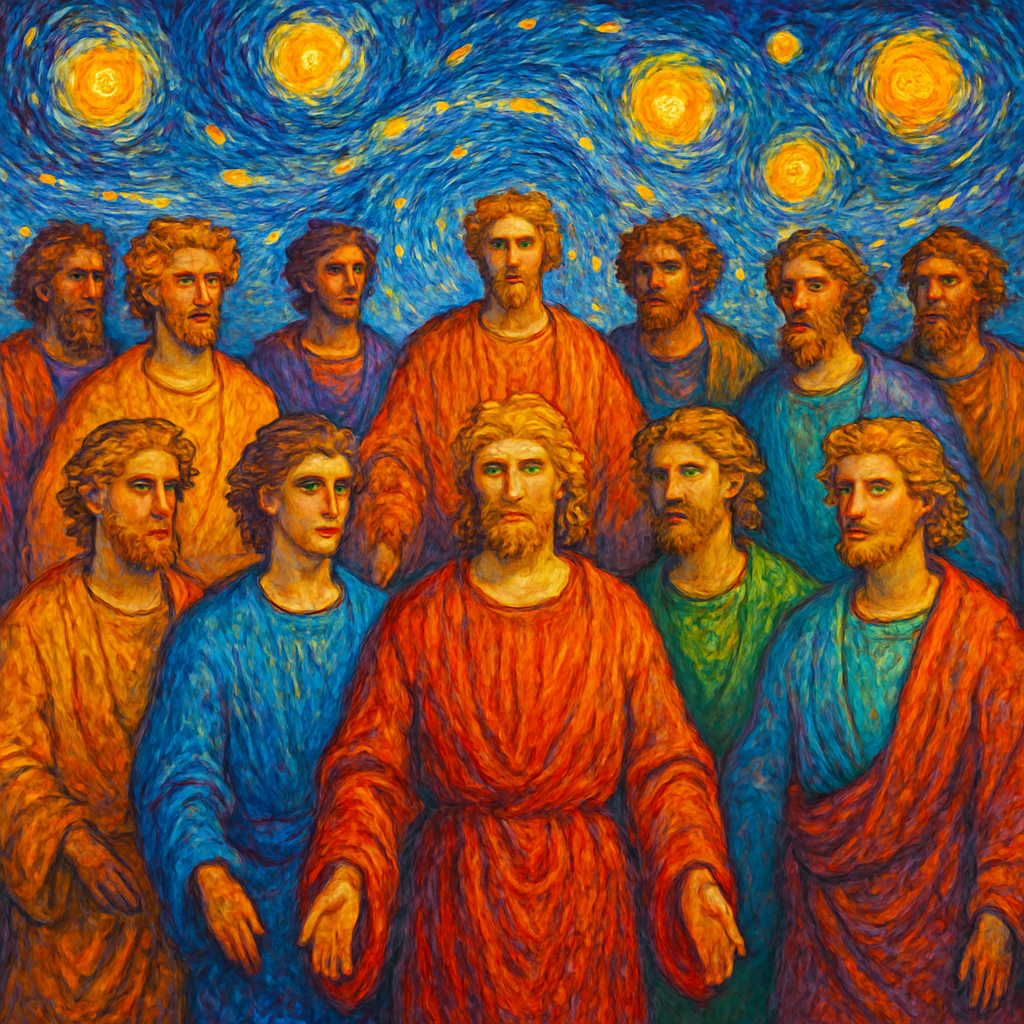
In studying the Holy Book and theology, few topics cause as much misunderstanding as God's name. One of the most sacred and powerful words in Scripture is YHWH (Hebrew: יהוה), often called the Tetragrammaton, meaning "four letters." But what does this name really mean? How is it used in different Bible versions? And why isn’t it tied to any specific religious group, like the Jehovah’s Witnesses, despite widespread confusion?
This article explores the meaning, translation, and spiritual significance of the divine name YHWH, while clearing up common modern misconceptions.
What Is YHWH?
YHWH is God's name revealed in the Hebrew Bible. It comes from the Hebrew verb "היה" (hayah), which means "to be" or "to exist." In Exodus 3:14, when Moses asks God His name, the reply is:
"Ehyeh Asher Ehyeh" – "I AM THAT I AM"
This directly links to YHWH, showing that God is:
Self-existent
Uncreated
Eternal
The source of all being
In short:
YHWH is an explanatory name, not a personal label like a human name.
It means:
"The One Who Is" – The Eternal Creator
Not a name given by parents, but the identity of the One who exists without beginning or end.
How Is YHWH Represented in Four Key Biblical Traditions?
The divine name YHWH appears differently across traditions and translations:
Masoretic Text (MT)
The traditional Hebrew Bible, preserved by Jewish scribes, writes the name as יהוה, but Jewish readers substitute it with Adonai (“Lord”) when reading aloud out of respect.
Septuagint (LXX)
This ancient Greek translation replaces YHWH with Kyrios (Lord), losing the personal name but maintaining a sense of authority.
King James Version (KJV)
This early English translation largely avoids "Jehovah" and instead uses LORD in all caps to show the divine name without pronouncing it. "Jehovah" appears in only a few verses.
Dead Sea Scrolls
These ancient Hebrew manuscripts from Qumran (around the 2nd century BCE) do preserve YHWH fully. In some scrolls, it is even written in Paleo-Hebrew script to set it apart and demonstrate reverence.
What About “Jehovah”? Is It the True Name of God?
No.
The word “Jehovah” is a medieval invention, mistakenly formed by combining the consonants of YHWH with the vowels of Adonai. The result was YeHoWaH, later Latinized as Jehovah.
While common today, this word is:
Linguistically incorrect
Historically absent from any ancient manuscript
Never spoken or written by Hebrew prophets.
Is YHWH Connected to Jehovah’s Witnesses?
Many believe that YHWH (or Jehovah) is primarily or exclusively associated with Jehovah’s Witnesses (a church that has no statehood), a religious group that emerged in the 19th century. This is not only wrong but also downplays the historical and theological depth of God's name.
The misuse of "Jehovah" by this group:
Does not reflect biblical linguistics or theology
It is based on a misunderstanding of ancient Hebrew grammar
Often casts a shadow over the true sacred name of God.
Important: The name YHWH belongs to no religious group.
It is not a label, a membership term, or the property of any sect.
It is the eternal name of the Creator, used in Scripture long before any modern church or denomination existed.
Theological Summary: Why YHWH Means “Creator”
When we say YHWH, we refer to the One who exists eternally, without beginning or end. The name implies:
Creator of everything
The one who causes all things to exist
Independent of time, space, and human origins
Therefore, YHWH is not a “given name,” like a child’s name from parents. It describes divine essence, rooted in the verb "to be"—making it the most meaningful name in all human language.
Final Thoughts
The sacred name YHWH (I AM THAT I AM), LORD, and Creator deserve respect, not confusion. It is not a trademark, sectarian term, or a mistranslated label. It is the eternal, self-existent name of the Creator, revealed to Moses, preserved in Scripture, and beyond all religions or organizations.
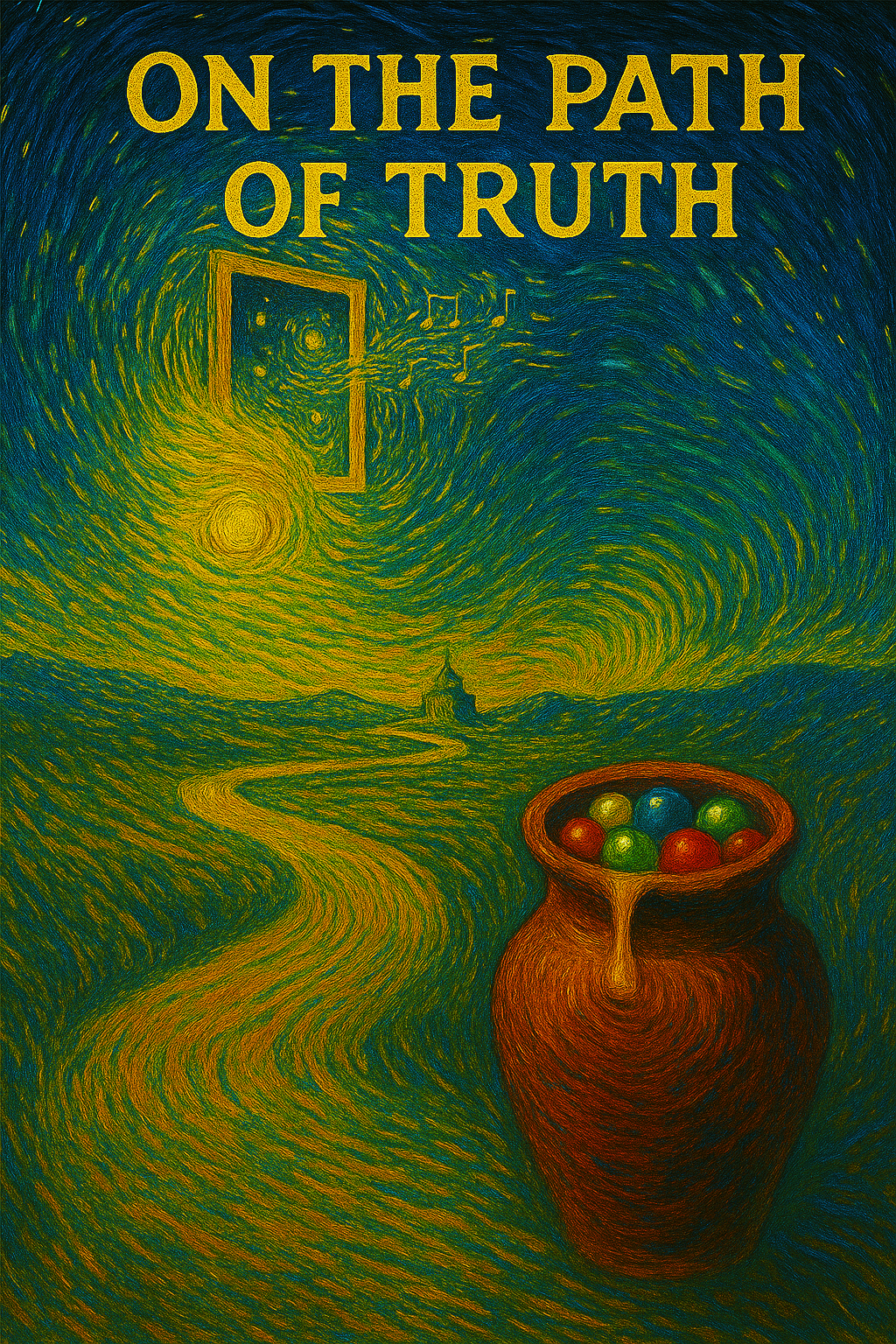
In the futuristic dawn of 2086, Isaac’s chance encounter with a divine figure on a quiet street ignites a transformative journey. Written between 2013 and 2014, the novel On the Path of Truth (originally in Armenian) interweaves prophetic revelations and fantastical twists into a narrative of spiritual discovery, mystical events, and a journey to Peru that unveils hidden truths. Dare to explore a world where faith confronts the unknown.
On the Path of Truth
At the corner of the street stood a girl dressed in tattered rags. She wore old rags, and we were strolling down the breadth of the street, joyful and lively, with words and laughter, as if intoxicated—not by wine. It was a brownish morning, and the road appeared milky. The girl, or perhaps woman, in old rags gazed directly into my eyes. At that very moment, my friend beside me said, “Look at that Old Rags now; she’s staring straight into my eyes.” One of the girls walking with us also remarked, “Kids, this Old Rags is looking straight into my eyes. Could she be one of those?” and a burst of laughter swept through us all. (In truth, that woman could look into all our eyes simultaneously; indeed, she was God, and none of us, neither one nor the other, realized it.) I also said, “Now let me go see who that girl in Old Rags is, as if she’s looking straight at me,” and I quickly reached the spot (it felt as though I arrived swiftly because God hastened time and my steps) and said, “Hey, girl, you seem like my father—you’re looking straight into my eyes like a father.”
Then I heard a man’s voice—not a woman’s—hoarse yet soft and even pleasant. He said, “Greetings, my Son, I am the Lord, God. I have come to save you.” The old rags God wore were black, but they appeared new, not worn out, meticulously pieced together, and they emitted a fragrance so pleasant from the woman that it opened my breath and uplifted my mood. The woman also had a face that seemed fitting only for God—beautiful up close and stunning from afar. Her skin was a blend of white, gold, and green; her hair was pomegranate red, and she exuded an inexplicable, palpable aura—God. Because of her beauty, it was as if God’s features resembled a woman’s—smiling and giggly—while her body reminded me of a man’s. Her posture revealed that her strength was intact—more than that, how can one even measure God’s strength? Behind her hung a transparent door in the air, half-open, leading to an infinity filled with star clusters. From that infinity, wonderful music resounded—just for me.
I felt that salvation had already occurred. Yet, I also sensed with horror that something else still needed to happen—to me, to those with me, and to those who were not with me—as if hell roared beneath my feet and called out to me. God said to me, “When you are afraid, I will send you joy and comfort.” I asked God, “What if I grow bored? I know boredom is worse than fear.” God replied, “When you grow bored, know that you are on the cross, without nails, without wood, crucified. The cross is the sign of boredom, and know that people have deliberately bored and crucified you.” Again, God spoke and said, “Return to your friends. I will ascend to Heaven, to My invisible throne. When you arrive home, you will find a glass of milk with honey on the table. You will drink it, and for nine months, no one will be able to bore you. You will simply open your mouth and laugh ha-ha at them. Your name will also be Laughter. After nine months, they will have one day to bore you. After that, the Holy Book will descend like a hammer on their heads, on the heads of those who bored you, and will pierce their heads. It will also descend on your head but will not pierce it. Just as they say that the head of the one who does good is pierced, so too must the head of the one who does evil be pierced.” God said, “There is money in your pocket. Give it all to me, and you will find it on the same table where the milk will be. Tell your friends that a beggar asked for money. Go now, and until you leave, I will remain here.” And so I did. We left, and I later reached home.
That day was summer. The day itself felt like summer; it happens. Let’s say the month is summer, yet the day feels like winter, or the month is winter—cold—yet the day feels like summer, or it is night but feels like day. It is day but feels like darkness. You can be full yet feel as if you are hungry, like a beast descending from the mountain without bread or water. It happens that you are hungry yet feel as if you are full. You are silent, yet everyone is clapping for you. You speak, but it turns out you have mumbled. That day was also summer. The month was also summer, and I was near the house door. The door was locked with a key. I reached into my pocket and realized the key was not there. In my mind, I said, “Either I lost it, or I gave it to God with the money.” Again, in my mind, I said, “Well, even better. My house and my money are safe in Heaven.” I noticed that the window of my house was slightly ajar. I entered through the window and saw that on the table were placed a glass of milk, money, and keys. It was the first time I felt these words of Scripture on my skin: “Then their pagan hearts shall be ashamed, and they shall feel the weight of their committed sins”—as if a stone idol sat on my shoulders, heavy. My emotions enveloped me like a storm, ready to solidify into a force capable of shaking the continents to their core. I, who was like a king, was walking and did not stop until a lion appeared before me. I had become as if an orphan who, having grown up, had left the orphanage. With difficulty, I approached the table, drank the milk, and I recall the glass slipping from my hand and crashing to the floor, and I remember falling face down on the floor.
From the knock on the door and Sarah’s voice, it seemed I came to my senses. The taste and sweetness of the honey were still in my mouth. Sarah was knocking on the door and calling, “Isaac, Isaac…” With difficulty, I opened my mouth and said, “Sarah, come in through the window. The door is locked. I feel unwell—why have you come at this late hour?” Shortly after, I sensed that Sarah was trying to help me rise from the floor and said, “Hey, boy, what late hour? It’s daytime. Where have you been these three days?” I realized that I had gone blind and had remained on the floor for three days. I wanted to conceal my blindness from Sarah, while she asked suspiciously, “Why are you looking for me with frozen eyes, and why did you say, ‘Why have you come at this late hour?’” I also remembered that there was some paper on the table with something written on it, but I had not read it before drinking the milk. I told Sarah, “There must be a paper on the table. Read it and see what is written. My eyes are stinging. I washed them with the wrong liquid, and they seem to have become inflamed.” Sarah read, “You will see after three days.” I understood that this was God’s paper. God also knew that I would not read the paper before drinking the milk. I told Sarah, “I called a doctor. He probably wrote that paper and left through the window as he had entered, while I was tending to my natural needs. The doctor will also send medicines for me. He said to just lie down and rest. As for where I was for three days—I will tell you later.” Sarah said, “Jesus Christ, what chaotic stories these are.” I also asked Sarah a sharp question, saying, “Sarah, allow me to jest: if Christ was not blind for at least a few days, then where did the blind Christians come from, and who has seen Christ’s face if not the sly fishermen, crawling tax collectors, and short-sighted scribes?” Sarah replied, “The liquid has had a good effect on you; you’ve turned from an architect into a prophet.”
If my blindness was not a trial, then it was a true revelation for me, especially since I knew it was temporary and expected, perhaps granting me new vision and eyes. I felt as if I were in a dance hall, a summoned and awaited guest. I remembered everyone—my relatives, acquaintances, friends, even strangers—moment by moment. Sarah’s always longing, deer-like gaze seemed to be before my eyes, with her drooping lower lip bearing a small dimple and green eyes, as if they were peaceful green lakes. Yet, when she was a little jealous, that peaceful lake would turn into a stormy sea, and at that time, everyone feared her, though her emotions were directed at me. Sarah was a painter; she had twin brothers who were my friends, Gabriel and Michael. Gabriel was one hour older than Michael. I was one year younger than them, while Sarah was two years younger than me, twenty-five years old. Gabriel was a designer, while Michael was a priest. Sarah painted icons on the walls inside the church. I always told her, “I love you, but I am repelled by your brush; you paint idols—they are right after all, that without thorns, there is no rose.” We always argued about this. I told her that the essence of an idol does not lie in its composition, whether it is stone, wood, or paint and picture, and I added, “God has chosen the golden mean so that people are a little idol-worshipping until the Red Sea splits, becomes two parts, and a path opens.” She replied that I was chasing fairy tales, and I told her, “Sarah, now man cannot truly believe in God because man is weak in faith but strong in caprice. All the religions of the world are caprices and profit, not faith.”
I answered Sarah, “Yes, Sarah, the liquid has had a profound effect on me, doubling my knowledge, as if it were the Holy Spirit and God’s milk, from which I went blind. But as they say, the blindness of the mind is worse than the blindness of the eye. If we are one body in love, then your green eyes will be mine, while my colorful mind will be yours.” Sarah said, “Hey, boy, maybe you are Christ. I am also painting you on the church walls, but without a ruler, though I love both of you.” I replied, “Sarah, Christ cannot be a self-serving man to be adored, but God’s mouth and word, and even that only from time to time, because Christ is a man; he dreams, sleeps, and wakes up; he can even see a delusion. God is higher than Christ, but man will not reach God until he understands Christ.” Sarah answered, “Isaac, it’s the 21st century now; your eyes will heal from the scum, as the doctor wrote that you will see in three days. So let my eyes remain mine, so that afterward, I will paint you large on the church walls with your black eyes, ha-ha. But seriously, I can’t wrap my head around your colorful mind now; maybe you’re right, unless Satan has deceived you.” I said, “Sarah, there is no Satan except sin and death. People have moved away from God and choose a king for themselves, while Satan feeds on the smell from the right and left, because the smell chooses only the best sheep. It happens that, confused, it chooses a goat as a king, which cannot protect the flock from the wolf, that is, from Satan. Meanwhile, the shepherd, the true king, is Christ, in whose time the wolf will simply evaporate like acetone.”
Sarah took my hand and said, “Come, I’ll accompany you to the living room so you can lie down on the couch, rest, and wait for the doctor’s medicines. And you’ll tell me where you were lost these three days. But until then, what will you say about God being a envy God? I’ve read about that in the Bible, in the Old Testament.” I replied, “It is written that God is also jealous, and that jealousy and envy are creative because God is a Creator. That envy is real and natural, filled with love, unlike the envy of a neighbor who has done no good and harbors only malice.” We reached the living room from the dining room on the left, passing through a zigzag corridor where there were three baklava-shaped bedrooms, while the bathroom and shower were on the second floor. The stairs were located between the two left bedrooms; the door of the right bedroom was directly opposite those stairs. The right intersecting walls of the corridor were cut by the bedroom door. The entrance to the living room was at the end of the corridor with its recessed stairs, rising about one meter. I had built the oval living room one meter higher than the corridor, while the dining room was one step lower than the corridor. The corridor began from the area adjacent to the dining room, where the house’s entrance door was. The dining room floor and the house’s yard were on the same level.
I had just lain down on the couch when a knock was heard at the door. I told Sarah, “Sarah, the house key is on the dining room table; take it and open the door to see who it is.” I heard Sarah’s departing footsteps, then her returning steps, and she said, “Hey, you, they brought your phone. It was the mailman; he said someone found it on the street and handed it to the nearby post office. That’s why, ha, you weren’t answering my calls.” I told Sarah, “Sarah, turn off my phone. Whoever asks about me, tell them I’ve gone to Egypt to study the Pyramids. As for your question about where I was these three days, I’ll say I returned from Egypt tonight. My work had a very tight schedule, which is why I couldn’t inform you. As you see, I had lost my phone. That day at dawn, the dawn following your birthday—well, you remember that girl wearing old rags—I’ll leave for Peru in two days. I have an important meeting; we need to study the structures there that were built at the same time as the Egyptian Pyramids, and you must accompany me. Book a plane ticket for yourself on the same flight; I booked mine a week ago.” Sarah began jumping with joy. Her joy culminated in claps; she clapped quickly, and after finishing, I said, “Sarah, now hold on tight so you don’t fall. After four days in Peru, we will leave from there to Jerusalem to see the Western Wall, whose large stones share the same structure as Machu Picchu in Peru, the Pyramids in Egypt, and Baalbek in Lebanon. There is a suspicion that the so-called Western Wall does not form part of Solomon’s Temple but is a section of an unknown structure with a history of ten to twelve thousand years. These ancient structures are like stars on Earth and are highly mysterious; man should not get lost gazing at them. Even if there are aliens, they could not have built such things. The Pyramids seem like male and female, symbolizing man’s limited spiritual image, even symbolizing man’s condensed and allegorical structure.”
For some reason, this time Sarah laughed, and that seemed strange to me because Sarah did not like surprises; in that, she was like me. Even the tone of her laugh was different; she had never laughed like that, as if she had understood something new. She began asking questions with a changed voice, as if it were the voice of a black jaguar with a smile on her face, though Sarah’s skin was the color of a white apple, while mine was apricot. Sarah said, “Isaac, it’s as if I’m in a dream. To dispel my doubts that we are not in a dream, I need to ask you a few questions. Are you ready? Well, let’s start. Can you build a temple like wise Solomon, and what would the appearance of your temple be like?” I answered, saying, “I can build only in two cases: if I am the Son of David or the Son of God. The difference lies only in the handwriting. The spiritual appearance of the Temple is my word, while the external appearance is known only to God; it is the pinnacle of perfection.” Sarah said, “One more question: What distinguishes Christ from man?” I replied, “Sarah, let me think a bit, and give me a piece of gum; my mouth is dry. Christ is the needle in the hay that turns the hay into a needle, something useful for God; otherwise, the cow would eat the grass, the hay, while the hay is the people.” Sarah asked again, “And in your opinion, is love eternal, or like a flower, does it wither?” I said, “Sarah, love is eternal and stubborn. If you forget it, it will not forget you, and sooner or later, it will take revenge. Then love will no longer be a crown on your head but a chain around your neck, and you will become a dog, possibly rabid, until God heals you, and love will again be a crown on your head, and you will be joyful like a deer.” Sarah laughed and said, “Then why does the lion eat the deer?” I replied, “Sarah, nature is like that. It happens that the snake also bites the lion, and it dies. One should not overtake the Creator and care for life; if you can, save the deer from the lion’s jaws.”
The antique wall clock announced five in the evening, ringing five times. I loved antique clocks; I even had a collection. On the second floor, where my gym was, there were twelve antique clocks set to twelve different times. When they rang at round hours, without looking at the corresponding clock, I knew the time from the last ring because the sounds were distinct, and the clocks worked accurately. Sarah went to the kitchen, which was a continuation of the dining room, separated only by a wooden curtain. She prepared dinner. I did not feel hungry but agreed to eat so that Sarah would eat too. She was helping me eat because I could not see anything. I was deceiving Sarah by saying that I was seeing blurry; I did not want to scare her by telling the truth. After dinner, Sarah made coffee; she fed me the coffee with a cup. After drinking the coffee, Sarah played music from her phone, and we danced tango. It was a masterpiece—dancing tango blind.
I met Sarah and her brothers under very sad circumstances. It was six years ago, in 2080, an August morning. They—Sarah, Gabriel, Michael, and their parents—were involved in a car accident before my eyes. They were driving in front of my car when a fox crossed their path, emerging from the right-side ravine. Sarah’s father, who was driving, saw the fox, became confused, and sharply turned the wheel to the left, losing control. Their car hit the right front part of an oncoming truck, which threw their car like paper into the left-side ravine. The truck driver simply drove on unharmed, as if nothing had happened. I quickly stopped my car and descended the ravine, where Sarah’s car had fallen, to save people unknown to me, unknown friends. The sun setting on the horizon was piercing my eyes, forcing me to look down at the ravine from above. Wherever I looked while descending, it was as if the sun was biting me, showing me my difficult situation and hinting, as if to say, that God does not exist. In my mind, I said, “You too turned out to be a traitor, sun boy, like your lover, the moon, is a traitor.” While descending the ravine, the thorns were rustling, while the river seemed to speak in its own language. A woodpecker was tapping somewhere in the ravine, on some tree, as if hinting that boredom is whose dog. The car had fallen straight onto a medium-sized tree in the ravine, breaking its trunk at about one meter high. The car had fallen about fifteen meters down the ravine until that tree, breaking it, and there remained about twenty meters for the car to reach the rocky end of the ravine and be finally destroyed by hitting the large stones on the riverbank. The front part of the car was burning, and that fire had also caught the tree, gradually weakening the trunk section and the broken part of the tree, while the upper part of the tree from the broken section was slowly tilting downward, burning, opening a path for the car toward final destruction. The car was simply leaning on the upper part of the broken tree, slightly tilted. I had to manage to get the people out of the car before that destruction, whose groans were not even heard, and I did not know if they were alive or not.
When I approached the burning car, I noticed that the rear window was shattered—it was in shards—and I heard faint moans. “So they are alive,” I thought. That inspired me, and I quickly got to work. I climbed the rear part of the car and started pulling the people out through the broken window opening. There were five of them—three in the back seat, two in the front. The first I pulled out was a girl—that was Sarah. Her lower lip was torn about two centimeters from the right side, and blood was flowing down her cheek. I noticed her beautiful face and was staring at her, forgetting for a moment why I had descended the ravine. Sarah was in my hands, unconscious but alive. I quickly came to my senses and went back to work, this time even faster, because the car was moving forward. I took Sarah about three meters away from the car and laid her down with her feet downward in a vertical position so she would not roll, as the terrain had a tilt of about forty-five degrees. I also pulled out the two brothers through the same broken window opening and placed them next to their sister. They had fractures and were moaning from pain. While pulling them out, it was as if I had received supernatural strength; even without that, my strength was considerable, and I was acting very quickly involuntarily. The car was a hair’s breadth from rolling toward its final end; its front no longer had a tree to serve as an obstacle. It remained to pull out their parents—the father and the mother.
I remembered that in the trunk of my car, I had a ten-meter rope specially designed for towing cars. That rope could hold a load hanging in the air up to three tons, while the car was hardly two tons, and in a forty-five-degree tilt, the pull would be even less. I needed to quickly climb the ravine, bring the rope, and tie the car to any tree behind, but before that, it was necessary to stop the car from falling by placing a log under it. There was such a log, as if it had been specially sent from Heaven in its size. I took that log and leaned it under the front of the car, and I leaned the bottom of the log on a rock that protruded from the ground. The tree cracked again and tilted a little more but did not finally break because the log had come to the tree’s aid, if one can call it that. I took a deep breath and ran to bring the rope. I quickly brought the rope and a cutting tool with it to cut the rope after pulling the people out and let the car roll to the end of the ravine, as there was a danger that the car could explode from the fire and harm us. The car was leaning on a log about two meters high, while the tree was broken from the part where the car was leaning, about one meter lower. The interesting thing was that the tree was not broken from the part hit by the car but from a weaker section—logical. I first tied the rope to the appropriate part at the back of the car, which was buried in the ground, then I tightly tied the rope to the tree. It remained for the pole to finally burn with the tree and the front part of the car to go down to the ground so that I could pull Sarah’s and her brothers’ father and mother out from the front doors. But until then, I was idle and looked toward Sarah and saw that everyone was silently looking at me with astonished and teary eyes.
Like an apple cut into two halves, so too were the two brothers similar to each other. Both had large and straight noses, square foreheads, straight and yellow hair, and honey-colored eyes. Sarah was not like her brothers—only in the forehead was she similar. Her hair was curly and black like a raven, her nose moderately stake, her eyes slightly large and dark green. I approached them and said, “Greetings to the survivors. Do you remember me? I was driving in front of your car when you passed me as I stopped near a spring to drink water. You did not stop. Glory to God that I stopped to drink water; otherwise, after the truck hit your car, it continued its path carefree. We met under these sad circumstances. My name is Isaac.” When I finished my words, the cracking of the tree was heard; the tree fell toward the river, the log also broke when it burned, the front part of the car fell heavily down, and I went back to work, leaving the survivors in their place.
The car was strongly built and lightweight for its size. The internal and external safety systems operated properly. The external safety features include a three-layer barrier in front of the car. The internal safety system included a foam-based fire-extinguishing water jet network and an engine made of transparent, lightweight, heat-resistant, and hard porcelain that shatters upon strong impact. Although the engine shattered (security system), the water jet network did not activate, which led to the fire caused by the burning fuel in the engine. The tied rope was firmly holding the car in its place. I had taken the survivors to the left of the car, so first I went to the left door, where the driver was—Sarah’s father. I first noticed his typical forehead, which was present in his children; his neck was broken, which they later healed. I easily pulled him out through the front door, and at that time, two brothers came to my aid, while Sarah was crying, calling for her mom and dad. I told the brothers to take their father straight to my car, while I went to the other side of the car and, with great difficulty, opened the door. I saw that an iron rod was stuck in the upper part of Sarah’s mother’s right leg. I removed it with great difficulty from her leg and took her straight to my car; blood was flowing quickly from her leg. The boys came toward me, and I handed their mother to them, saying to tie her leg tightly so the bleeding would stop. She was also alive. Five were saved and later fully recovered; only Sarah’s mother’s right leg was amputated. After that, I went down the ravine again and pulled out Sarah, who had fainted again, while I did not cut the rope because the danger was behind.
Two years after this incident, in 2082, I became extremely wealthy, secretly extremely wealthy, the owner of an immense fortune that could become the cause of my destruction, both spiritually and physically. That immense fortune had to be used correctly—moderately and secretly—otherwise, destruction would be inevitable. I had accidentally discovered a cave-house full of treasures inside a rock—a carved-dug house. There were bags and large jars full of gold, jewelry, and precious stones. There were forty pieces of treasure there; it was probably the treasures of some ancient prince or king. The carved-dug house inside the rock had three rooms and a vestibule, whose height reached seven to eight meters; the length of their walls was also the same. That house had no windows and was dark; ventilation with the outside world was done only through secret spiral passages, like chimneys, for example, from which light did not penetrate. The only entrance to the house was at the bottom of the riverbed—a secret tunnel was dug, with a diameter of two meters and about twenty meters long. The tunnel was filled with river water, and that water also flowed into the heart-shaped pool of the house inside the adjacent rock, whose level corresponded to the river level. The pool even had a reserve height in case of river overflow—when the river water rose, the pool water also rose. Probably, the builders, while constructing that house, had temporarily changed the riverbed so they could dig the tunnel and the rock, like they dig and build the metro under the city.
If the rock was climbed a little and observed carefully, the trace of that riverbed was visible, which the house builders had dug so that the river water would bypass the place from where the house entrance—that is, the tunnel leading to the house, toward the heart of the rock, toward the heart-shaped pool—was to be dug. The average depth of the river was three meters, while its width was fifteen. It flowed along the left part of the ravine. From above, the bottom of the ravine resembled a flat plain, whose width reached two hundred meters in places, while the least was fifty meters. The river seemed to have cut its bed in that plain like butter, showing its power. The beginning of the tunnel was framed with large triangular stones about one meter high, which were joined together with pinpoint precision, while the inside of the tunnel was covered with small stones arranged in an arched pattern, from which not a single stone was loose.
Besides being an architect, I was also a skilled swimmer; there was no one equal to me on the international scene. I was a winner and medalist in many competitions. I had loved swimming since childhood and swam in the river against the current. That river was the one from the accident and the treasures, which was near our village. The village was located in the eastern part of that ravine. Being a swimmer, I worked as a lifeguard one day a month on the beach. My house was in the city, on the seaside; the city was newly built, as was my house. I had come to the city to study and also to live. I was born and grew up in the village; our village had acquired a new name—Bethlehem—after the day when a prophet descending from the sky wrote on the mountain in front of the village with large stones: Bethlehem. After that incident, they changed the village’s name. Five eyewitnesses who saw that scene had become mute; the prophet, turning around, saw that they were watching him and made them mute. My mother was a teacher and worked at the village school, while my father was a farmer. We had a large farm in the village—we had five hundred head of cattle and a thousand sheep. My father’s name was Artashes, while my mother’s name was Esther, and she had come as a bride from the city to the village.
The people of our village and the people of the city lived in poverty and were burdened with debts. I decided to help them secretly because, having found the treasures, I had become extremely wealthy. I took out one bag of gold and one bag of precious stones from the house in the rock and took them to the city—my house. I waited until a heavy rain came with wind and a storm. It did not delay—four days later, at night, a heavy rain came with a storm. During the storm, I sat in my car, opened the front window, and started throwing the gold and precious stones into the city streets and into house yards. I kept the remainder at the bottom of the bags as if that was all I had found. The next day, there was a commotion and celebration in the city. Everyone was talking that it was possible that the storm had brought the treasures from the seabed and scattered them in the city (that’s how I had planned it, that they would talk like that), but they could not solve the riddle. Everyone was amazed; it quickly spread on the internet and in news outlets. An international jewelry organization came specially to our city and requested to buy the found gold and stones because they were of high quality and unique. A little later, I also sold what I had supposedly found and took the money to the village. I gave the money to my mother and told her to distribute it to the village’s poor, while I gifted my mother a necklace from which a large emerald stone was hanging.
In the treasure house, the treasures were arranged by category. In the left room from the vestibule, there was gold filled in bags; the bags were woven from camel hair. There were thirteen bags of gold there; the bags were larger than usual, so that one sheep could fit in each. The gold bags were very heavy; lifting them was impossible. The gold was in the form of coins, the size of a black fig. On one side of the gold, a woman’s face was engraved; on the other side, a naked cross was engraved. In the middle room, there were the same bags and the same number of jewelry. The jewelry was diverse, of various precious stones—starting with earrings, ending with men’s rings, and in the middle with the crowns of a king and queen. In the right room, there were thirteen jars full of precious and semi-precious stones—from diamonds to pearls. The average size of the stones was that of an olive; the jars had wide mouths and one meter height. In the right part of the vestibule, because the heart-shaped pool had a left tilt, there was a copper basin placed on a stand, about one meter in diameter and forty centimeters high. It was full only of jewelry made from emeralds; the chain that I had given to my mother, I had taken from that basin.
The thirteenth jar in the right room was closed; wax was poured over it. Removing the wax layer from above, I saw that it was full of pearls of different colors and sizes. The clay jar was sealed with wax so that the pearls would not spoil. The size of the pearls reached up to the size of a chicken egg, while the smallest were the size of a pea. Those pearls I had to sell soon so they would not spoil and would serve their purpose. I set to work and sold the pearls; I also sold two semi-processed thousand-carat diamonds and with that money, I founded a production in our city—a battery production, from watch batteries to solar batteries. Next to the battery production, I also founded a bicycle production. Those bicycles were new; they worked with micro-motors and solar batteries so that while pedaling the bicycle, a person used twice less effort, while the speed was tripled compared to mechanical bicycles. It took four years to organize the production and build the factory, to find specialists and recruit workers—just so much talking and running that all the muscles of the body cramped. The production was working with very little profit for me, but the workers were well paid, while the buyers were buying the product cheaply. I did not have the problem of accumulating wealth, but I was trying to improve people’s lives, and that gave me pleasure. I participated in various charitable programs, quite generously and tangibly, while I did not destroy my opponents but broke their knee so they would eat their bread and cheese and become good people. I would say, “If a Satan has entered you, then drink a worm medicine.” Thus, the years passed until that dawn.
While dancing tango, Sarah said, “Isaac, what a pleasant smell is coming from you. If it’s not a secret, tell me what perfume this is; it’s a real man’s perfume. My mood is sharply rising.” I understood that it was the result of that milk, which had started to change my body’s composition. I remembered the prophecy of the Psalm: “You love righteousness and hate wickedness; therefore God, Your God, has anointed You with the oil of gladness more than Your companions.” In my mind, I said, “Would that a prophet were to write about me, my story, but since there is no such prophet, I will write my story for the coming generations, if the pilaf is not converted to a grill, and the time is spiral.” I said, “Sarah, this perfume is only for the Anointed; isn’t it that the Anointed is anointed with perfume full of horns?”
Continuing the conversation, Sarah said, “Isaac, I would very much like you to be the Anointed, because no one has seen Christ’s face. But isn’t it that the Anointed was crucified in the past and rose again? If that was a lie, then how will you rise from the jaws of this beastly world? Isn’t it that the cross will not pass a second time?” I said, “Sarah, that man who was crucified in the past, or hanged, was probably not Christ, nor was he a criminal, nor a prophet, but an innocent believer, and God gave him resurrection, and he is now deeply asleep in some rock crevice. God does not make a deep distinction between an ordinary believer and His son and loves everyone equally. If an innocent man was crucified, for God, it is the same as crucifying His son. God’s works are as known as they are secret and encoded, while rising from the jaws of the world is God’s work.”
Sarah said, “Isaac, come, let’s go out to the sea and swim. I will accompany you; you also love swimming in the sea in the evening, and the saltwater will be good for your eyes. By the way, what happened to the medicines that the doctor promised, and will you tell me who gave you the name Isaac—your mother or father? Isaac means He Will Laugh; I always forget to ask you this question.” I said, “Sarah, you have a very jealous curiosity. My name was changed to Isaac when I was eight, while before that, my name was Alexander. My mother had a dream, and in the dream, a dark-haired woman with pierced hands and feet, as if Christ, said that my name should be changed to Isaac. My mother was very scared and changed my name. As for the medicines, we will ask the sea fish.” Sarah said, “I know that the dolphin can speak Armenian; we will ask them for your medicines,” and she laughed like a dolphin, if a dolphin really laughs—well, I am very strong in imagination. We went out and swam in the sea, while my lighthouse was Sarah’s voice. While swimming, Sarah said, “Isaac, can you walk on water like Christ?” I said, “Sarah, three days from now, I will walk on water headfirst, like a man walks on the internet head down.”
That night and the next night, Sarah stayed at my house—it was the first time. She slept in my room, which was in front of the stairs, while I slept in the room to the left of the stairs, which was relatively cooler than my room (I did not like using air conditioning in the summer). We came home wet after swimming in the sea for one hour, took a shower, and even played table tennis—laughing. I was trying to play blind-blind tennis, and it was not going badly for me because my hearing had started to sharpen, while in the future, I was hearing even from continent to continent. The length of my house yard was fifty meters and ended directly at the seaside to the north; the width of the yard was forty meters, while the house was located in the southern part of the yard. Next to my house, in the eastern part, there was a kindergarten, while in the western part, there was a school. In front of my house, there was a field of pine trees, while opposite was the Dolphin Hotel with a Comet status, where entry with shoes was forbidden—only barefoot. The floor temperature of the hotel was a constant forty degrees, while the air temperature was a constant twenty-five degrees, ensured in the rooms according to order.
We left for Peru on the third day. Sarah was accompanying me because I couldn’t see anything. On the plane, Sarah sat two seats ahead; next to me sat an old lady who in no way wanted to swap her seat with Sarah. The mood of everyone on the plane was high; the reason was the smell of my perfume—as Sarah was saying. Besides that, their heads had started to work well, and on the plane, they were making plans for their future. I was listening to all their conversations and understood that the soul is the coat of the body, not the body the coat of the soul, while the spirit is man’s mind. A human who is born has a spirit, while the soul is given by God, which strengthens the spirit, turning it into one piece—the soul and spirit merge with each other and heal the entire organism, and man does not even feel that he has bones, as if in paradise. When the plane took off, my eyes started to see gradually.
A Psalm from the Old Testament reminded me that the old lady sitting next to me was hiding a secret. My eyes were already seeing, and quite brightly; I could see even around corners and very far, see in the dark, see inside a closed basement. I turned toward that old lady and started to examine her carefully and noticed that sitting next to me was an old Sarah, and she smiled; even her lip dimple was preserved. Sarah had even argued with that old lady over the seat, while the old lady shushed Sarah so much that I even laughed. Next to Sarah sat an old man; I looked around at him and, to my surprise, saw that it was me in old age. That reality was from God; it was showing a partial event, that God can even change the form of time, making time, so to speak, spirality. I said in my mind, “How many secrets there are in God’s world.”
A human who has taste, that taste he either gives to God, or to a friend, or to a wife. The middle option is very rare—to give taste to everyone—because the basis of being in love lies in man’s taste seasoned with freedom. We made a stopover before reaching Peru, and we no longer saw that old lady and old man; they did not board the plane after the stopover, and the young Sarah sat next to me. She was very scared of that old lady and old man; something had dawned on her, but she was not talking about it. In Peru, we were awaited by my childhood friend, Moses. He welcomed us at the airport, and we went to his house. He was a karate-do master and acted in films. Moses always said, “Karate-do is a divine style, which is defensive and has no dual form, taking a bribe with one hand and defending with the other, let alone boasting with a black belt.” I agreed with him because God is impartial. One time He makes an Israelite a king, another time He throws him to the ground because of sin. He judges the Israelites more strictly than the pagans; He is more demanding toward the Son than the stranger. He adopts the stranger, while He subjects the Son to slavery, like Joseph, when his brothers sold him into slavery, and then Joseph became a pharaoh, even the pharaoh of the Israelites. Whoever knows what God looks like, maybe God is a whole army of Gods similar to each other or not similar to each other, who are one and not like the non-gods.
Epilogue
On the Path of Truth remains an unfinished journey, as its author chose not to continue it. Beyond this point, the characters, unbound by the writer’s hand, refuse to conform to a scripted fate. The story’s future is left to Isaac, who is free to shape his narrative in the uncharted years beyond 2086.
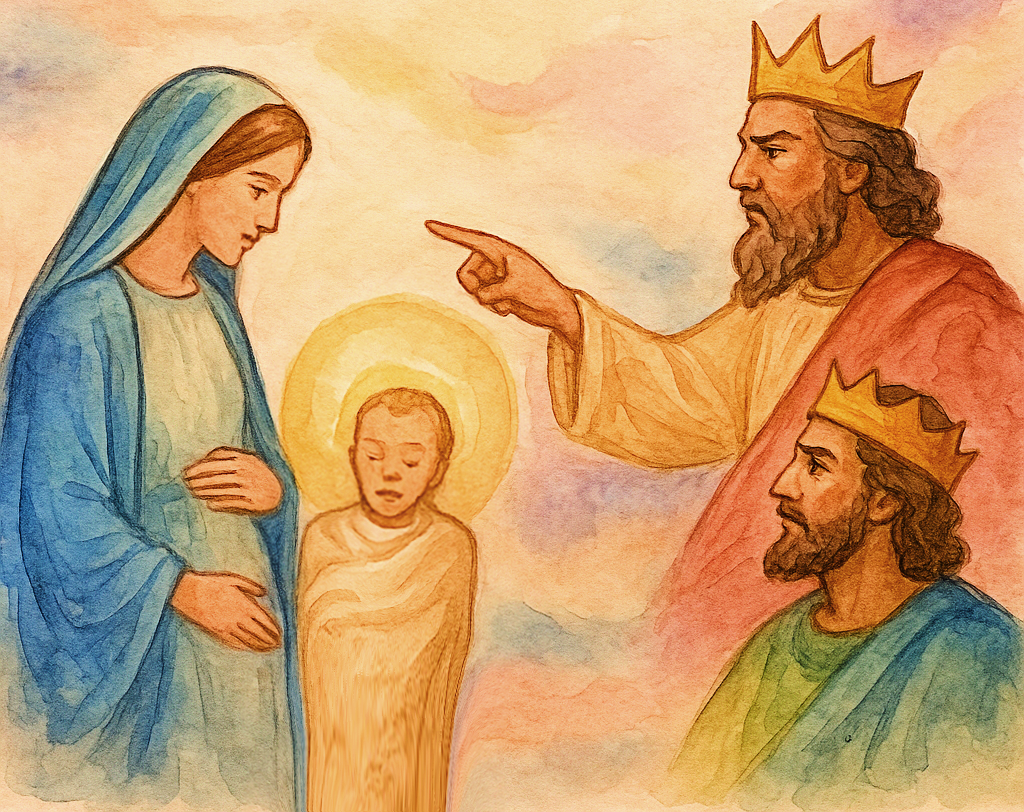
Explore the deeper meaning of Isaiah 7:14 and Psalm 2 in the context of the Law and the covenant. Does the prophecy of the virgin conception exclude the male role? How do ancient scriptures reconcile divine calling, marriage, and kingship?
Introduction
Isaiah 7:14 states:
“Behold, the virgin shall conceive and bear a son, and shall call his name Immanuel.”
This verse is often treated as a straightforward prophecy of Jesus' birth. But does it truly foretell a miraculous conception through the Holy Spirit, or have layers of interpretation blurred its meaning?
This article explores the theological, legal, and symbolic depth behind Isaiah’s words and their connection to Psalm 2, a central messianic psalm.
Isaiah 7:14 Contextual Prophecy or Supernatural Event?
Virgin means "young woman" or maiden, not necessarily a virgin by our modern definitions. In the context of Isaiah, it likely referred to a real woman in King Ahaz’s time, whose child would serve as a sign of Judah’s survival.
Later, Christian theology reinterprets this to refer to the Virgin Mary and Jesus. However, this reinterpretation introduces a non-explicit concept, the miraculous conception through the Holy Spirit, which is not found in Isaiah’s original prophecy.
Psalm 2: God’s Son and Messianic Authority
Psalm 2 complements Isaiah’s prophecy by presenting a divine declaration of kingship:
“The Lord said to me, ‘You are my Son; today I have begotten you.’”
Here, “Son” symbolizes a chosen king, not a supernaturally born individual. This reflects a royal installation of a king "begotten" by divine decree, not biology.
Continues:
“Ask of Me, and I will give You the nations as Your inheritance.”
The “Son” is the ruler of nations, a figure of divine authority, power, and covenant, not merely a newborn child of mystical origin.
Law: A Virgin Wife for the High Priest
Leviticus 21:13-14 states:
“He shall take a wife in her virginity… only a virgin of his people shall he take as his wife.”
This reveals the sacredness of union, not just the woman's virginity. The High Priest was required to marry a virgin, not because she was holy in her own right, but because the union was covenantal and pure.
This contradicts the notion that the absence of a man enhances sanctity. God’s law supports both male and female roles in fulfilling divine purposes.
The Danger of Ideological Extremes: Female Holiness vs. Male Guilt
Pagan traditions often elevated goddesses (Ishtar, Artemis, Cybele) as divine vessels while viewing male sexuality as impure. Some early Christian Gnostic sects adopted this view, exalting virginity and demonizing male participation in reproduction.
But this contradicts:
Psalm 2, where God’s “Son” rules with authority
Law, where male priesthood and covenantal union are sacred
Balance, where male and female together reflect the image of God (Genesis 1:27)
The Scriptures never elevate one sex over the other. They highlight divine partnership, not exclusion.
A Multi-Layered Prophecy
Isaiah 7:14 isn't just a supernatural teaser. It's a national sign, a guarantee that God is with His people. The virgin or young woman signifies faithfulness, while the child born (Immanuel) symbolizes hope and continuity.
Psalm 2 expands this vision with divine kingship:
“You are my Son,” a ruler, not merely an infant.
“Today I have begotten you,” a commission, not just a birth event.
The full prophetic meaning becomes clear when we see:
A faithful virgin (symbol of Israel or covenant purity)
A legitimate union (as prescribed by the Law)
A chosen Son (prophet, king, or messiah)
The enduring presence of God (Immanuel = “God with us”)
Conclusion: Divine Cooperation, Not Sex Exclusion
Isaiah 7:14, when seen alongside Psalm 2 and Leviticus 21, reveals a balanced theology:
Virginity is sacred, but so is holy union.
God calls both men and women into covenant.
The Messiah is not merely miraculously conceived, but divinely appointed.
When we strip away ideological misinterpretations, the Scriptures show us a deeper truth:
Sanctity is not about bypassing human nature but about fulfilling it within God’s order.
Man and woman together reflect the covenant and the Kingdom.
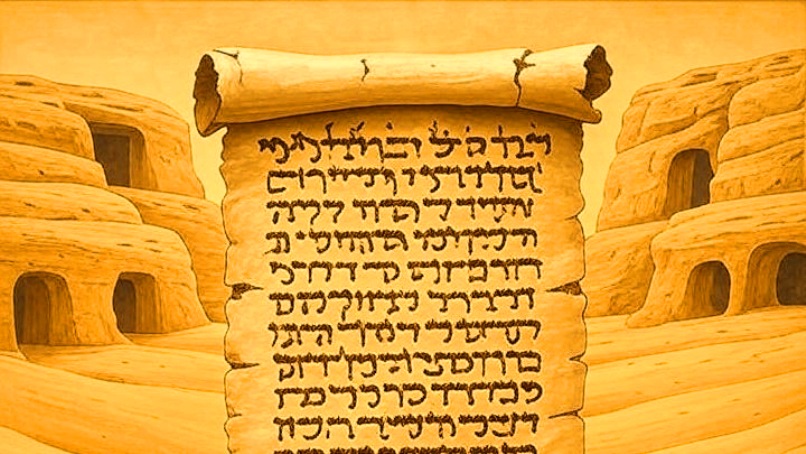
Discover the secrets of the Dead Sea Scrolls—rules, prayers, and prophecies from the Essene sect. Explore how these ancient texts shape our understanding of early Judaism, messianic hope, and biblical interpretation.
Discovered between 1947 and 1956 in the Qumran Caves near the Dead Sea, the Dead Sea Scrolls are regarded as one of the greatest archaeological discoveries of the 20th century. These ancient manuscripts—many of which are attributed to a Jewish sect known as the Essenes—provide unprecedented insight into the religious life, philosophy, and messianic expectations of a community that thrived during the Second Temple period.
In this article, we explore the Essenes’ strict community rules, prophetic commentaries on biblical texts, spiritual prayers, and their vision of the "last days." Whether you are a history enthusiast, religious scholar, or spiritual seeker, this guide helps unravel the deeper meanings embedded in the Qumran scrolls.
What Are the Dead Sea Scrolls?
The Dead Sea Scrolls comprise over 900 manuscripts and thousands of fragments, written primarily in Hebrew, Aramaic, and Greek, and dating from the 3rd century BCE to the 1st century CE. These include:
Copies of nearly all the books of the Hebrew Bible, except for Esther.
Apocryphal and pseudepigraphal texts.
Sectarian writings are unique to the Essenes.
Most scholars agree that the scrolls were composed, copied, or collected by the Essenes, a Jewish sect known for their communal living, ritual purity, and apocalyptic worldview. The Qumran site, where the scrolls were discovered, is believed to have housed a sectarian settlement that served as both a spiritual commune and a scriptural archive.
The Essene Rulebooks: Spiritual Discipline and Community Life
Two central documents reveal the disciplined lifestyle of the Essenes:
Community Rule (1QS)
This foundational text outlines the ethical code, hierarchy, initiation rituals, and daily conduct within the sect.
“This is the rule for those who enter the community to seek God. They must turn from all evil and walk in perfect obedience. They shall love the sons of light and hate the sons of darkness.”
— 1QS 5:1–3
The Essenes viewed existence through a stark dualism: "sons of light" (the righteous) vs "sons of darkness" (the impure or rebellious).
Damascus Document (CD / 4Q266)
This document, discovered in both Cairo Geniza and Qumran, addresses community structure and legal interpretations.
“Whoever breaks the covenant and acts with arrogance shall be expelled from the congregation."
— CD 2:12–13
These rules enforced purity, obedience, and moral accountability, reflecting the Essenes' belief in living as a holy remnant before the coming judgment.
Biblical Commentaries (Pesharim): Interpreting the End Times
The Essenes were not merely readers of scripture—they were interpreters, believing that biblical prophecies spoke directly to their time. Their commentaries, known as pesharim, apply prophetic writings to current events and future expectations.
Habakkuk Commentary (1QpHab)
This commentary reveals the sect’s view of a Teacher of Righteousness—possibly their founder or spiritual leader.
“The traitors will not believe the words of the Teacher of Righteousness. This refers to the final generation."
— 1QpHab 2:5–6
Genesis Commentary (4Q252)
This text links patriarchal blessings to messianic hope.
“Jacob will be blessed in the last days—this points to the Messiah, descendant of Jacob.”
— 4Q252 5:1–2
The Essenes saw themselves as a chosen group, living on the brink of a transformative age.
Prayers and Hymns: Spiritual Devotion in the Desert
The Dead Sea Scrolls also include deeply personal and communal prayers, notably the Thanksgiving Hymns (Hodayot) and Words of the Luminaries.
Thanksgiving Hymns (1QH)
Written in the first person, these hymns convey gratitude and divine intimacy.
“You have delivered me from the pit and raised me into Your light. I will praise You forever.”
— 1QH 10:14–15
Words of Prayer (4Q504)
A liturgical collection likely used during festivals or communal worship.
“Blessed are You, Lord, who guards the people of Your covenant. Extend Your mercy upon us.”
— 4Q504 1–2:5–6
These prayers reveal a theology rooted in grace, election, and divine guidance, resonating with contemporary spiritual traditions.
Messianic Prophecies: Awaiting Divine Redemption
A key element in Essene literature is messianism—the belief in a divinely appointed figure or figures who would bring justice, rebuild the Temple, and restore Israel.
Testimonia (4Q175)
This composite text quotes Deuteronomy, Numbers, and Psalms, framing them as messianic prophecies.
“God will raise a prophet like Moses who will speak His words. He shall deliver Israel in the last days.”
— 4Q175 1:9–11
Florilegium (4Q174)
A collection of texts foretelling the construction of a new, glorious temple.
“The temple of the last days will be the dwelling of God’s glory, fulfilling David’s prophecy.”
— 4Q174 1:11–12
Some scrolls refer to two messianic figures: a priestly Messiah from the line of Aaron and a royal Messiah from the line of David, indicating a complex eschatological vision.
Modern Research and New Discoveries
Between 2020 and 2021, new scroll fragments—containing Greek translations of Zechariah and Nahum—were discovered in the Cave of Horror in the Judean Desert. While not introducing new concepts, these findings enhance our understanding of the textual transmission of the Hebrew Bible.
Technological advancements like multispectral imaging, AI-assisted reconstruction, and DNA analysis of parchment are revolutionizing scroll research. The Leon Levy Dead Sea Scrolls Digital Library, in collaboration with the Israel Antiquities Authority and Google, provides open access to high-resolution images and translations.
Why the Dead Sea Scrolls Still Matter
Far from being relics of the past, the Dead Sea Scrolls offer valuable insights into the religious ferment of early Judaism, just before the rise of Christianity and Rabbinic Judaism. They help contextualize debates on law, prophecy, divine justice, and community life.
For spiritual seekers, the scrolls preserve a voice that is both ancient and timeless—one that speaks of a people striving for purity, faithfulness, and hope in an age of uncertainty.
Conclusion
The Dead Sea Scrolls continue to transform our understanding of the Bible, Jewish history, and early religious movements. Through their strict rules, inspired prayers, bold prophecies, and mystical commentaries, the Essenes left behind a profound legacy—one that invites modern readers to reflect on the eternal human quest for truth and divine connection.
Join the SubMeet community to discuss more on ancient prophecies, sacred texts, and modern spirituality!
Introduction
The Holy Book consistently emphasizes the enduring power of God’s Word. One of the most profound declarations of this truth is found in Isaiah 55:11:
“So shall My word be that goes forth from My mouth;
It shall not return to Me void,
But it shall accomplish what I please,
And it shall prosper in the thing for which I sent it.”
(Isaiah 55:11, NKJV)
But how consistently has this promise been preserved across ancient manuscripts? In this article, we explore Isaiah 55:11 by comparing three key textual witnesses:
The Hebrew Masoretic Text (MT),
The Greek Septuagint (LXX),
And the Dead Sea Scrolls (specifically the Isaiah Scroll, 1QIsaᵃ).
Together, these sources reveal the extraordinary preservation of God’s Word through the centuries.
Isaiah 55:11 in the Hebrew Masoretic Text
The Masoretic Text (MT) is the standard Hebrew version of the Old Testament, faithfully preserved by Jewish scribes. Isaiah 55:11 in the MT reads:
“So shall My word be that goes forth from My mouth;
It shall not return to Me empty,
But it shall accomplish what I desire,
And succeed in the purpose for which I sent it.”
Key Points:
God’s Word is purposeful and effective.
It never returns empty, but always fulfills His will.
This version has been foundational for most modern Holy Book translations and reflects the text used by Jewish communities for centuries.
Isaiah 55:11 in the Greek Septuagint (LXX)
The Septuagint (LXX), an ancient Greek translation of the Hebrew Scriptures (3rd–2nd century BC), provides further insight with powerful Greek phrasing. The LXX renders Isaiah 55:11 as:
“So shall my word be, which goes forth from my mouth;
It shall never return to me empty,
Until it accomplishes what I willed,
And prospers in the things for which I sent it.”
What Stands Out?
The Greek employs a strong double negative, οὐ μὴ (ou mē), meaning “never, by no means.”
This emphasizes the absolute certainty that God’s Word cannot fail to accomplish its purpose.
Isaiah 55:11 in the Dead Sea Scrolls (1QIsaᵃ)
The Dead Sea Scrolls, discovered between 1947 and 1956, include a nearly complete copy of Isaiah (1QIsaᵃ) dated to the 2nd century BC. Isaiah 55:11 in this scroll reads almost identically to the Masoretic Text:
“Thus shall My word be that goes out of My mouth;
It shall not return to Me empty,
But it shall accomplish what I desire,
And succeed in the purpose for which I sent it.”
One remarkable fact is that the Isaiah Scroll found among the Dead Sea Scrolls (1QIsaᵃ) is over 1,000 years older than the Masoretic Text manuscripts we had before its discovery. Despite this vast time gap, the wording of Isaiah 55:11 remains virtually identical, demonstrating the extraordinary preservation of God’s Word across the centuries.
Key Observations:
Virtually no textual differences regarding Isaiah 55:11.
Minor spelling variations do not affect meaning.
Confirms that God’s Word has been faithfully preserved for more than two millennia.
Why This Matters
The consistency of Isaiah 55:11 across the Hebrew Masoretic Text, the Greek Septuagint, and the Dead Sea Scrolls confirms an essential truth:
God’s Word is unchanging, trustworthy, and eternally effective.
Despite spanning languages, cultures, and thousands of years, God’s promise remains the same: His Word will never return void and will always fulfill its divine purpose.
The Unbreakable Word of God
The Septuagint’s powerful phrasing (“never at all return empty”) deepens our understanding of God’s unwavering faithfulness. This truth is echoed throughout Scripture:
“Lift up your eyes to the heavens,
And look on the earth beneath.
For the heavens will vanish away like smoke,
The earth will grow old like a garment,
And those who dwell in it will die in like manner;
But My salvation will be forever,
And My righteousness will not be abolished.”
(Isaiah 51:6, NKJV)
“Heaven and earth will pass away, but My words will by no means pass away.”
(Matthew 24:35, NKJV)
These verses remind us that while heaven and earth are temporary, God’s Word endures forever. It remains alive, powerful, and unshaken throughout all generations. Although the New Testament presents a simplified and stylized version of the Old Testament.
Final Thoughts
This remarkable preservation of Isaiah 55:11 from ancient times until today demonstrates that God’s Word was not only given to humanity but was also protected by His power across millennia.
God’s Word is alive. It is eternal. It succeeds wherever it is sent.
In a world of shifting ideas and fleeting promises, His Word stands unchanging, calling us to believe, to trust, and to live by every word that proceeds from His mouth.
Introduction
The idea of a machine that can operate indefinitely without any external energy input, known as perpetual motion, has fascinated inventors and engineers for centuries. While enticing, this concept contradicts the fundamental laws of physics. However, innovative designs like those in the provided image attempt to challenge these limitations through clever mechanics and energy transfer principles.
This article explores the feasibility of a rotational perpetual motion design, as shown in the image above. In this design, two rotating wheels with extended arms hold weighted balls. The balls fall and strike opposing weights, inducing continuous motion. Additionally, we examine potential improvements that could make such a system more efficient, even if accurate perpetual motion remains impossible.
Understanding the Design: How It Works
The proposed system consists of two rotating wheels with extended arms holding weighted balls. The mechanism relies on:
Momentum Transfer: As a ball falls and strikes another on the opposite wheel, it transfers kinetic energy, theoretically sustaining rotation.
Gravity Assistance: The downward motion of the balls contributes additional force to keep the wheels spinning.
Impact Cascade Effect: A chain reaction of impacts is expected to maintain continuous movement.
While this setup appears to generate sustained motion, it faces key challenges, particularly energy dissipation through friction, air resistance, and imperfect collisions.
The Scientific Challenges of Perpetual Motion
Despite the ingenuity of this design, certain physical principles prevent it from functioning indefinitely:
Energy Loss: Every collision between the balls dissipates some energy, such as sound, heat, or deformation.
Friction & Air Resistance: The axles and moving parts experience friction, gradually slowing the motion.
Equilibrium State: Gravity will eventually bring the system to a resting position once energy losses accumulate.
However, while accurate perpetual motion is impossible, highly efficient energy transfer systems that can run for extended periods with minimal external input can be created.
Possible Improvements for Enhanced Efficiency
To increase the efficiency of the rotating system, the following modifications can be considered:
1. Magnetic Assistance
Using magnets to propel or attract the balls strategically could help sustain movement.
Magnetic levitation could minimize friction at the axle, reducing energy loss.
2. Low-Friction Bearings
Incorporating high-precision ball bearings or superconducting materials could dramatically reduce resistance.
Magnetic or air-based levitation techniques could further limit mechanical drag.
3. Energy Harvesting Techniques
Piezoelectric materials could convert impact energy into small electrical charges, potentially feeding back into the system.
Regenerative braking systems (like electric vehicles) could recover and reuse lost kinetic energy.
4. External Energy Boosters
Solar panels or electromagnetic induction could provide minimal external energy to counteract inevitable losses.
Tuning mass and momentum balance to optimize kinetic energy distribution across impacts.
Could Perpetual Motion Ever Be Achieved?
In the strictest scientific sense, perpetual motion remains unattainable due to the laws of thermodynamics, which dictate that all systems gradually lose energy to entropy. However, near-perpetual motion systems where energy loss is minimized to the lowest possible level could be developed with advanced materials and technologies.
Conclusion
The perpetual motion engine design in the image is an intriguing concept that relies on momentum transfer and cascading impacts. While the laws of physics prevent it from running indefinitely, incorporating magnetic assistance, friction reduction, energy harvesting, and external input could create a system capable of operating for extended periods with high efficiency.
By refining such ideas, engineers and scientists can push the boundaries of energy efficiency, even if accurate perpetual motion remains an elusive goal. Could future breakthroughs in quantum mechanics or superconducting materials one day challenge these limitations? This possibility keeps the door of innovation wide open, fostering a sense of hope and optimism. Only time will tell.
Have Your Idea?
Your thoughts are crucial for discussing perpetual motion concepts or energy-efficient designs. Share your ideas in the comments! Let's explore the future of innovative motion together, with your input shaping the conversation.
Melchizedek is one of the most enigmatic figures. He appears briefly in Genesis 14:18-20 as a priest-king of Salem who blesses Abraham. Two key sources, the Dead Sea Scrolls (DSS) and the Septuagint (LXX), the Greek Old Testament, offer different interpretations of Melchizedek’s role. This article explores the similarities and differences between these accounts and provides key passages from the Dead Sea Scrolls.
Who Was Melchizedek?
In Genesis 14:18-20 (LXX), Melchizedek is described as:
- King of Salem (interpreted as Jerusalem)
- Priest of the Most High God (El Elyon)
- A figure who blesses Abraham and receives a tithe from him
However, the Dead Sea Scrolls and Psalms (110:4) later expand on his identity, portraying him as an eternal priest, messianic figure, or even an angelic being.
Melchizedek in the Dead Sea Scrolls (11Q13 - 11QMelchizedek)
One of the most intriguing discussions of Melchizedek is found in the Dead Sea Scrolls (11Q13 or 11QMelchizedek), a text discovered in Cave 11 at Qumran. This document presents Melchizedek as a heavenly, possibly angelic figure who will bring divine judgment and redemption in the last days.
Key Passages from 11QMelchizedek
1. Melchizedek as a Divine Judge
"[Melchizedek] will proclaim liberty to the captives... and announce to them the Jubilee year in which all debts will be forgiven..." (11Q13, Fragment 2)
This passage echoes Isaiah 61:1-2, a prophecy about the Messiah. Here, Melchizedek is depicted as the one who brings salvation and forgiveness of sins.
2. Melchizedek vs. Belial (Satan)
"And Melchizedek will avenge the judgments of God... and the wicked one (Belial) will be defeated." (11Q13, Fragment 4)
In this passage, Melchizedek is portrayed as a divine warrior who defeats Belial (Satan), bringing justice and restoring righteousness.
3. Melchizedek as a High Priest in Heaven
"Melchizedek shall be exalted among the holy ones... He will make atonement for the sons of light..." (11Q13, Fragment 6)
This description suggests that Melchizedek is an angelic priestly figure.
Conclusion: Two Views of Melchizedek
The Dead Sea Scrolls (11QMelchizedek) depict Melchizedek as a heavenly high priest, warrior, and judge who is involved in end-time redemption.
The Septuagint (LXX) presents him as a human priest-king in Genesis 14 but hints at an eternal priesthood in Psalm 110.

Bomb cyclones, also known as explosive cyclogenesis storms, are a natural phenomenon gaining attention due to their intensity and destructive potential. These storms, defined by their rapid drop in atmospheric pressure of at least 24 millibars within 24 hours unleash fierce winds, heavy precipitation, and plunging temperatures. This article delves into the science behind bomb cyclones, the regions most frequently affected, their impacts, and how communities can prepare for and endure them.
What Is a Bomb Cyclone (Explosive Cyclogenesis)?
The term "bomb cyclone" refers to a storm that undergoes bombogenesis, a process involving an extraordinary intensification of low-pressure systems. These storms typically occur in mid-latitude regions where cold, dry Arctic air collides with warm, moist air masses. The dramatic temperature gradient fuels the storm's rapid development, creating extreme weather conditions.
Where Do Bomb Cyclones Occur Most Often?
Bomb cyclones are not confined to one region. Instead, they occur in areas with significant temperature contrasts and access to moisture. Some of the most frequently affected areas include:
United States:
Pacific Northwest: Bomb cyclones frequently hit this region during winter, fueled by Arctic air masses and atmospheric rivers. Cities like Seattle and Portland often experience heavy rain and snow during these events.
Northeast (Nor’easter Zone): Boston, New York City, and Philadelphia are vulnerable to bomb cyclones. These storms, often associated with nor’easters, bring strong winds and blizzards.
California: Southern California and the San Francisco Bay area increasingly see bomb cyclones, particularly during the late fall and winter seasons.
Canada:
The Atlantic provinces, including Nova Scotia and Newfoundland, face frequent bomb cyclones during the winter, driven by Arctic air masses and the Gulf Stream's warmth.
Europe:
United Kingdom and Ireland: These nations experience bomb cyclones as strong low-pressure systems travel across the Atlantic Ocean.
Scandinavia and Western Europe: France, Germany, and neighboring countries occasionally see bomb cyclones during winter storms.
Asia:
Japan and Korea: Bomb cyclones develop in the northwestern Pacific, influenced by the Siberian air masses meeting the warmer Pacific Ocean.
Southern Hemisphere:
Regions like New Zealand and parts of Australia can experience bomb cyclones, though these are less common compared to the northern hemisphere.
Impacts of Bomb Cyclones
Bomb cyclones pose severe risks to communities and infrastructures. Below are some of the critical impacts:
Transportation Disruptions:
Airports face mass cancellations due to severe winds and low visibility.
Roads and highways become hazardous from snow, ice, or floods.
Flooding:
Coastal regions often experience storm surges leading to floods, particularly in low-lying areas.
Power Outages:
High winds can damage power lines, leaving homes and businesses without electricity during extreme cold.
Economic Strain:
The combined cost of infrastructure repairs, emergency services, and lost productivity can significantly strain local economies.
Environmental Impact:
Landslides and soil erosion may occur in mountainous regions due to heavy rains or snowmelt.
Preparing for a Bomb Cyclone
Effective preparation can mitigate the devastating effects of a bomb cyclone. Here are actionable steps for individuals and communities:
Stay Informed:
Monitor reliable weather services like the National Weather Service (NWS) or local meteorological agencies for updates.
Emergency Supplies:
Stock up on essentials, including non-perishable food, drinking water, flashlights, batteries, and first-aid kits.
Secure Your Home:
Reinforce windows and doors. If you're in a flood-prone area, consider installing barriers or sandbags.
Evacuation Plans:
Have a family evacuation plan, including a safe meeting spot and a route to higher ground.
Protect Your Vehicle:
Keep your car fueled, and ensure it's equipped with emergency supplies like blankets, ice scrapers, and a spare tire.
Climate Change and Bomb Cyclones
The role of climate change in the frequency and intensity of bomb cyclones remains a hot topic among scientists. Rising global temperatures contribute to more moisture in the atmosphere and alter the behavior of jet streams, which are vital in developing these storms. As a result, bomb cyclones may become more frequent or severe in certain regions.
SubMeet: Your Resource During Severe Weather
At SubMeet, we’re committed to fostering meaningful connections. During challenging times like bomb cyclones, our platform allows individuals to share resources, advice, and support. Whether coordinating community efforts or staying informed, SubMeet empowers you to navigate through every storm - literal or figurative. Visit SubMeet today and join a community always prepared to face the elements!
By understanding bomb cyclones and their potential impacts, individuals and communities can take proactive steps to stay safe and minimize damage. With platforms like SubMeet, weathering life’s storms becomes a collective effort. Stay safe and prepared!
The New Year is a time of joy and togetherness, and the festive table plays a central role in bringing loved ones together. In Armenia, the New Year’s table is more than just a feast; it symbolizes abundance, tradition, and hospitality. Here’s how you can decorate your table with traditional Armenian dishes, pastries, fruits, and drinks while making it appealing to guests from any culture.
1. Traditional Armenian Dishes to Anchor the Table
The centerpiece of an Armenian New Year’s table is its savory dishes. These options not only please the palate but also add a touch of cultural heritage to the décor:
Tolma (Stuffed Cabbage or Grape Leaves): This traditional dish, served in ornate dishes, represents the warmth of family gatherings.
Khashlama is a hearty beef or lamb stew paired with root vegetables, served in clay pots for an authentic rustic look.
Grilled Kebabs (Khorovats): Perfectly grilled meats presented on skewers or platters add flair to the table.
2. Pastries for Sweetness and Charm
Armenian pastries bring sweetness and a festive aroma to the table.
Gata (Sweet Pastry Bread): A decorative gata loaf is delicious and often inscribed with intricate patterns that symbolize good luck.
Pakhlava (Baklava): Cut into diamond shapes and decorated with pistachios, pakhlava is a must-have.
Chorek (Sweet Bread): A braided bread sprinkled with sesame seeds or sugar completes the pastry selection.
3. Seasonal Fruits for Elegance and Symbolism
Fruits are a cornerstone of the Armenian New Year table, signifying health and prosperity.
Pomegranates: Known as the symbol of Armenia, pomegranates add a pop of red to the table while representing fertility and life.
Dried Fruits: Dried apricots, plums, and figs arranged in wooden trays offer natural sweetness.
Fresh Citrus Fruits: Oranges and tangerines bring brightness and energy, often arranged in decorative bowls.
4. Drinks to Toast the Occasion
Armenian Brandy: Known worldwide, a bottle of aged Armenian cognac is an elegant addition to the table.
Homemade Wine: Displayed in crystal decanters, it adds a personal touch.
Compote: A sweet fruit-based drink, typically made with apricots or cherries, offers a non-alcoholic option.
5. Table Decoration Ideas for All Cultures
Even if you’re not Armenian, these ideas can inspire your New Year’s celebration:
Use embroidered tablecloths or runners with traditional patterns.
Include candles or small lanterns for a warm glow.
Arrange evergreen branches or pinecones for a seasonal touch.
Place small gifts or handwritten notes on each guest’s plate to enhance the festive spirit.
Why SubMeet Inspires Connection During New Year’s Festivities
This Armenian-inspired guide reflects SubMeet’s mission to celebrate cultural connections and unite people. On SubMeet, you can share your New Year’s table photos, organize celebrations with friends, or find inspiration for your next cultural event.

Ads
SubMeet


Ads

Rose

