
SubMeet Blog Posts
Write your:
Biography, story, article or tidings.
Maximum 50.000  symbols (Depends on the browser) one post.
Maximum 10 posts per day, 100 posts per month, for one user.
We recommend using the Firefox browser to publish a post.



 Moder
Moder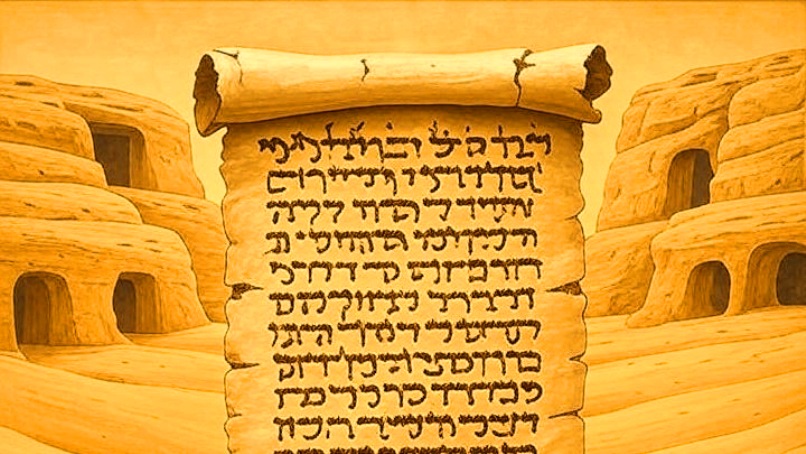
Discover the secrets of the Dead Sea Scrolls—rules, prayers, and prophecies from the Essene sect. Explore how these ancient texts shape our understanding of early Judaism, messianic hope, and biblical interpretation.
Discovered between 1947 and 1956 in the Qumran Caves near the Dead Sea, the Dead Sea Scrolls are regarded as one of the greatest archaeological discoveries of the 20th century. These ancient manuscripts—many of which are attributed to a Jewish sect known as the Essenes—provide unprecedented insight into the religious life, philosophy, and messianic expectations of a community that thrived during the Second Temple period.
In this article, we explore the Essenes’ strict community rules, prophetic commentaries on biblical texts, spiritual prayers, and their vision of the "last days." Whether you are a history enthusiast, religious scholar, or spiritual seeker, this guide helps unravel the deeper meanings embedded in the Qumran scrolls.
What Are the Dead Sea Scrolls?
The Dead Sea Scrolls comprise over 900 manuscripts and thousands of fragments, written primarily in Hebrew, Aramaic, and Greek, and dating from the 3rd century BCE to the 1st century CE. These include:
Copies of nearly all the books of the Hebrew Bible, except for Esther.
Apocryphal and pseudepigraphal texts.
Sectarian writings are unique to the Essenes.
Most scholars agree that the scrolls were composed, copied, or collected by the Essenes, a Jewish sect known for their communal living, ritual purity, and apocalyptic worldview. The Qumran site, where the scrolls were discovered, is believed to have housed a sectarian settlement that served as both a spiritual commune and a scriptural archive.
The Essene Rulebooks: Spiritual Discipline and Community Life
Two central documents reveal the disciplined lifestyle of the Essenes:
Community Rule (1QS)
This foundational text outlines the ethical code, hierarchy, initiation rituals, and daily conduct within the sect.
“This is the rule for those who enter the community to seek God. They must turn from all evil and walk in perfect obedience. They shall love the sons of light and hate the sons of darkness.”
— 1QS 5:1–3
The Essenes viewed existence through a stark dualism: "sons of light" (the righteous) vs "sons of darkness" (the impure or rebellious).
Damascus Document (CD / 4Q266)
This document, discovered in both Cairo Geniza and Qumran, addresses community structure and legal interpretations.
“Whoever breaks the covenant and acts with arrogance shall be expelled from the congregation."
— CD 2:12–13
These rules enforced purity, obedience, and moral accountability, reflecting the Essenes' belief in living as a holy remnant before the coming judgment.
Biblical Commentaries (Pesharim): Interpreting the End Times
The Essenes were not merely readers of scripture—they were interpreters, believing that biblical prophecies spoke directly to their time. Their commentaries, known as pesharim, apply prophetic writings to current events and future expectations.
Habakkuk Commentary (1QpHab)
This commentary reveals the sect’s view of a Teacher of Righteousness—possibly their founder or spiritual leader.
“The traitors will not believe the words of the Teacher of Righteousness. This refers to the final generation."
— 1QpHab 2:5–6
Genesis Commentary (4Q252)
This text links patriarchal blessings to messianic hope.
“Jacob will be blessed in the last days—this points to the Messiah, descendant of Jacob.”
— 4Q252 5:1–2
The Essenes saw themselves as a chosen group, living on the brink of a transformative age.
Prayers and Hymns: Spiritual Devotion in the Desert
The Dead Sea Scrolls also include deeply personal and communal prayers, notably the Thanksgiving Hymns (Hodayot) and Words of the Luminaries.
Thanksgiving Hymns (1QH)
Written in the first person, these hymns convey gratitude and divine intimacy.
“You have delivered me from the pit and raised me into Your light. I will praise You forever.”
— 1QH 10:14–15
Words of Prayer (4Q504)
A liturgical collection likely used during festivals or communal worship.
“Blessed are You, Lord, who guards the people of Your covenant. Extend Your mercy upon us.”
— 4Q504 1–2:5–6
These prayers reveal a theology rooted in grace, election, and divine guidance, resonating with contemporary spiritual traditions.
Messianic Prophecies: Awaiting Divine Redemption
A key element in Essene literature is messianism—the belief in a divinely appointed figure or figures who would bring justice, rebuild the Temple, and restore Israel.
Testimonia (4Q175)
This composite text quotes Deuteronomy, Numbers, and Psalms, framing them as messianic prophecies.
“God will raise a prophet like Moses who will speak His words. He shall deliver Israel in the last days.”
— 4Q175 1:9–11
Florilegium (4Q174)
A collection of texts foretelling the construction of a new, glorious temple.
“The temple of the last days will be the dwelling of God’s glory, fulfilling David’s prophecy.”
— 4Q174 1:11–12
Some scrolls refer to two messianic figures: a priestly Messiah from the line of Aaron and a royal Messiah from the line of David, indicating a complex eschatological vision.
Modern Research and New Discoveries
Between 2020 and 2021, new scroll fragments—containing Greek translations of Zechariah and Nahum—were discovered in the Cave of Horror in the Judean Desert. While not introducing new concepts, these findings enhance our understanding of the textual transmission of the Hebrew Bible.
Technological advancements like multispectral imaging, AI-assisted reconstruction, and DNA analysis of parchment are revolutionizing scroll research. The Leon Levy Dead Sea Scrolls Digital Library, in collaboration with the Israel Antiquities Authority and Google, provides open access to high-resolution images and translations.
Why the Dead Sea Scrolls Still Matter
Far from being relics of the past, the Dead Sea Scrolls offer valuable insights into the religious ferment of early Judaism, just before the rise of Christianity and Rabbinic Judaism. They help contextualize debates on law, prophecy, divine justice, and community life.
For spiritual seekers, the scrolls preserve a voice that is both ancient and timeless—one that speaks of a people striving for purity, faithfulness, and hope in an age of uncertainty.
Conclusion
The Dead Sea Scrolls continue to transform our understanding of the Bible, Jewish history, and early religious movements. Through their strict rules, inspired prayers, bold prophecies, and mystical commentaries, the Essenes left behind a profound legacy—one that invites modern readers to reflect on the eternal human quest for truth and divine connection.
Join the SubMeet community to discuss more on ancient prophecies, sacred texts, and modern spirituality!
 Marshal
In this article, we explore Armenian's classification, compare it with Greek and Hebrew, and analyze its alphabet, vocabulary, grammar, and historical significance.
Is Armenian Its Own Language Family?
Although Armenian belongs to the Indo-European family, it does not have any direct sister languages within the group. Instead, it constitutes a single-language branch, similar to Greek and Albanian, making it distinct from the larger Indo-European subgroups.
Key Facts About Armenian:
An independent branch within Indo-European, like Greek and Albanian.
A literary tradition dating back to the 5th century AD.
A unique alphabet created by Mesrop Mashtots in 405 AD.
Influences from Persian, Greek, and Semitic languages due to historical interactions.
Comparison: Armenian vs. Greek vs. Hebrew
Greek and Hebrew belong to different language families. Greek is Indo-European, while Hebrew is Semitic. Despite this, historical and cultural exchanges have led to linguistic influences and similarities in structure, phonetics, and vocabulary.
Armenian vs. Greek
Alphabet and Writing System
The Armenian alphabet was influenced by Greek but was uniquely designed by Mesrop Mashtots, incorporating elements from Greek, Pahlavi (Middle Persian), and possibly Syriac scripts.
Both Armenian and Greek use phonetic alphabets, meaning words are generally written as they are pronounced.
Grammar and Structure
Armenian retains a complex case system, comparable to Ancient Greek, whereas modern Greek has simplified its case system over time.
Greek employs articles, while Armenian expresses definiteness through suffixes.
Phonetics and Pronunciation
Armenian features more consonant clusters, making its pronunciation more complex.
Both languages emphasize syllabic stress, though Greek has a more melodic intonation.
Armenian vs. Hebrew
Alphabet and Writing System
Hebrew uses an abjad, often omitting vowels in writing, whereas Armenian has a fully phonetic script, making pronunciation more predictable.
Grammar and Structure
Armenian follows a Subject-Object-Verb (SOV) word order, whereas Hebrew has a flexible structure (VSO/SVO).
Armenian verbs conjugate similarly to other Indo-European languages, while Hebrew verbs are based on root patterns and binyanim (verb forms).
Phonetics and Pronunciation
Hebrew features guttural sounds (e.g., ח, ע), which are less prominent in Armenian.
Armenian preserves vowel harmony, a characteristic absent in Hebrew.
Vocabulary & Lexical Influence
Armenian has absorbed vocabulary from Greek, Persian, and Arabic due to cultural exchanges. While some Armenian and Greek words share common Indo-European roots, these are not loanwords but inherited terms from their Proto-Indo-European ancestry.
Religious and cultural interactions have contributed some Hebrew terms to Armenian, but the influence is more theological than linguistic. Greek and Syriac had a more significant impact on Armenian Christian terminology than Hebrew.
Epic Traditions: Armenian, Greek, and Hebrew Literature
Each of these languages carries an ancient literary tradition that reflects their civilizations’ values and histories.
Armenian Epic: "The Daredevils of Sassoun" (Սասնա Ծռեր)
Armenian: «Մայր իմ, ինչու ես վախենում, ես չեմ մեռնի, ես անմահ եմ».
English: "Mother, why do you fear? I will not die; I am immortal."
Greek Epic: "The Iliad" (Ἰλιάς)
Greek: «Μῆνιν ἄειδε, θεὰ, Πηληϊάδεω Ἀχιλῆος».
English: "Sing, O goddess, the wrath of Achilles, son of Peleus."
Hebrew Epic Tradition
It can be argued that it does not have a singular epic in the same way that Greek or Armenian cultures do, such as the Iliad or The Daredevils of Sassoun. Instead, evolved through sacred texts and rabbinic discourse rather than through a unified heroic epic.
Final Thoughts: Why Armenian Stands Apart
Despite its Indo-European roots, Armenian remains a distinct linguistic entity. Unlike Greek, which has retained its influence in philosophy and science, and Hebrew, which was revived as a modern spoken language, Armenian continues to thrive as a bridge between the ancient and modern worlds. Through its unique alphabet, rich literary heritage, and linguistic evolution, Armenian remains an invaluable link to human history and cultural continuity.
ModerMelchizedek is one of the most enigmatic figures. He appears briefly in Genesis 14:18-20 as a priest-king of Salem who blesses Abraham. Two key sources, the Dead Sea Scrolls (DSS) and the Septuagint (LXX), the Greek Old Testament, offer different interpretations of Melchizedek’s role. This article explores the similarities and differences between these accounts and provides key passages from the Dead Sea Scrolls.
Who Was Melchizedek?
In Genesis 14:18-20 (LXX), Melchizedek is described as:
- King of Salem (interpreted as Jerusalem)
- Priest of the Most High God (El Elyon)
- A figure who blesses Abraham and receives a tithe from him
However, the Dead Sea Scrolls and Psalms (110:4) later expand on his identity, portraying him as an eternal priest, messianic figure, or even an angelic being.
Melchizedek in the Dead Sea Scrolls (11Q13 - 11QMelchizedek)
One of the most intriguing discussions of Melchizedek is found in the Dead Sea Scrolls (11Q13 or 11QMelchizedek), a text discovered in Cave 11 at Qumran. This document presents Melchizedek as a heavenly, possibly angelic figure who will bring divine judgment and redemption in the last days.
Key Passages from 11QMelchizedek
1. Melchizedek as a Divine Judge
"[Melchizedek] will proclaim liberty to the captives... and announce to them the Jubilee year in which all debts will be forgiven..." (11Q13, Fragment 2)
This passage echoes Isaiah 61:1-2, a prophecy about the Messiah. Here, Melchizedek is depicted as the one who brings salvation and forgiveness of sins.
2. Melchizedek vs. Belial (Satan)
"And Melchizedek will avenge the judgments of God... and the wicked one (Belial) will be defeated." (11Q13, Fragment 4)
In this passage, Melchizedek is portrayed as a divine warrior who defeats Belial (Satan), bringing justice and restoring righteousness.
3. Melchizedek as a High Priest in Heaven
"Melchizedek shall be exalted among the holy ones... He will make atonement for the sons of light..." (11Q13, Fragment 6)
This description suggests that Melchizedek is an angelic priestly figure.
Conclusion: Two Views of Melchizedek
The Dead Sea Scrolls (11QMelchizedek) depict Melchizedek as a heavenly high priest, warrior, and judge who is involved in end-time redemption.
The Septuagint (LXX) presents him as a human priest-king in Genesis 14 but hints at an eternal priesthood in Psalm 110.
Tag Search

Ads
SubMeet


Ads

Rose

