
The Virgin’s Conception Prophecy and Psalm 2: Law, Covenant, and Misinterpretation from Vinci's blog
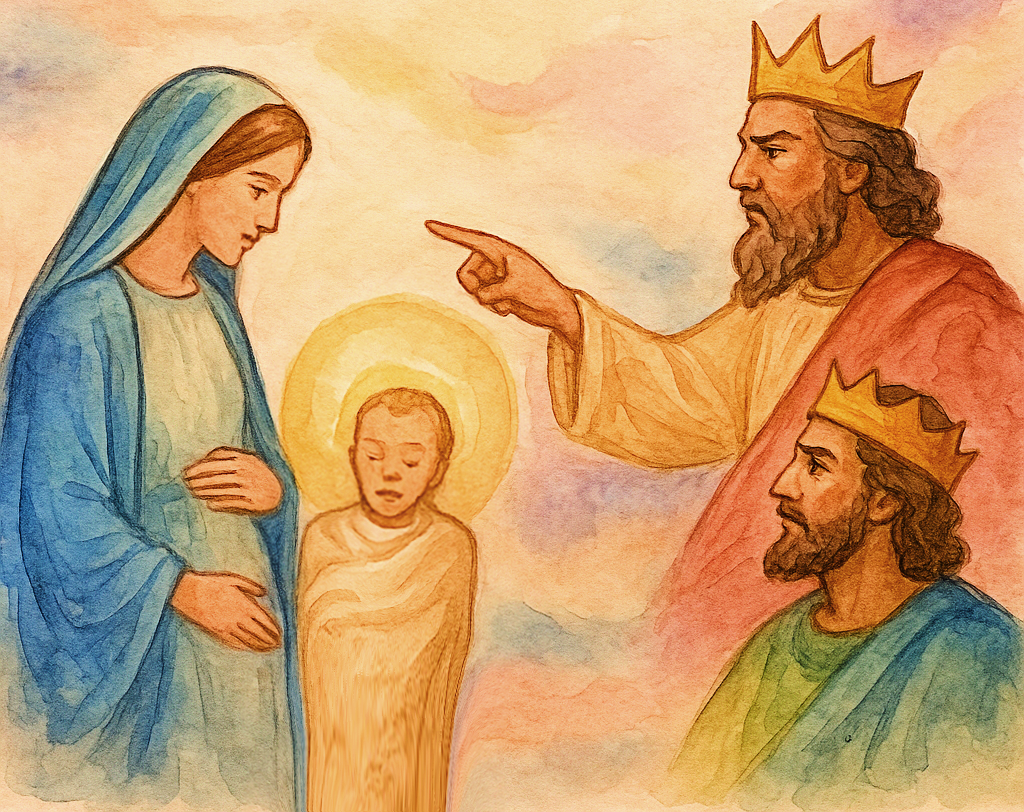
Explore the deeper meaning of Isaiah 7:14 and Psalm 2 in the context of the Law and the covenant. Does the prophecy of the virgin conception exclude the male role? How do ancient scriptures reconcile divine calling, marriage, and kingship?
Introduction
Isaiah 7:14 states:
“Behold, the virgin shall conceive and bear a son, and shall call his name Immanuel.”
This verse is often treated as a straightforward prophecy of Jesus' birth. But does it truly foretell a miraculous conception through the Holy Spirit, or have layers of interpretation blurred its meaning?
This article explores the theological, legal, and symbolic depth behind Isaiah’s words and their connection to Psalm 2, a central messianic psalm.
Isaiah 7:14 Contextual Prophecy or Supernatural Event?
Virgin means "young woman" or maiden, not necessarily a virgin by our modern definitions. In the context of Isaiah, it likely referred to a real woman in King Ahaz’s time, whose child would serve as a sign of Judah’s survival.
Later, Christian theology reinterprets this to refer to the Virgin Mary and Jesus. However, this reinterpretation introduces a non-explicit concept, the miraculous conception through the Holy Spirit, which is not found in Isaiah’s original prophecy.
Psalm 2: God’s Son and Messianic Authority
Psalm 2 complements Isaiah’s prophecy by presenting a divine declaration of kingship:
“The Lord said to me, ‘You are my Son; today I have begotten you.’”
Here, “Son” symbolizes a chosen king, not a supernaturally born individual. This reflects a royal installation of a king "begotten" by divine decree, not biology.
Continues:
“Ask of Me, and I will give You the nations as Your inheritance.”
The “Son” is the ruler of nations, a figure of divine authority, power, and covenant, not merely a newborn child of mystical origin.
Law: A Virgin Wife for the High Priest
Leviticus 21:13-14 states:
“He shall take a wife in her virginity… only a virgin of his people shall he take as his wife.”
This reveals the sacredness of union, not just the woman's virginity. The High Priest was required to marry a virgin, not because she was holy in her own right, but because the union was covenantal and pure.
This contradicts the notion that the absence of a man enhances sanctity. God’s law supports both male and female roles in fulfilling divine purposes.
The Danger of Ideological Extremes: Female Holiness vs. Male Guilt
Pagan traditions often elevated goddesses (Ishtar, Artemis, Cybele) as divine vessels while viewing male sexuality as impure. Some early Christian Gnostic sects adopted this view, exalting virginity and demonizing male participation in reproduction.
But this contradicts:
Psalm 2, where God’s “Son” rules with authority
Law, where male priesthood and covenantal union are sacred
Balance, where male and female together reflect the image of God (Genesis 1:27)
The Scriptures never elevate one sex over the other. They highlight divine partnership, not exclusion.
A Multi-Layered Prophecy
Isaiah 7:14 isn't just a supernatural teaser. It's a national sign, a guarantee that God is with His people. The virgin or young woman signifies faithfulness, while the child born (Immanuel) symbolizes hope and continuity.
Psalm 2 expands this vision with divine kingship:
“You are my Son,” a ruler, not merely an infant.
“Today I have begotten you,” a commission, not just a birth event.
The full prophetic meaning becomes clear when we see:
A faithful virgin (symbol of Israel or covenant purity)
A legitimate union (as prescribed by the Law)
A chosen Son (prophet, king, or messiah)
The enduring presence of God (Immanuel = “God with us”)
Conclusion: Divine Cooperation, Not Sex Exclusion
Isaiah 7:14, when seen alongside Psalm 2 and Leviticus 21, reveals a balanced theology:
Virginity is sacred, but so is holy union.
God calls both men and women into covenant.
The Messiah is not merely miraculously conceived, but divinely appointed.
When we strip away ideological misinterpretations, the Scriptures show us a deeper truth:
Sanctity is not about bypassing human nature but about fulfilling it within God’s order.
Man and woman together reflect the covenant and the Kingdom.

Ads
SubMeet


Ads

Rose


The Wall