
Dead Sea Scrolls Explained: Essene Rules, Prophecies, and Prayers Revealed from Vinci's blog
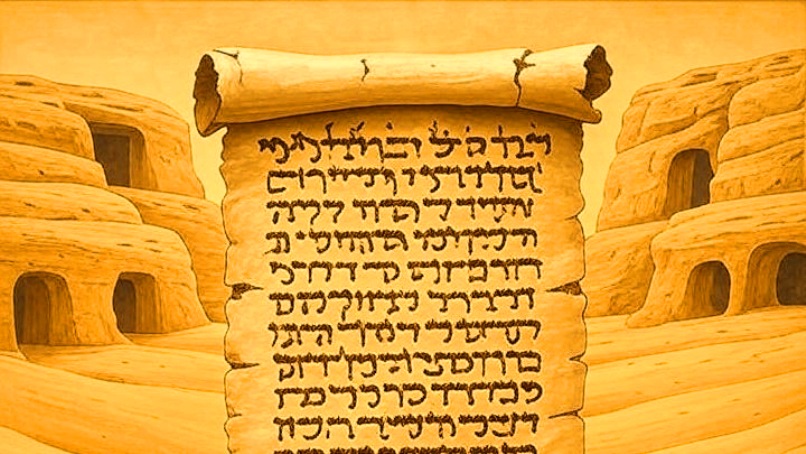
Discover the secrets of the Dead Sea Scrolls—rules, prayers, and prophecies from the Essene sect. Explore how these ancient texts shape our understanding of early Judaism, messianic hope, and biblical interpretation.
Discovered between 1947 and 1956 in the Qumran Caves near the Dead Sea, the Dead Sea Scrolls are regarded as one of the greatest archaeological discoveries of the 20th century. These ancient manuscripts—many of which are attributed to a Jewish sect known as the Essenes—provide unprecedented insight into the religious life, philosophy, and messianic expectations of a community that thrived during the Second Temple period.
In this article, we explore the Essenes’ strict community rules, prophetic commentaries on biblical texts, spiritual prayers, and their vision of the "last days." Whether you are a history enthusiast, religious scholar, or spiritual seeker, this guide helps unravel the deeper meanings embedded in the Qumran scrolls.
What Are the Dead Sea Scrolls?
The Dead Sea Scrolls comprise over 900 manuscripts and thousands of fragments, written primarily in Hebrew, Aramaic, and Greek, and dating from the 3rd century BCE to the 1st century CE. These include:
Copies of nearly all the books of the Hebrew Bible, except for Esther.
Apocryphal and pseudepigraphal texts.
Sectarian writings are unique to the Essenes.
Most scholars agree that the scrolls were composed, copied, or collected by the Essenes, a Jewish sect known for their communal living, ritual purity, and apocalyptic worldview. The Qumran site, where the scrolls were discovered, is believed to have housed a sectarian settlement that served as both a spiritual commune and a scriptural archive.
The Essene Rulebooks: Spiritual Discipline and Community Life
Two central documents reveal the disciplined lifestyle of the Essenes:
Community Rule (1QS)
This foundational text outlines the ethical code, hierarchy, initiation rituals, and daily conduct within the sect.
“This is the rule for those who enter the community to seek God. They must turn from all evil and walk in perfect obedience. They shall love the sons of light and hate the sons of darkness.”
— 1QS 5:1–3
The Essenes viewed existence through a stark dualism: "sons of light" (the righteous) vs "sons of darkness" (the impure or rebellious).
Damascus Document (CD / 4Q266)
This document, discovered in both Cairo Geniza and Qumran, addresses community structure and legal interpretations.
“Whoever breaks the covenant and acts with arrogance shall be expelled from the congregation."
— CD 2:12–13
These rules enforced purity, obedience, and moral accountability, reflecting the Essenes' belief in living as a holy remnant before the coming judgment.
Biblical Commentaries (Pesharim): Interpreting the End Times
The Essenes were not merely readers of scripture—they were interpreters, believing that biblical prophecies spoke directly to their time. Their commentaries, known as pesharim, apply prophetic writings to current events and future expectations.
Habakkuk Commentary (1QpHab)
This commentary reveals the sect’s view of a Teacher of Righteousness—possibly their founder or spiritual leader.
“The traitors will not believe the words of the Teacher of Righteousness. This refers to the final generation."
— 1QpHab 2:5–6
Genesis Commentary (4Q252)
This text links patriarchal blessings to messianic hope.
“Jacob will be blessed in the last days—this points to the Messiah, descendant of Jacob.”
— 4Q252 5:1–2
The Essenes saw themselves as a chosen group, living on the brink of a transformative age.
Prayers and Hymns: Spiritual Devotion in the Desert
The Dead Sea Scrolls also include deeply personal and communal prayers, notably the Thanksgiving Hymns (Hodayot) and Words of the Luminaries.
Thanksgiving Hymns (1QH)
Written in the first person, these hymns convey gratitude and divine intimacy.
“You have delivered me from the pit and raised me into Your light. I will praise You forever.”
— 1QH 10:14–15
Words of Prayer (4Q504)
A liturgical collection likely used during festivals or communal worship.
“Blessed are You, Lord, who guards the people of Your covenant. Extend Your mercy upon us.”
— 4Q504 1–2:5–6
These prayers reveal a theology rooted in grace, election, and divine guidance, resonating with contemporary spiritual traditions.
Messianic Prophecies: Awaiting Divine Redemption
A key element in Essene literature is messianism—the belief in a divinely appointed figure or figures who would bring justice, rebuild the Temple, and restore Israel.
Testimonia (4Q175)
This composite text quotes Deuteronomy, Numbers, and Psalms, framing them as messianic prophecies.
“God will raise a prophet like Moses who will speak His words. He shall deliver Israel in the last days.”
— 4Q175 1:9–11
Florilegium (4Q174)
A collection of texts foretelling the construction of a new, glorious temple.
“The temple of the last days will be the dwelling of God’s glory, fulfilling David’s prophecy.”
— 4Q174 1:11–12
Some scrolls refer to two messianic figures: a priestly Messiah from the line of Aaron and a royal Messiah from the line of David, indicating a complex eschatological vision.
Modern Research and New Discoveries
Between 2020 and 2021, new scroll fragments—containing Greek translations of Zechariah and Nahum—were discovered in the Cave of Horror in the Judean Desert. While not introducing new concepts, these findings enhance our understanding of the textual transmission of the Hebrew Bible.
Technological advancements like multispectral imaging, AI-assisted reconstruction, and DNA analysis of parchment are revolutionizing scroll research. The Leon Levy Dead Sea Scrolls Digital Library, in collaboration with the Israel Antiquities Authority and Google, provides open access to high-resolution images and translations.
Why the Dead Sea Scrolls Still Matter
Far from being relics of the past, the Dead Sea Scrolls offer valuable insights into the religious ferment of early Judaism, just before the rise of Christianity and Rabbinic Judaism. They help contextualize debates on law, prophecy, divine justice, and community life.
For spiritual seekers, the scrolls preserve a voice that is both ancient and timeless—one that speaks of a people striving for purity, faithfulness, and hope in an age of uncertainty.
Conclusion
The Dead Sea Scrolls continue to transform our understanding of the Bible, Jewish history, and early religious movements. Through their strict rules, inspired prayers, bold prophecies, and mystical commentaries, the Essenes left behind a profound legacy—one that invites modern readers to reflect on the eternal human quest for truth and divine connection.
Join the SubMeet community to discuss more on ancient prophecies, sacred texts, and modern spirituality!

Ads
SubMeet


Ads

Rose


The Wall