
SubMeet Blog Posts
Write your:
Biography, story, article or tidings.
Maximum 50.000  symbols (Depends on the browser) one post.
Maximum 10 posts per day, 100 posts per month, for one user.
We recommend using the Firefox browser to publish a post.



 Moder
ModerI AM THAT I AM
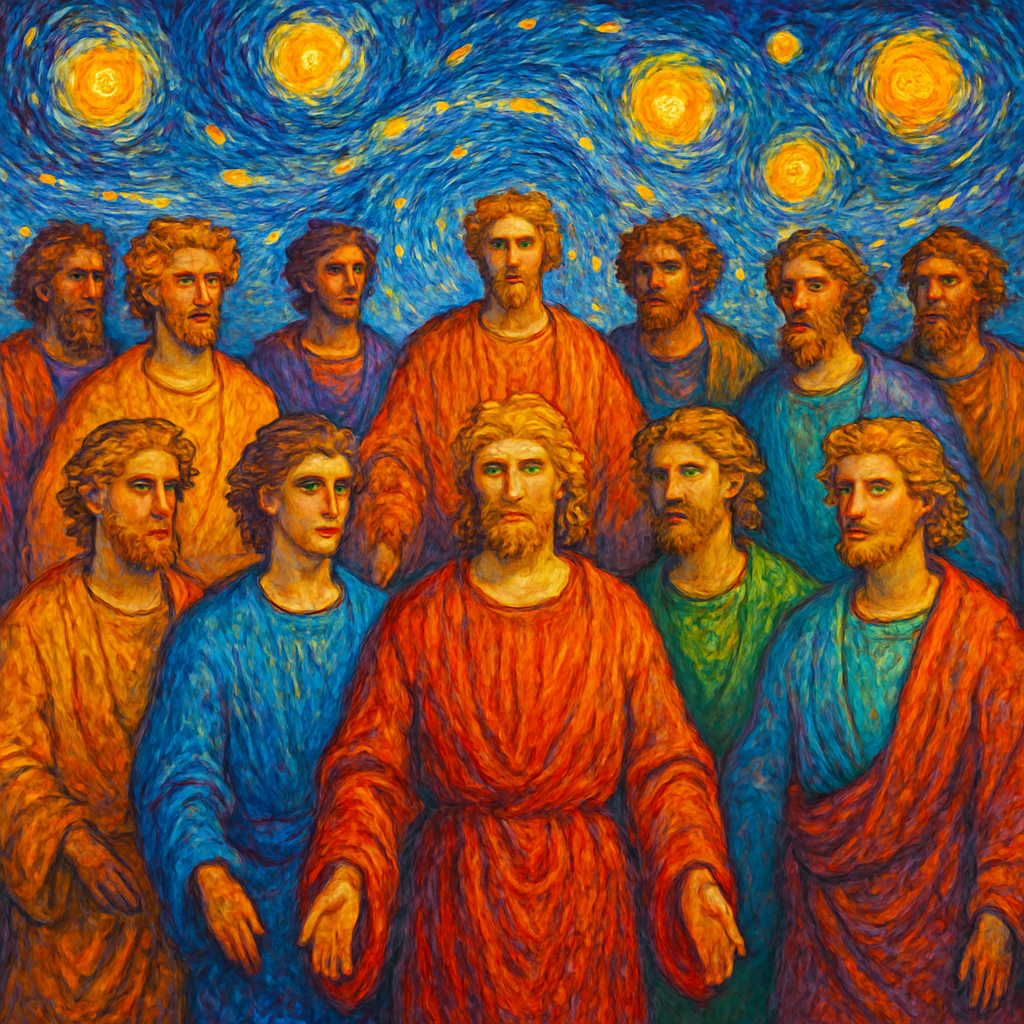
In studying the Holy Book and theology, few topics cause as much misunderstanding as God's name. One of the most sacred and powerful words in Scripture is YHWH (Hebrew: יהוה), often called the Tetragrammaton, meaning "four letters." But what does this name really mean? How is it used in different Bible versions? And why isn’t it tied to any specific religious group, like the Jehovah’s Witnesses, despite widespread confusion?
This article explores the meaning, translation, and spiritual significance of the divine name YHWH, while clearing up common modern misconceptions.
What Is YHWH?
YHWH is God's name revealed in the Hebrew Bible. It comes from the Hebrew verb "היה" (hayah), which means "to be" or "to exist." In Exodus 3:14, when Moses asks God His name, the reply is:
"Ehyeh Asher Ehyeh" – "I AM THAT I AM"
This directly links to YHWH, showing that God is:
Self-existent
Uncreated
Eternal
The source of all being
In short:
YHWH is an explanatory name, not a personal label like a human name.
It means:
"The One Who Is" – The Eternal Creator
Not a name given by parents, but the identity of the One who exists without beginning or end.
How Is YHWH Represented in Four Key Biblical Traditions?
The divine name YHWH appears differently across traditions and translations:
Masoretic Text (MT)
The traditional Hebrew Bible, preserved by Jewish scribes, writes the name as יהוה, but Jewish readers substitute it with Adonai (“Lord”) when reading aloud out of respect.
Septuagint (LXX)
This ancient Greek translation replaces YHWH with Kyrios (Lord), losing the personal name but maintaining a sense of authority.
King James Version (KJV)
This early English translation largely avoids "Jehovah" and instead uses LORD in all caps to show the divine name without pronouncing it. "Jehovah" appears in only a few verses.
Dead Sea Scrolls
These ancient Hebrew manuscripts from Qumran (around the 2nd century BCE) do preserve YHWH fully. In some scrolls, it is even written in Paleo-Hebrew script to set it apart and demonstrate reverence.
What About “Jehovah”? Is It the True Name of God?
No.
The word “Jehovah” is a medieval invention, mistakenly formed by combining the consonants of YHWH with the vowels of Adonai. The result was YeHoWaH, later Latinized as Jehovah.
While common today, this word is:
Linguistically incorrect
Historically absent from any ancient manuscript
Never spoken or written by Hebrew prophets.
Is YHWH Connected to Jehovah’s Witnesses?
Many believe that YHWH (or Jehovah) is primarily or exclusively associated with Jehovah’s Witnesses (a church that has no statehood), a religious group that emerged in the 19th century. This is not only wrong but also downplays the historical and theological depth of God's name.
The misuse of "Jehovah" by this group:
Does not reflect biblical linguistics or theology
It is based on a misunderstanding of ancient Hebrew grammar
Often casts a shadow over the true sacred name of God.
Important: The name YHWH belongs to no religious group.
It is not a label, a membership term, or the property of any sect.
It is the eternal name of the Creator, used in Scripture long before any modern church or denomination existed.
Theological Summary: Why YHWH Means “Creator”
When we say YHWH, we refer to the One who exists eternally, without beginning or end. The name implies:
Creator of everything
The one who causes all things to exist
Independent of time, space, and human origins
Therefore, YHWH is not a “given name,” like a child’s name from parents. It describes divine essence, rooted in the verb "to be"—making it the most meaningful name in all human language.
Final Thoughts
The sacred name YHWH (I AM THAT I AM), LORD, and Creator deserve respect, not confusion. It is not a trademark, sectarian term, or a mistranslated label. It is the eternal, self-existent name of the Creator, revealed to Moses, preserved in Scripture, and beyond all religions or organizations.
 Business
Roman Sources: A Glimpse of Jesus from Imperial Historians
Tacitus (c. 56-120 CE) One of Rome’s most respected historians, Tacitus, references Jesus in his Annals (Book 15, Chapter 44). Writing about Emperor Nero’s persecution of Christians, Tacitus identifies Jesus (“Christus”) as having been executed under Pontius Pilate during Emperor Tiberius’ reign. Tacitus describes Christianity as a "mischievous superstition" that originated in Judea and spread to Rome. Though critical, Tacitus confirms Jesus’ historical existence and his execution.
Suetonius (c. 69-122 CE) briefly mentions disturbances in Rome caused by followers of Chrestus in The Lives of the Twelve Caesars. Scholars widely interpret Chrestus as a reference to Christ, highlighting the early presence of Christianity in Rome.
Pliny the Younger (c. 61-113 CE) wrote letters to Emperor Trajan describing Christians worshiping Christ "as to a god." He details their moral integrity and refusal to worship Roman deities, illuminating early Christian practices and their reverence for Jesus.
Jewish Sources: Jesus Through a Jewish Lens
Josephus (c. 37-100 CE)The works of Josephus, a Jewish historian, contain two significant references to Jesus:
In Antiquities of the Jews (Book 18, Chapter 3), Josephus describes Jesus as a wise man and teacher who performed "surprising deeds" and was crucified under Pilate. This passage, known as the Testimonium Flavianum, acknowledges Jesus’ impact but has been subject to later Christian interpolation.
In Antiquities (Book 20, Chapter 9), Josephus refers to James as "the brother of Jesus who is called Christ," further affirming Jesus’ historical presence.
The Talmud Jewish rabbinic texts, such as the Talmud, mention a figure named Yeshu. These references are often critical, portraying him as leading people astray. Scholars debate whether "Yeshu" directly refers to Jesus of Nazareth, but the texts indicate awareness of a controversial figure and his following.
Early Christian Writings Beyond the Bible
The Didache, also known as The Teaching of the Twelve Apostles, is an early Christian document that outlines ethical teachings and worship practices, reflecting the influence of Jesus’ teachings on early communities.
Gnostic Texts: The Nag Hammadi library, discovered in 1945, includes writings such as The Gospel of Thomas and Philip. These texts focus on spiritual knowledge and emphasize Jesus’ role as a teacher rather than his crucifixion and resurrection.
The Apocryphal Gospels Non-canonical texts like The Infancy Gospel of Thomas and The Gospel of Peter add legendary and miraculous dimensions to Jesus’ life, offering alternative perspectives on his character and mission.
Other Historical Mentions
Mara bar Serapion, a Syriac philosopher, wrote a letter mentioning a "wise king" who was executed by his people. Many interpret this as a reference to Jesus, linking his execution to the downfall of the Jewish nation.
Lucian of Samosata (c. 125-180 CE)A Greek satirist, Lucian mocks Christians for worshiping a crucified leader. While disdainful, his writings affirm the early Christian devotion to Jesus.
Common Themes Across Historical Sources
Existence and Execution: Most sources agree that Jesus was a real person executed under Pontius Pilate.
A Teacher with Followers: Jesus is often described as a wise teacher with a growing movement.
Christian Practices: Early Christians are depicted as devoted, worshiping Jesus as divine.
Controversy: Jesus’ life and teachings elicited mixed reactions, from admiration to hostility.
Here are a few notable passages from The Gospel of Thomas, The Gospel of Philip, The Infancy Gospel of Thomas, and The Gospel of Peter.
1. The Gospel of Thomas
Saying 1:
"Whoever discovers the interpretation of these sayings will not taste death."
Saying 77:
"Jesus said, 'I am the light that is over all things. I am all: from me, all came forth, and to me all attained. Split a piece of wood; I am there. Lift the stone, and you will find me there.'"
2. The Gospel of Philip
Excerpt on Knowledge and Ignorance:
"Ignorance is the mother of all evils. Ignorance will result in death because those who come from ignorance neither were nor are nor shall be."
Excerpt on the Nature of Jesus:
"The companion of the Savior is Mary Magdalene. But Christ loved her more than all the disciples and used to kiss her often on her [mouth]."
3. The Infancy Gospel of Thomas
Jesus Brings Clay Birds to Life:
"When this boy Jesus was five years old, he was playing at the ford of a stream. He made soft clay and shaped it into twelve sparrows. ... But Jesus clapped his hands and cried to the sparrows, ‘Be gone!’ And the sparrows took flight and went away chirping."
Jesus Strikes a Boy Dead (and Later Revives Him):
"The son of Annas the scribe came and took a branch and dispersed the water which Jesus had gathered. When Jesus saw what had happened, he was enraged and said to him: 'You insolent, godless dunderhead, what harm did the pools and the water do to you? See now, you shall also wither like a tree and shall bear neither leaves nor root nor fruit.'"
4. The Gospel of Peter
The Crucifixion:
"And they brought two criminals and crucified the Lord between them. But he kept silent as if he felt no pain. And when they had set up the cross, they wrote upon it: 'This is the King of Israel.'"
The Resurrection:
"And in the night in which the Lord's day dawned, while the soldiers were keeping guard two by two in every watch, there was a great voice in heaven; and they saw the heavens opened, and two men descending from there in great brightness. ... And the stone which had been laid against the entrance to the sepulcher started of itself to roll away."
Why These Sources Matter
The non-biblical references to Jesus provide independent confirmation of his historical existence. They also highlight how his life and influence extended beyond religious texts, impacting Roman governance, Jewish society, and the formation of early Christian communities. While interpretations vary, these accounts enrich our understanding of Jesus as a historical figure.
Conclusion
From Roman historians like Tacitus to Jewish chroniclers like Josephus, diverse sources attest to Jesus's life, teachings, and the early Christian movement. These accounts offer a multifaceted view of Jesus, bridging history and faith.
If you’re intrigued by historical insights about Jesus, share this article and join the conversation about one of history’s most influential figures!
Business
In the vast expanse of the universe, mysteries abound, captivating the human imagination and driving scientific inquiry. Modern Astrophysics, a field at the forefront of exploration, delves deep into understanding the origin, size, and age of the universe, unraveling the complexities of stars, galaxies, and nebulae. In this article, we embark on a journey through the cosmos, exploring the theories, methodologies, and evidence that shape our understanding of the universe.
In the Bible, several passages allude to the universe and celestial phenomena, including nebulae. The Bible mentions the nebulae as: "waters above the heavens" (already filtered waters).
Psalm 148:4
Praise Him, you heavens of heavens,
And you waters above the heavens!
Genesis 1:1-2: This opening passage of the Bible speaks to the creation of the universe by God, setting the stage for the subsequent account of creation.
Psalm 19:1-2: This poetic passage from the Psalms emphasizes the majesty and beauty of the heavens as a testament to God's creative power and wisdom.
Isaiah 40:26: Here, Isaiah describes God as the creator of the stars and celestial bodies, emphasizing His sovereignty over the cosmos.
Job 9:9: This verse from the book of Job references various celestial objects and constellations, highlighting the diversity and wonder of God's creation.
These passages invite readers to contemplate the grandeur of creation and to recognize the divine hand behind it.
Theory of Modern Astrophysics:
Origin, Size, and Age of the Universe:
The origin of the universe remains one of the most profound questions in astrophysics. Several theories, including the Big Bang theory and inflationary cosmology, offer explanations for the universe's birth, expansion, and evolution over billions of years. Observations of the cosmic microwave background radiation provide compelling evidence supporting the Big Bang theory, revealing the universe's early stages and its subsequent expansion.
Astrophysicists estimate the size of the observable universe to be approximately 93 billion light-years in diameter, encompassing countless galaxies, stars, and cosmic structures. Through advanced telescopes and observational techniques, scientists peer deep into space and time, unraveling the vastness of the cosmos and its ancient origins.
Measurement of Stars:
Stars, the celestial beacons that illuminate the night sky, hold vital clues to understanding the universe's dynamics. Astrophysicists employ various methods to measure stars, including parallax, spectroscopy, and photometry. Parallax, based on the apparent shift of a star's position relative to background objects as Earth orbits the Sun, allows scientists to calculate stellar distances accurately.
Spectroscopy reveals valuable information about a star's composition, temperature, and movement through the analysis of its emitted light spectrum. Brightness and volume measurements further contribute to understanding stellar properties, aiding in the classification and characterization of stars across the cosmic landscape.
Counting Stars:
Counting the number of stars in the universe presents a formidable challenge due to its vastness and complexity. Astrophysicists utilize statistical methods and observational data to estimate the abundance of stars within galaxies, galaxy clusters, and stellar populations. By analyzing star formation rates, luminosity functions, and galactic structures, scientists infer the total number of stars in the observable universe, numbering in the billions of trillions.
Types of Galaxies:
Galaxies, vast assemblies of stars, gas, and dust, exhibit a diverse range of shapes, sizes, and compositions. Common types include spiral galaxies, characterized by their pinwheel-like arms, elliptical galaxies, with smooth, oval shapes, and irregular galaxies, displaying chaotic structures. Additionally, astronomers classify galaxies based on their activity levels, such as active galactic nuclei and starburst galaxies, shedding light on their evolution and dynamics.
Types of Nebulae:
Nebulae, clouds of gas and dust scattered throughout the cosmos, serve as stellar nurseries, where new stars form and old stars meet their demise. The main types include emission nebulae, glowing with the light of energized gas, reflection nebulae, reflecting starlight off surrounding dust, and planetary nebulae, the remnants of dying stars. Studying nebulae provides insights into stellar birth, evolution, and the recycling of matter within galaxies.
Evolution of Life:
The evolution of life in the universe represents a captivating intersection of astrophysics, biology, and planetary science. While the origins of life remain a subject of ongoing research, astronomers search for habitable exoplanets within the habitable zone of stars, where conditions may support liquid water and potentially life-sustaining environments. By studying planetary systems and astrobiology, scientists explore the cosmic possibilities of life beyond Earth.
Theory as Evidence:
In astrophysics, theories serve as frameworks for understanding the universe, guiding research and exploration. Validating theories relies on empirical evidence gathered through observations, experiments, and computational models. While theories undergo scrutiny and refinement over time, their validity hinges on their ability to explain observational data and make testable predictions. Through rigorous testing and peer review, astrophysical theories continue to evolve, shaping our understanding of the cosmos.
 Marshal
Psalm 5:4 For You are not a God who takes pleasure in wickedness, Nor shall evil dwell with You. 12 For You, O Lord, will bless the righteous; With favor You will surround him as with a shield.
Psalm 6:1 O Lord, do not rebuke me in Your anger, Nor chasten me in Your hot displeasure. 2 Have mercy on me, O Lord, for I am weak; O Lord, heal me, for my bones are troubled. 10 Let all my enemies be ashamed and greatly troubled; Let them turn back and be ashamed suddenly.
Psalm 9:15 The nations have sunk down in the pit which they made; In the net which they hid, their own foot is caught. 17 The wicked shall be turned into hell, And all the nations that forget God. 18 For the needy shall not always be forgotten; The expectation of the poor shall not perish forever.
Psalm 16:10 For You will not leave my soul in Sheol, Nor will You allow Your Holy One to see corruption. 11 You will show me the path of life; In Your presence is fullness of joy; At Your right hand are pleasures forevermore.
Psalm 18:18 They confronted me in the day of my calamity, But the Lord was my support. 19 He also brought me out into a broad place; He delivered me because He delighted in me. 34 He teaches my hands to make war, So that my arms can bend a bow of bronze. 35 You have also given me the shield of Your salvation; Your right hand has held me up, Your gentleness has made me great. 36 You enlarged my path under me, So my feet did not slip. 44 As soon as they hear of me they obey me; The foreigners submit to me.
Psalm 19:9 The fear of the Lord is clean, enduring forever; The judgments of the Lord are true and righteous altogether. 10 More to be desired are they than gold, Yea, than much fine gold; Sweeter also than honey and the honeycomb.
Psalm 22:15 My strength is dried up like a potsherd, And My tongue clings to My jaws; You have brought Me to the dust of death. 16 For dogs have surrounded Me; The congregation of the wicked has enclosed Me. They pierced My hands and My feet;
Psalm 25:3 Indeed, let no one who waits on You be ashamed; Let those be ashamed who deal treacherously without cause. 4 Show me Your ways, O Lord; Teach me Your paths. 6 Blessed be the Lord, Because He has heard the voice of my supplications! 7 The Lord is my strength and my shield; My heart trusted in Him, and I am helped; Therefore my heart greatly rejoices, And with my song I will praise Him.
Psalm 28:8 The Lord is their strength, And He is the saving refuge of His anointed. 9 Save Your people, And bless Your inheritance; Shepherd them also, And bear them up forever.
Psalm 31:23 Oh, love the Lord, all you His saints! For the Lord preserves the faithful, And fully repays the proud person. 24 Be of good courage, And He shall strengthen your heart, All you who hope in the Lord.
Psalm 33:13 The Lord looks from heaven; He sees all the sons of men. 14 From the place of His dwelling He looks On all the inhabitants of the earth; 15 He fashions their hearts individually; He considers all their works. 16 No king is saved by the multitude of an army; A mighty man is not delivered by great strength. 17 A horse is a vain hope for safety; Neither shall it deliver any by its great strength.
Tag Search

Ads
SubMeet


Ads

Rose

