
SubMeet Blog Posts
Write your:
Biography, story, article or tidings.
Maximum 50.000  symbols (Depends on the browser) one post.
Maximum 10 posts per day, 100 posts per month, for one user.
We recommend using the Firefox browser to publish a post.



 Business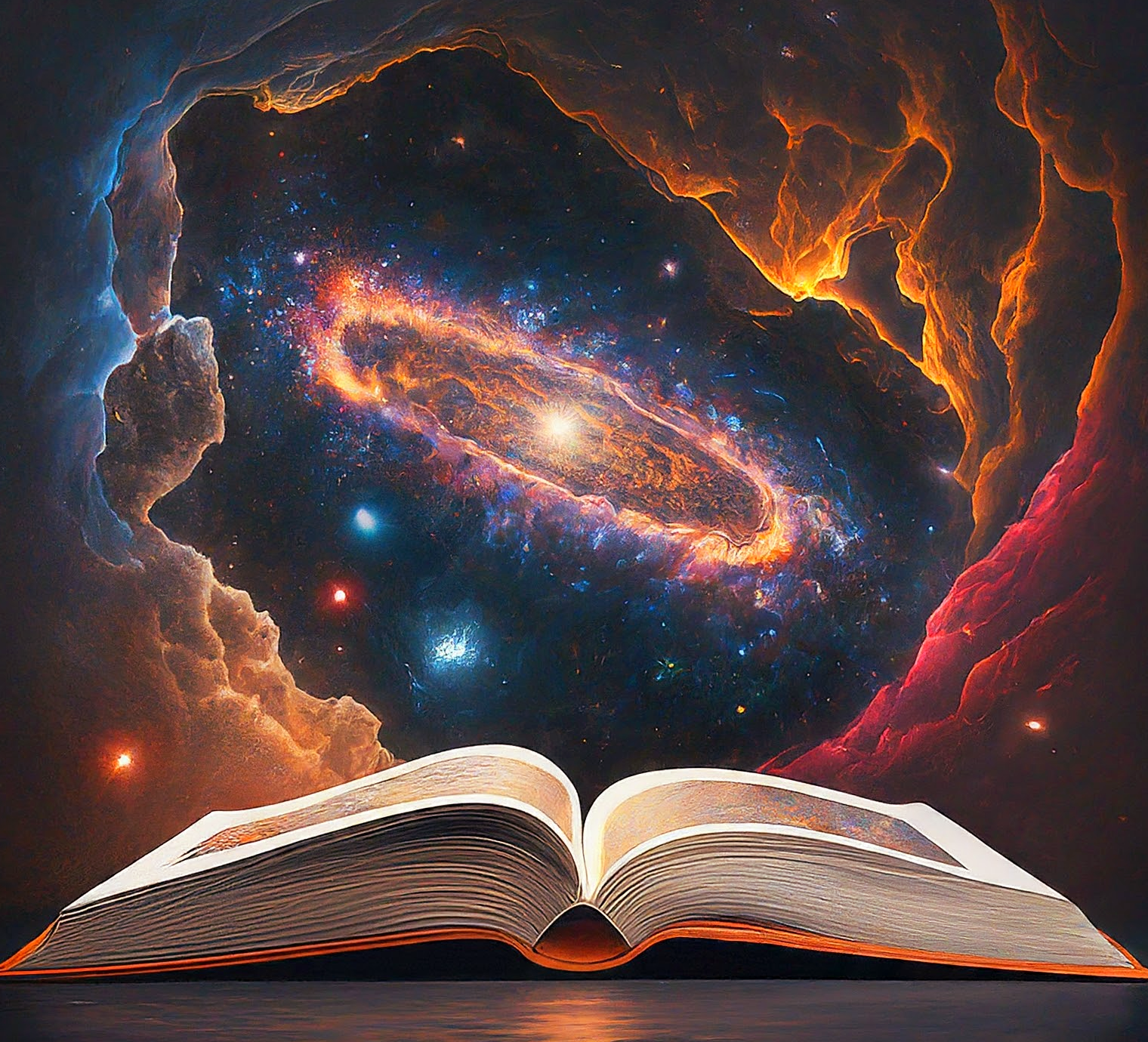
In the vast expanse of the universe, mysteries abound, captivating the human imagination and driving scientific inquiry. Modern Astrophysics, a field at the forefront of exploration, delves deep into understanding the origin, size, and age of the universe, unraveling the complexities of stars, galaxies, and nebulae. In this article, we embark on a journey through the cosmos, exploring the theories, methodologies, and evidence that shape our understanding of the universe.
In the Bible, several passages allude to the universe and celestial phenomena, including nebulae. The Bible mentions the nebulae as: "waters above the heavens" (already filtered waters).
Psalm 148:4
Praise Him, you heavens of heavens,
And you waters above the heavens!
Genesis 1:1-2: This opening passage of the Bible speaks to the creation of the universe by God, setting the stage for the subsequent account of creation.
Psalm 19:1-2: This poetic passage from the Psalms emphasizes the majesty and beauty of the heavens as a testament to God's creative power and wisdom.
Isaiah 40:26: Here, Isaiah describes God as the creator of the stars and celestial bodies, emphasizing His sovereignty over the cosmos.
Job 9:9: This verse from the book of Job references various celestial objects and constellations, highlighting the diversity and wonder of God's creation.
These passages invite readers to contemplate the grandeur of creation and to recognize the divine hand behind it.
Theory of Modern Astrophysics:
Origin, Size, and Age of the Universe:
The origin of the universe remains one of the most profound questions in astrophysics. Several theories, including the Big Bang theory and inflationary cosmology, offer explanations for the universe's birth, expansion, and evolution over billions of years. Observations of the cosmic microwave background radiation provide compelling evidence supporting the Big Bang theory, revealing the universe's early stages and its subsequent expansion.
Astrophysicists estimate the size of the observable universe to be approximately 93 billion light-years in diameter, encompassing countless galaxies, stars, and cosmic structures. Through advanced telescopes and observational techniques, scientists peer deep into space and time, unraveling the vastness of the cosmos and its ancient origins.
Measurement of Stars:
Stars, the celestial beacons that illuminate the night sky, hold vital clues to understanding the universe's dynamics. Astrophysicists employ various methods to measure stars, including parallax, spectroscopy, and photometry. Parallax, based on the apparent shift of a star's position relative to background objects as Earth orbits the Sun, allows scientists to calculate stellar distances accurately.
Spectroscopy reveals valuable information about a star's composition, temperature, and movement through the analysis of its emitted light spectrum. Brightness and volume measurements further contribute to understanding stellar properties, aiding in the classification and characterization of stars across the cosmic landscape.
Counting Stars:
Counting the number of stars in the universe presents a formidable challenge due to its vastness and complexity. Astrophysicists utilize statistical methods and observational data to estimate the abundance of stars within galaxies, galaxy clusters, and stellar populations. By analyzing star formation rates, luminosity functions, and galactic structures, scientists infer the total number of stars in the observable universe, numbering in the billions of trillions.
Types of Galaxies:
Galaxies, vast assemblies of stars, gas, and dust, exhibit a diverse range of shapes, sizes, and compositions. Common types include spiral galaxies, characterized by their pinwheel-like arms, elliptical galaxies, with smooth, oval shapes, and irregular galaxies, displaying chaotic structures. Additionally, astronomers classify galaxies based on their activity levels, such as active galactic nuclei and starburst galaxies, shedding light on their evolution and dynamics.
Types of Nebulae:
Nebulae, clouds of gas and dust scattered throughout the cosmos, serve as stellar nurseries, where new stars form and old stars meet their demise. The main types include emission nebulae, glowing with the light of energized gas, reflection nebulae, reflecting starlight off surrounding dust, and planetary nebulae, the remnants of dying stars. Studying nebulae provides insights into stellar birth, evolution, and the recycling of matter within galaxies.
Evolution of Life:
The evolution of life in the universe represents a captivating intersection of astrophysics, biology, and planetary science. While the origins of life remain a subject of ongoing research, astronomers search for habitable exoplanets within the habitable zone of stars, where conditions may support liquid water and potentially life-sustaining environments. By studying planetary systems and astrobiology, scientists explore the cosmic possibilities of life beyond Earth.
Theory as Evidence:
In astrophysics, theories serve as frameworks for understanding the universe, guiding research and exploration. Validating theories relies on empirical evidence gathered through observations, experiments, and computational models. While theories undergo scrutiny and refinement over time, their validity hinges on their ability to explain observational data and make testable predictions. Through rigorous testing and peer review, astrophysical theories continue to evolve, shaping our understanding of the cosmos.
 VIP
VIP
Unlocking the ancient tales and cosmic wonders woven into the fabric of our universe
The vast expanse of the cosmos has captivated humanity's imagination since time immemorial. One of the most enchanting aspects of the night sky is the presence of nebulae, celestial clouds of gas, water, and dust (soil) that come in a breathtaking array of colors and shapes. Throughout history, these cosmic wonders have inspired myths, legends, and poetic descriptions across various cultures.
Let's embark on a journey through time and space as we explore famous nebulae and the captivating stories that have been spun around them. Along the way, we'll hear from individuals whose lives have been touched by the beauty and mystery of these celestial marvels.
1. The Orion Nebula:
Mythological Association: In the heart of the Orion constellation lies the Orion Nebula. In Greek mythology, Orion was the legendary hunter.
In Greek mythology, Orion was a giant hunter who was eventually placed among the stars as the constellation Orion. According to one myth, Orion was stung by a scorpion and killed, which led to the placement of the constellation Scorpius (Scorpio) opposite Orion in the sky. As astrophotographer Lisa Williams observes, "When I look at the Orion Nebula, I can't help but feel a connection to the ancient tale of Orion the hunter. It's like gazing into the very soul of the cosmos."
2. The Eagle Nebula:
Mythological Association: The Eagle Nebula's iconic "Pillars of Creation" resemble giant cosmic pillars. Dr. James Carter, an astrophysicist, says, "While not tied to mythology, the Eagle Nebula has this grandeur that evokes a sense of celestial artistry. It's a canvas where stars are born."
3. The Horsehead Nebula:
Mythological Association: Though not rooted in ancient myths, the Horsehead Nebula's striking horsehead shape has fueled the imagination of astronomers. Dr. Sarah Reynolds, an astronomer, muses, "There's an allure in the nebulous depths of space. The Horsehead Nebula reminds us that cosmic beauty knows no bounds."
4. The Crab Nebula:
Mythological Association: Named after its resemblance to a crab's claw, the Crab Nebula is a testament to the universe's dynamism. Historian and astronomer Robert Clarke remarks, "The Crab Nebula's explosive history is a reminder of the ever-changing nature of the cosmos, witnessed by ancient cultures and modern science alike."
5. The Lagoon Nebula:
Mythological Association: The Lagoon Nebula resides in the Sagittarius constellation. Dr. Emily Turner, an archaeoastronomer, explains, "Sagittarius carries the legacy of ancient centaur myths. While the Lagoon Nebula itself isn't mythological, it shares the cosmic stage with celestial tales."
6. The Helix Nebula:
Mythological Association: Often likened to the "Eye of God" or the "Eye of Sauron," the Helix Nebula inspires imaginative connections. Sci-fi enthusiast Mark Anderson enthuses, "It's like a gateway to the unknown. The Helix Nebula hints at the infinite possibilities that await us in the universe."
The Birth of Stars from Nebulae:
Nebulae are more than just breathtaking spectacles; they are cosmic nurseries where stars are born. This incredible process begins with the gravitational collapse of a region within a nebula. Here's how it unfolds:
Gravitational Instability: Within a dense region of a nebula, gravitational forces overcome the outward pressure of gas, water, and dust (soil), causing the region to contract and condense.
Protostar Formation: This protostar is in its infancy, surrounded by a rotating disk of material.
Nuclear Fusion Ignition: When the core temperature and pressure reach a critical point, nuclear fusion reactions ignite. Hydrogen atoms fuse together to form helium, releasing an immense amount of energy in the form of light and heat.
Emergence of a Star: The star enters the main sequence phase, where it will shine for ten thousand to one hundred thousand years.
As we journey through the cosmos, we discover that the stories surrounding these nebulae blend the rich tapestry of human history with the infinite mysteries of the universe. From ancient myths to contemporary wonders, these cosmic clouds continue to inspire awe and wonder among stargazers and scientists alike. With every gaze into the night sky, we are reminded that the cosmos is not only a scientific frontier but also a wellspring of creativity and imagination.
 Admin
Admin
It is probably worth starting with an anecdote. Elephants meet a lion and one of them asks the lion - Who are you?, and the lion replies that he is a king, the elephants laugh and reply to the lion saying - If you are a king then why are you so small?
In this anecdote, the elephants are the astronomers or astrophysicists and the lion is the universe.
However, one should not conclude from this anecdote that if the stars are not very large, then they are very small, but one should adhere to the rule of the golden mean in astronomy or in astrophysics.
First of all, let's start with the fact that the Universe "works" like a mechanical clock (+ fast spiral and reverse orbit (keeping the Sun (rotation (in 24 hours) of the Sun around the Earth) at an "curved" equal distance from Earth) or + circular inclined orbit (annual rotation of the Sun 'along' the "Zodiac" (but the stars are "fixed" in their places, and the planets (cold stars) are mobile around the Earth, and there are also other "rotations" and cold stars in the Universe)), two options (in both cases the Earth is located "near" the center of the Universe, has a fixed area. Earth is like a pearl (there is no second)): or - or, in the first option, the rotation of the Earth around its axis at a slow rate is possible, in the second option, the fast rotation of the Earth around its axis; in 24 hours (slightly slowly (counterclockwise))), to which the Copernican Solar System does not correspond. The motions of the Universe cannot be fictional and irregular; in music it's called Jazz, may also be called "astronomical faith". The dimensions of the Universe can be compared to the Pyramid of Cheops, provided that the granite sarcophagus of the King's Chamber is the Earth (this means that this is sealed information, if the sarcophagus (although it is not a sarcophagus) were like a ball, then many people would understand that we are talking about the Earth, although Copernicus (his theory) has "blinded" everyone indiscriminately). The expansion or contraction of the Universe is also cyclical and "mechanical", and "births" and "explosions" also occur in the Universe from time to time.
Let's start with the fact that the Sun is two or three times bigger than the Moon and is just as far away (the radius of the Sun is not 109 times greater than the radius of the Earth and the Sun is not an "ordinary" star). We only see one side of the Sun.
It must also be emphasized that the so-called planets are unusual stars (they are cold stars).
After all this, one may wonder, where did the galaxies and nebulae go?
Galaxies are stellar clouds or clusters (not that big and light years away), while nebulae are filtered and frozen water (for stars).
Earth waters (ocean, sea, river) were taken, filtered, and sent from nebulae (in the beginning, the nebulae had another mixture, composition, and temperature with the ground, nebulae were an original mix with oxygen (and water); for creating the Earth, Sun, Moon, stars, and people). Figuratively speaking, the Earth fell from universe, from the nebulae.
Dark Matter and Dark Energy in the Universe is a possible "material" (it's not that big of a space), but it is not God or the Creator.
About Dark Matter or Dark Energy, the Bible says - Job 38:19 Where is the way where light dwelleth? and as for darkness, where is the place thereof, 20 That thou shouldest take it to the bound thereof, and that thou shouldest know the paths to the house thereof?
What is beyond the Universe, Dark Matter, Dark Energy, and Black Holes? (an extended round (containing the Universe, Dark Matter, Dark Energy, and Black Holes) area or a separate 3D triangular area); God is there with His "rules".
The Big Bang theory, according to astrophysicists, which was the first starting "Point" or the second starting "Point" (or so on), for the origin of our Universe; "Point" with compressed time and space, then in what time and what space (area) was located this "Point" before Big Bang, before the origin of the Universe? (the main secret of the Universe is space (area)). It's like putting two mirrors in front of each other (reflections, where there is no space (area)). And in general, where is our Universe located? so that it is not "lost"! the correct answer is: before God.
Tag Search

Ads
SubMeet


Ads

Rose

