
SubMeet Blog Posts
Write your:
Biography, story, article or tidings.
Maximum 50.000  symbols (Depends on the browser) one post.
Maximum 10 posts per day, 100 posts per month, for one user.
We recommend using the Firefox browser to publish a post.



 Admin
Admin
Introduction: A New Vision of the Universe
The universe, as described by modern astrophysics, is vast, expanding, and largely incomprehensible due to its scale and complexity. In the Copernican model, the Sun is 109 times larger than Earth, and planets revolve around it in a heliocentric system. However, alternative models of the universe provide us with new perspectives that suggest a more ordered, compact, and purposeful design - where God, as the Creator, resides outside of the known universe (though space is not essential to Him).
This article will explore an alternate understanding of the universe. Here, the universe is not an endless expanse, but a structured, mechanical system with an Earth at its center (Near the center. The Earth may have some movement like the winch of a mechanical wall clock (slower).). Celestial bodies operate according to divine laws, and God governs from a larger triangular space outside this universe. Let us delve into this alternate model, the redefined role of celestial bodies, and the significance of galaxies, nebulae, Dark Matter, and Dark Energy (the so-called).
The Clockwork Universe and Earth’s Central Role
The Divine Mechanism: A Smaller, More Ordered Cosmos
In this alternate version of the universe, we see a compact, structured cosmos that functions like a finely tuned mechanical clock. The universe is far smaller and more ordered than what Copernican astronomy and modern astrophysics propose. Unlike the heliocentric model where Earth is just one of many planets orbiting a distant Sun, this model places Earth at the center (near the center) of the universe.
The Sun, rather than being a massive star located millions of miles away, is much closer to Earth. It is approximately two to three times larger than Earth, compared to the astrophysical assumption that the Sun’s radius is 109 times greater than that of Earth. In this model, the Sun is unique, not an ordinary star. It follows a controlled spiral orbit around Earth, rotating once every 24 hours (there is also another rotating option). The Sun’s size, proximity, and movement are all designed with purpose, reflecting the divine order of this smaller universe (relatively small). Interestingly, we only see one side of the Sun, which remains ever-present and fixed in its orbit around Earth.
Cold Stars and Hot Stars: Redefining Planets and Stars
In this compact universe, celestial bodies do not adhere to the standard definitions used in modern astronomy. The planets that we know of - Mars, Jupiter, Saturn, or another planet in the universe supposedly similar to Earth - are actually "cold stars" in this model. These cold stars do not emit heat like the Sun but are still mobile and orbit Earth in their respective paths. In contrast, the traditional stars we see in the night sky are "hot stars," which produce their own light and energy. However, they are not the enormous, distant suns we assume them to be. Instead, they are approximately twice the size of the Earth, significantly smaller and much closer than what is described by modern astrophysics.
This radical redefinition of celestial bodies creates a more cohesive and understandable cosmos. The universe is not an endless expanse of distant planets and stars, but a tightly knit structure where all objects play a meaningful role in maintaining the system's order.
The Compact Universe: Dimensions and Divine Purpose
The size of this alternate universe is drastically reduced compared to the vast, infinite model proposed by astrophysics. To better understand its scale, we can draw an analogy to the Great Pyramid of Giza. In this analogy, Earth occupies the position of the granite sarcophagus in the King’s Chamber (If the sarcophagus is the fully compressed sphere), while the rest of the universe is the pyramid itself. This analogy emphasizes that the universe is finite, with each celestial body serving a specific function, contributing to the harmonious operation of the cosmic system.
Unlike the vastness of modern cosmology, where stars are light-years away and galaxies are separated by unimaginable distances, this new model presents a manageable, compact universe. Every celestial body operates under divine order, with Earth holding a central position in God’s grand design. This smaller, structured universe invites us to rethink the scale of creation and our place within it.
Galaxies, Nebulae, and the Origin of Earth’s Waters
Galaxies: Closer and More Contained
In modern astrophysics, galaxies are immense systems composed of billions of stars, often separated by millions of light-years from each other. However, in this alternate universe, the concept of galaxies is far more accessible and simplified. Rather than being distant, far-reaching clusters of stars and cosmic matter, galaxies are reimagined as smaller, closer stellar clouds. These clusters are not light-years away, but exist within a more condensed universe, occupying a space that is easier to comprehend and manage.
The galaxies in this alternate universe are not vast, unreachable cosmic entities. They are part of the same structured, clockwork-like universe that is held together by divine laws. Their proximity to Earth and each other plays a critical role in maintaining the harmony of the entire system. This intimate placement emphasizes the structured nature of the universe, where celestial bodies remain within reach, contributing to a greater cosmic order rather than existing in isolation.
Nebulae: The Source of Water and Creation
One of the most striking differences in this alternate universe is the role that nebulae play. Rather than being mere clouds of gas and dust floating in the expanse of space, nebulae have a more significant and purposeful function - they are the source of water and life on Earth.
In this model, nebulae are not far-off, mysterious objects. Instead, they contain filtered and frozen water, essential for the formation of stars and planets. The nebulae are not just reservoirs of cosmic material, but they are directly involved in the creation of Earth and other celestial bodies. At the beginning of the universe, nebulae had a different mixture of elements, including oxygen and water, which contributed to the creation of Earth, the Sun, the Moon, stars, and even people.
This divine design suggests that the waters of Earth - the oceans, seas, rivers, and lakes - originated from these nebulae. Earth’s waters were not simply part of the planet’s geological processes, as we understand them in modern science, but were sent from nebulae, filtered and prepared by the Creator for sustaining life on Earth. The original nebulae had a different composition and temperature, helping to form the foundation of life and the very existence of Earth. Figuratively speaking, the Earth "fell" from the universe, descending from the nebulae, rich with life-giving water and other elements essential for creation.
Dark Matter, Dark Energy, and the Divine Order Beyond the Universe
Dark Matter and Dark Energy: Cosmic Mysteries or Divine Materials?
In modern astrophysics, Dark Matter and Dark Energy are considered some of the greatest enigmas of the universe. They are believed to make up approximately 85% of the total mass of the universe, yet they remain invisible and undetectable by traditional means. Dark Matter is thought to exert gravitational forces, while Dark Energy is believed to be driving the expansion of the universe. But in this alternate, divinely structured universe, Dark Matter and Dark Energy take on a different meaning.
In this model, Dark Matter and Dark Energy are not vast, incomprehensible forces spread across the cosmos. Instead, they are a possible "material" that exists in limited spaces, serving a divine purpose. They are part of the intricate design of the universe but are not the governing forces behind creation. Unlike the view in modern science, where Dark Matter and Dark Energy seem to operate beyond human understanding, this model suggests they exist under God’s control, playing a supportive role in the function of the universe.
As described in the Bible, in Job 38
19 Where is the way where light dwelleth? and as for darkness, where is the place thereof,
20 That thou shouldest take it to the bound thereof, and that thou shouldest know the paths to the house thereof?
This passage implies that even darkness, whether in the form of Dark Matter or Dark Energy, has a defined place and purpose within God’s creation. These materials may fill the spaces between stars and galaxies, contributing to the balance of the cosmos. However, they are not the ultimate force that sustains the universe - God is.
The Role of Black Holes and the Edge of the Universe
One of the most perplexing aspects of modern astrophysics is the existence of black holes - regions of space where gravity is so intense that even light cannot escape. While black holes remain largely unexplained, in this alternate view of the universe, they can be seen as mechanisms within God’s cosmic system. Black holes might serve as portals or boundaries between different parts of the universe, containing and regulating energy and matter in ways that are essential to the universe’s function.
What Lies Beyond the Universe? The Triangular Realm of God
One of the most significant ideas in this alternate universe model is the existence of a space beyond the known universe - a triangular area where God resides. This triangular realm is not part of the physical universe that we can observe or measure. It exists beyond the boundaries of space, time, and Dark Matter. In this realm, God governs the universe according to His divine laws, which are reflected in the intricate, mechanical nature of the cosmos.
This triangular space represents a higher dimension, containing the universe, Dark Matter, Dark Energy, and black holes. It is the seat of divine power and authority, where God oversees the functioning of the entire system. The laws of physics, as we understand them, do not apply here. Instead, this realm operates on divine principles that transcend human understanding.
The Big Bang theory, as proposed by modern science, suggests that the universe began as a single point that exploded outward, creating time and space. But even if the universe had a beginning, the question remains: what existed before the Big Bang? Where was this "Point" located, and what space contained it before the universe began? This alternate model offers a compelling answer: the universe, including the moment of its creation, exists before God. It is His creation, sustained and guided by His will from the triangular realm outside of space and time.
The Divine Control of the Universe’s Expansion
In modern astrophysics, the universe is constantly expanding and is driven by Dark Energy. But in this alternate model, the expansion of the universe is not random or chaotic. It is part of a cyclical, mechanical process governed by divine laws. The universe expands and contracts in cycles, with "births" and "explosions" occurring at regular intervals. These events are not accidents or anomalies; they are part of the Creator’s grand design.
The Final Question: Where Is Our Universe Located?
After examining this alternate view of the universe, one fundamental question arises: where is our universe located? If the universe is not an infinite, ever-expanding expanse, then where does it exist? The answer is simple yet profound: the universe is located before God. It exists within the triangular space where God resides, governed by His rules and sustained by His will. This divine perspective shifts our understanding of the universe from a random, chaotic expanse to a purposeful, structured creation.
Conclusion: A Universe of Divine Order and Purpose
In this alternate vision, the universe is not an incomprehensible expanse governed by random forces. Instead, it is a structured, mechanical system that operates under divine laws. Earth is central to this system, with galaxies, nebulae, and stars serving specific, life-giving functions. Dark Matter, Dark Energy, and black holes play their roles within the cosmos, but the ultimate force behind the universe is God.
This view invites us to rethink our understanding of the cosmos - not as a random, chaotic system, but as a purposeful, divine creation, centered around Earth and overseen by God from His realm beyond the stars.
 VIP
VIP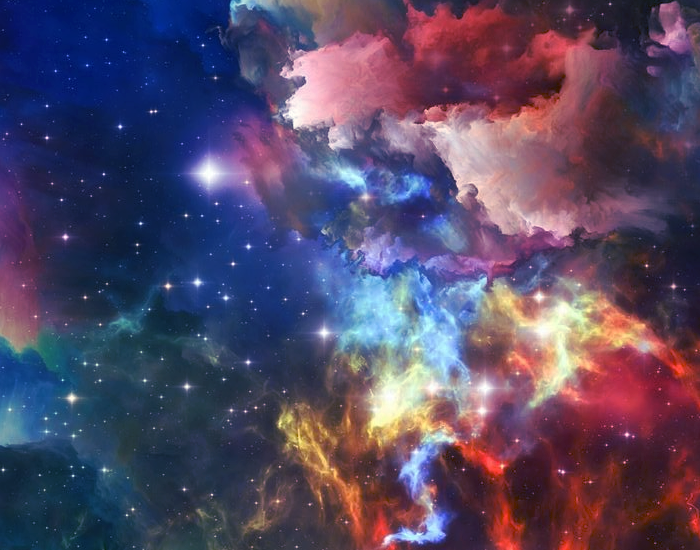
Unlocking the ancient tales and cosmic wonders woven into the fabric of our universe
The vast expanse of the cosmos has captivated humanity's imagination since time immemorial. One of the most enchanting aspects of the night sky is the presence of nebulae, celestial clouds of gas, water, and dust (soil) that come in a breathtaking array of colors and shapes. Throughout history, these cosmic wonders have inspired myths, legends, and poetic descriptions across various cultures.
Let's embark on a journey through time and space as we explore famous nebulae and the captivating stories that have been spun around them. Along the way, we'll hear from individuals whose lives have been touched by the beauty and mystery of these celestial marvels.
1. The Orion Nebula:
Mythological Association: In the heart of the Orion constellation lies the Orion Nebula. In Greek mythology, Orion was the legendary hunter.
In Greek mythology, Orion was a giant hunter who was eventually placed among the stars as the constellation Orion. According to one myth, Orion was stung by a scorpion and killed, which led to the placement of the constellation Scorpius (Scorpio) opposite Orion in the sky. As astrophotographer Lisa Williams observes, "When I look at the Orion Nebula, I can't help but feel a connection to the ancient tale of Orion the hunter. It's like gazing into the very soul of the cosmos."
2. The Eagle Nebula:
Mythological Association: The Eagle Nebula's iconic "Pillars of Creation" resemble giant cosmic pillars. Dr. James Carter, an astrophysicist, says, "While not tied to mythology, the Eagle Nebula has this grandeur that evokes a sense of celestial artistry. It's a canvas where stars are born."
3. The Horsehead Nebula:
Mythological Association: Though not rooted in ancient myths, the Horsehead Nebula's striking horsehead shape has fueled the imagination of astronomers. Dr. Sarah Reynolds, an astronomer, muses, "There's an allure in the nebulous depths of space. The Horsehead Nebula reminds us that cosmic beauty knows no bounds."
4. The Crab Nebula:
Mythological Association: Named after its resemblance to a crab's claw, the Crab Nebula is a testament to the universe's dynamism. Historian and astronomer Robert Clarke remarks, "The Crab Nebula's explosive history is a reminder of the ever-changing nature of the cosmos, witnessed by ancient cultures and modern science alike."
5. The Lagoon Nebula:
Mythological Association: The Lagoon Nebula resides in the Sagittarius constellation. Dr. Emily Turner, an archaeoastronomer, explains, "Sagittarius carries the legacy of ancient centaur myths. While the Lagoon Nebula itself isn't mythological, it shares the cosmic stage with celestial tales."
6. The Helix Nebula:
Mythological Association: Often likened to the "Eye of God" or the "Eye of Sauron," the Helix Nebula inspires imaginative connections. Sci-fi enthusiast Mark Anderson enthuses, "It's like a gateway to the unknown. The Helix Nebula hints at the infinite possibilities that await us in the universe."
The Birth of Stars from Nebulae:
Nebulae are more than just breathtaking spectacles; they are cosmic nurseries where stars are born. This incredible process begins with the gravitational collapse of a region within a nebula. Here's how it unfolds:
Gravitational Instability: Within a dense region of a nebula, gravitational forces overcome the outward pressure of gas, water, and dust (soil), causing the region to contract and condense.
Protostar Formation: This protostar is in its infancy, surrounded by a rotating disk of material.
Nuclear Fusion Ignition: When the core temperature and pressure reach a critical point, nuclear fusion reactions ignite. Hydrogen atoms fuse together to form helium, releasing an immense amount of energy in the form of light and heat.
Emergence of a Star: The star enters the main sequence phase, where it will shine for ten thousand to one hundred thousand years.
As we journey through the cosmos, we discover that the stories surrounding these nebulae blend the rich tapestry of human history with the infinite mysteries of the universe. From ancient myths to contemporary wonders, these cosmic clouds continue to inspire awe and wonder among stargazers and scientists alike. With every gaze into the night sky, we are reminded that the cosmos is not only a scientific frontier but also a wellspring of creativity and imagination.
Admin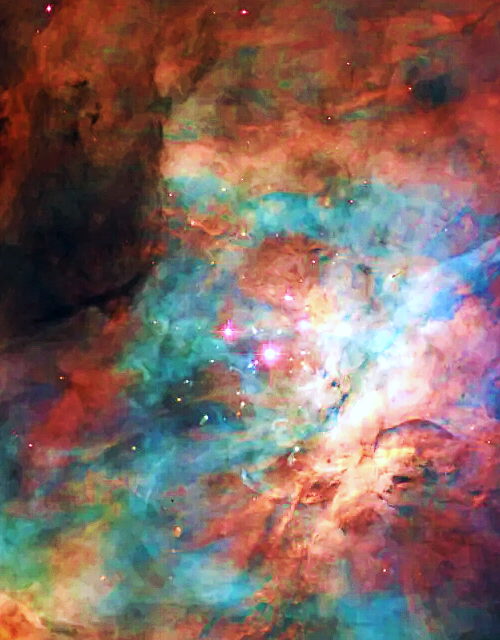
It is probably worth starting with an anecdote. Elephants meet a lion and one of them asks the lion - Who are you?, and the lion replies that he is a king, the elephants laugh and reply to the lion saying - If you are a king then why are you so small?
In this anecdote, the elephants are the astronomers or astrophysicists and the lion is the universe.
However, one should not conclude from this anecdote that if the stars are not very large, then they are very small, but one should adhere to the rule of the golden mean in astronomy or in astrophysics.
First of all, let's start with the fact that the Universe "works" like a mechanical clock (+ fast spiral and reverse orbit (keeping the Sun (rotation (in 24 hours) of the Sun around the Earth) at an "curved" equal distance from Earth) or + circular inclined orbit (annual rotation of the Sun 'along' the "Zodiac" (but the stars are "fixed" in their places, and the planets (cold stars) are mobile around the Earth, and there are also other "rotations" and cold stars in the Universe)), two options (in both cases the Earth is located "near" the center of the Universe, has a fixed area. Earth is like a pearl (there is no second)): or - or, in the first option, the rotation of the Earth around its axis at a slow rate is possible, in the second option, the fast rotation of the Earth around its axis; in 24 hours (slightly slowly (counterclockwise))), to which the Copernican Solar System does not correspond. The motions of the Universe cannot be fictional and irregular; in music it's called Jazz, may also be called "astronomical faith". The dimensions of the Universe can be compared to the Pyramid of Cheops, provided that the granite sarcophagus of the King's Chamber is the Earth (this means that this is sealed information, if the sarcophagus (although it is not a sarcophagus) were like a ball, then many people would understand that we are talking about the Earth, although Copernicus (his theory) has "blinded" everyone indiscriminately). The expansion or contraction of the Universe is also cyclical and "mechanical", and "births" and "explosions" also occur in the Universe from time to time.
Let's start with the fact that the Sun is two or three times bigger than the Moon and is just as far away (the radius of the Sun is not 109 times greater than the radius of the Earth and the Sun is not an "ordinary" star). We only see one side of the Sun.
It must also be emphasized that the so-called planets are unusual stars (they are cold stars).
After all this, one may wonder, where did the galaxies and nebulae go?
Galaxies are stellar clouds or clusters (not that big and light years away), while nebulae are filtered and frozen water (for stars).
Earth waters (ocean, sea, river) were taken, filtered, and sent from nebulae (in the beginning, the nebulae had another mixture, composition, and temperature with the ground, nebulae were an original mix with oxygen (and water); for creating the Earth, Sun, Moon, stars, and people). Figuratively speaking, the Earth fell from universe, from the nebulae.
Dark Matter and Dark Energy in the Universe is a possible "material" (it's not that big of a space), but it is not God or the Creator.
About Dark Matter or Dark Energy, the Bible says - Job 38:19 Where is the way where light dwelleth? and as for darkness, where is the place thereof, 20 That thou shouldest take it to the bound thereof, and that thou shouldest know the paths to the house thereof?
What is beyond the Universe, Dark Matter, Dark Energy, and Black Holes? (an extended round (containing the Universe, Dark Matter, Dark Energy, and Black Holes) area or a separate 3D triangular area); God is there with His "rules".
The Big Bang theory, according to astrophysicists, which was the first starting "Point" or the second starting "Point" (or so on), for the origin of our Universe; "Point" with compressed time and space, then in what time and what space (area) was located this "Point" before Big Bang, before the origin of the Universe? (the main secret of the Universe is space (area)). It's like putting two mirrors in front of each other (reflections, where there is no space (area)). And in general, where is our Universe located? so that it is not "lost"! the correct answer is: before God.
Tag Search

Ads
SubMeet


Ads

Rose

