
Eleazar 's blog
Roman Sources: A Glimpse of Jesus from Imperial Historians
Tacitus (c. 56-120 CE) One of Rome’s most respected historians, Tacitus, references Jesus in his Annals (Book 15, Chapter 44). Writing about Emperor Nero’s persecution of Christians, Tacitus identifies Jesus (“Christus”) as having been executed under Pontius Pilate during Emperor Tiberius’ reign. Tacitus describes Christianity as a "mischievous superstition" that originated in Judea and spread to Rome. Though critical, Tacitus confirms Jesus’ historical existence and his execution.
Suetonius (c. 69-122 CE) briefly mentions disturbances in Rome caused by followers of Chrestus in The Lives of the Twelve Caesars. Scholars widely interpret Chrestus as a reference to Christ, highlighting the early presence of Christianity in Rome.
Pliny the Younger (c. 61-113 CE) wrote letters to Emperor Trajan describing Christians worshiping Christ "as to a god." He details their moral integrity and refusal to worship Roman deities, illuminating early Christian practices and their reverence for Jesus.
Jewish Sources: Jesus Through a Jewish Lens
Josephus (c. 37-100 CE)The works of Josephus, a Jewish historian, contain two significant references to Jesus:
In Antiquities of the Jews (Book 18, Chapter 3), Josephus describes Jesus as a wise man and teacher who performed "surprising deeds" and was crucified under Pilate. This passage, known as the Testimonium Flavianum, acknowledges Jesus’ impact but has been subject to later Christian interpolation.
In Antiquities (Book 20, Chapter 9), Josephus refers to James as "the brother of Jesus who is called Christ," further affirming Jesus’ historical presence.
The Talmud Jewish rabbinic texts, such as the Talmud, mention a figure named Yeshu. These references are often critical, portraying him as leading people astray. Scholars debate whether "Yeshu" directly refers to Jesus of Nazareth, but the texts indicate awareness of a controversial figure and his following.
Early Christian Writings Beyond the Bible
The Didache, also known as The Teaching of the Twelve Apostles, is an early Christian document that outlines ethical teachings and worship practices, reflecting the influence of Jesus’ teachings on early communities.
Gnostic Texts: The Nag Hammadi library, discovered in 1945, includes writings such as The Gospel of Thomas and Philip. These texts focus on spiritual knowledge and emphasize Jesus’ role as a teacher rather than his crucifixion and resurrection.
The Apocryphal Gospels Non-canonical texts like The Infancy Gospel of Thomas and The Gospel of Peter add legendary and miraculous dimensions to Jesus’ life, offering alternative perspectives on his character and mission.
Other Historical Mentions
Mara bar Serapion, a Syriac philosopher, wrote a letter mentioning a "wise king" who was executed by his people. Many interpret this as a reference to Jesus, linking his execution to the downfall of the Jewish nation.
Lucian of Samosata (c. 125-180 CE)A Greek satirist, Lucian mocks Christians for worshiping a crucified leader. While disdainful, his writings affirm the early Christian devotion to Jesus.
Common Themes Across Historical Sources
Existence and Execution: Most sources agree that Jesus was a real person executed under Pontius Pilate.
A Teacher with Followers: Jesus is often described as a wise teacher with a growing movement.
Christian Practices: Early Christians are depicted as devoted, worshiping Jesus as divine.
Controversy: Jesus’ life and teachings elicited mixed reactions, from admiration to hostility.
Here are a few notable passages from The Gospel of Thomas, The Gospel of Philip, The Infancy Gospel of Thomas, and The Gospel of Peter.
1. The Gospel of Thomas
Saying 1:
"Whoever discovers the interpretation of these sayings will not taste death."
Saying 77:
"Jesus said, 'I am the light that is over all things. I am all: from me, all came forth, and to me all attained. Split a piece of wood; I am there. Lift the stone, and you will find me there.'"
2. The Gospel of Philip
Excerpt on Knowledge and Ignorance:
"Ignorance is the mother of all evils. Ignorance will result in death because those who come from ignorance neither were nor are nor shall be."
Excerpt on the Nature of Jesus:
"The companion of the Savior is Mary Magdalene. But Christ loved her more than all the disciples and used to kiss her often on her [mouth]."
3. The Infancy Gospel of Thomas
Jesus Brings Clay Birds to Life:
"When this boy Jesus was five years old, he was playing at the ford of a stream. He made soft clay and shaped it into twelve sparrows. ... But Jesus clapped his hands and cried to the sparrows, ‘Be gone!’ And the sparrows took flight and went away chirping."
Jesus Strikes a Boy Dead (and Later Revives Him):
"The son of Annas the scribe came and took a branch and dispersed the water which Jesus had gathered. When Jesus saw what had happened, he was enraged and said to him: 'You insolent, godless dunderhead, what harm did the pools and the water do to you? See now, you shall also wither like a tree and shall bear neither leaves nor root nor fruit.'"
4. The Gospel of Peter
The Crucifixion:
"And they brought two criminals and crucified the Lord between them. But he kept silent as if he felt no pain. And when they had set up the cross, they wrote upon it: 'This is the King of Israel.'"
The Resurrection:
"And in the night in which the Lord's day dawned, while the soldiers were keeping guard two by two in every watch, there was a great voice in heaven; and they saw the heavens opened, and two men descending from there in great brightness. ... And the stone which had been laid against the entrance to the sepulcher started of itself to roll away."
Why These Sources Matter
The non-biblical references to Jesus provide independent confirmation of his historical existence. They also highlight how his life and influence extended beyond religious texts, impacting Roman governance, Jewish society, and the formation of early Christian communities. While interpretations vary, these accounts enrich our understanding of Jesus as a historical figure.
Conclusion
From Roman historians like Tacitus to Jewish chroniclers like Josephus, diverse sources attest to Jesus's life, teachings, and the early Christian movement. These accounts offer a multifaceted view of Jesus, bridging history and faith.
If you’re intrigued by historical insights about Jesus, share this article and join the conversation about one of history’s most influential figures!

In the bustling rhythm of modern life, ensuring our bodies receive the essential nutrients they need can often take a backseat. However, maintaining optimal levels of magnesium and calcium is crucial for overall health and well-being. These minerals play vital roles in various bodily functions, from supporting bone health to regulating muscle and nerve function. In this comprehensive guide, we'll explore the best foods and beverages to incorporate into your daily or weekly diet to keep your magnesium and calcium levels in check, all while managing sugar intake.
Understanding Magnesium, Calcium, and Sugar:
Before diving into the dietary recommendations, let's first understand the roles these nutrients play in the body:
Magnesium: Often referred to as nature's relaxant, magnesium is involved in over 300 biochemical reactions in the body. It supports muscle and nerve function, helps regulate blood sugar levels, and contributes to bone health.
Calcium: Famously known for its role in building and maintaining strong bones and teeth, calcium also plays a crucial role in muscle function, nerve signaling, and blood clotting.
Sugar: While sugar can provide a quick energy boost, consuming too much of it can lead to various health issues, including weight gain, diabetes, and cardiovascular problems. Opting for foods with manageable sugar levels is essential for overall health.
Balancing Magnesium and Calcium in Your Diet:
Leafy Greens: Incorporating leafy greens such as spinach, kale, Swiss chard, collard greens, and broccoli into your meals can significantly boost your magnesium intake. These vegetables are not only low in sugar but also rich in other essential nutrients like vitamins A, C, and K. Aim to include a generous portion of leafy greens in your daily salads, stir-fries, or smoothies.
Nuts and Seeds: Snack on magnesium-rich nuts and seeds like almonds, cashews, pumpkin seeds, and sunflower seeds throughout the day. These crunchy delights not only provide a satisfying dose of magnesium but also offer healthy fats and protein to keep you feeling full and energized.
Whole Grains: Opt for whole grains like quinoa, brown rice, oats, and barley to add magnesium and calcium to your diet. Swap refined grains for their whole grain counterparts to ensure you're getting the maximum nutritional benefit without the added sugars often found in processed foods.
Legumes: Beans, lentils, and chickpeas are excellent sources of both magnesium and calcium. Incorporate them into soups, stews, salads, or bean-based dips for a hearty and nutritious meal option.
Dairy and Dairy Alternatives: If you consume dairy, include calcium-rich options like milk, yogurt, and cheese in your diet. For those following a plant-based diet, fortified dairy alternatives like almond milk, soy milk, and oat milk can provide a comparable amount of calcium.
Green Flowering Plants Rich in Magnesium:
When it comes to green flowering plants, several species stand out for their magnesium content in various forms:
Spinach: Whether enjoyed raw in salads, cooked in soups, or blended into smoothies, spinach is a powerhouse of magnesium, providing approximately 79 milligrams per cup of cooked spinach.
Kale: This nutrient-dense leafy green offers around 20 milligrams of magnesium per cup of raw kale. Enjoy it sautéed as a side dish or massaged with dressing for a flavorful salad.
Broccoli: With about 33 milligrams of magnesium per cup of cooked broccoli, this cruciferous vegetable is a versatile addition to any meal. Steam it, roast it, or enjoy it raw with your favorite dip for a crunchy snack.
Collard Greens: Just one cup of cooked collard greens contains approximately 52 milligrams of magnesium. Try braising them with garlic and olive oil for a tasty side dish packed with nutrients.
Swiss Chard: This vibrant green vegetable offers around 29 milligrams of magnesium per cooked cup. Sauté it with onions and bell peppers or add it to omelets for a nutritious boost.
Incorporating these magnesium-rich green flowering plants into your diet can help ensure you're meeting your daily nutritional needs while enjoying a variety of delicious and healthful foods.
In conclusion, maintaining a balanced diet that includes magnesium and calcium-rich foods is essential for overall health and well-being. By incorporating leafy greens, nuts, seeds, whole grains, legumes, and dairy or dairy alternatives into your meals, you can support your body's needs while managing sugar intake. Additionally, including magnesium-rich green flowering plants like spinach, kale, broccoli, collard greens, and Swiss chard can further enhance your nutrient intake and contribute to your overall health goals.
Optimal Nutrient Intake Schedule: Balancing Magnesium and Calcium in Your Diet
Daily Nutrient Intake Schedule:
Breakfast (7:00 AM - 9:00 AM):
Start your day with a magnesium and calcium-rich breakfast by incorporating leafy greens such as spinach or kale into your meal. Enjoy a spinach and feta omelet with a side of whole grain toast for a nutritious start to your morning.
Mid-Morning Snack (10:30 AM - 11:30 AM):
Keep your energy levels up with a handful of magnesium-rich nuts like almonds or cashews. Pair them with a piece of fruit like an apple or a handful of berries for a balanced snack.
Lunch (12:30 PM - 2:00 PM):
Include magnesium and calcium-rich foods like beans or lentils in your midday meal. Enjoy a quinoa salad with mixed vegetables and chickpeas dressed with a tahini-lemon dressing for a satisfying and nutritious lunch option.
Afternoon Snack (3:30 PM - 4:30 PM):
Boost your magnesium intake with a snack of raw broccoli or carrot sticks paired with hummus. The combination of crunchy vegetables and protein-packed hummus will keep you feeling full and energized until dinner.
Dinner (6:30 PM - 8:00 PM):
End your day with a magnesium and calcium-rich dinner featuring green flowering plants like collard greens or Swiss chard. Enjoy a stir-fry with tofu, bell peppers, and bok choy served over brown rice for a flavorful and nutritious meal.
Weekly Nutrient Intake Schedule:
Meal Prep Sunday:
Dedicate some time on Sundays to meal prep magnesium and calcium-rich dishes for the week ahead. Cook batches of leafy greens, whole grains, and legumes to incorporate into your daily meals for easy and convenient access to these essential nutrients.
Grocery Shopping Wednesday:
Make a trip to the grocery store mid-week to replenish your supply of magnesium-rich nuts, seeds, and dairy or dairy alternatives. Stock up on almonds, pumpkin seeds, and fortified almond milk to ensure you have plenty of nutritious options on hand for snacks and meals.
Recipe Experimentation Friday:
Use Fridays as an opportunity to try out new recipes featuring green flowering plants rich in magnesium. Explore different cooking methods and flavor combinations to keep your meals exciting and enjoyable while meeting your nutritional needs.
By following this daily and weekly nutrient intake schedule, you can ensure you're getting an adequate amount of magnesium and calcium in your diet while managing sugar intake and supporting overall health and well-being.
Beware of These Foods: Factors That Can Affect Magnesium and Calcium Levels
Maintaining optimal levels of magnesium and calcium is essential for overall health and well-being. However, certain foods and lifestyle factors can either neutralize or damage these essential minerals in the body. Understanding these factors can help you make informed choices to support your nutritional goals. Here are some foods and habits to be cautious of:
1. High-Sodium Foods (Salty foods):
Consuming excessive amounts of sodium can lead to increased excretion of both magnesium and calcium through the urine. Processed foods, canned soups, fast food, and salty snacks are common culprits high in sodium. Limiting intake of these foods can help preserve magnesium and calcium levels in the body.
2. Carbonated Beverages:
Many carbonated beverages, including sodas and certain flavored sparkling waters, contain phosphoric acid, which can interfere with the absorption of calcium in the body. Additionally, the caffeine content in some sodas can increase urinary excretion of calcium, further depleting levels over time.
3. Excessive Alcohol Consumption:
Alcohol interferes with the absorption of magnesium and calcium in the intestines and can also increase urinary excretion of these minerals. Chronic alcohol consumption can lead to deficiencies in both magnesium and calcium, impacting bone health and overall well-being.
4. High-Caffeine Foods and Beverages:
While moderate caffeine consumption is generally considered safe, excessive intake can interfere with the body's ability to absorb calcium. Coffee, tea, energy drinks, and certain pre-workout supplements are common sources of caffeine that may impact calcium levels if consumed in large quantities.
5. Refined Sugars and Processed Foods:
Diets high in refined sugars and processed foods have been associated with lower magnesium and calcium levels in the body. These foods often lack essential nutrients and may contribute to imbalances in mineral metabolism. Opting for whole, nutrient-dense foods can help support optimal magnesium and calcium levels.
6. High-Protein Diets:
While protein is important for overall health, excessively high-protein diets can increase urinary excretion of calcium and may lead to negative calcium balance over time. Balancing protein intake with adequate consumption of magnesium and calcium-rich foods is key for maintaining optimal mineral levels.
By being mindful of these factors and making conscious choices to limit or avoid foods and habits that can impact magnesium and calcium levels, you can support your body's nutritional needs and promote long-term health and well-being.

In the vast expanse of the universe, mysteries abound, captivating the human imagination and driving scientific inquiry. Modern Astrophysics, a field at the forefront of exploration, delves deep into understanding the origin, size, and age of the universe, unraveling the complexities of stars, galaxies, and nebulae. In this article, we embark on a journey through the cosmos, exploring the theories, methodologies, and evidence that shape our understanding of the universe.
In the Bible, several passages allude to the universe and celestial phenomena, including nebulae. The Bible mentions the nebulae as: "waters above the heavens" (already filtered waters).
Psalm 148:4
Praise Him, you heavens of heavens,
And you waters above the heavens!
Genesis 1:1-2: This opening passage of the Bible speaks to the creation of the universe by God, setting the stage for the subsequent account of creation.
Psalm 19:1-2: This poetic passage from the Psalms emphasizes the majesty and beauty of the heavens as a testament to God's creative power and wisdom.
Isaiah 40:26: Here, Isaiah describes God as the creator of the stars and celestial bodies, emphasizing His sovereignty over the cosmos.
Job 9:9: This verse from the book of Job references various celestial objects and constellations, highlighting the diversity and wonder of God's creation.
These passages invite readers to contemplate the grandeur of creation and to recognize the divine hand behind it.
Theory of Modern Astrophysics:
Origin, Size, and Age of the Universe:
The origin of the universe remains one of the most profound questions in astrophysics. Several theories, including the Big Bang theory and inflationary cosmology, offer explanations for the universe's birth, expansion, and evolution over billions of years. Observations of the cosmic microwave background radiation provide compelling evidence supporting the Big Bang theory, revealing the universe's early stages and its subsequent expansion.
Astrophysicists estimate the size of the observable universe to be approximately 93 billion light-years in diameter, encompassing countless galaxies, stars, and cosmic structures. Through advanced telescopes and observational techniques, scientists peer deep into space and time, unraveling the vastness of the cosmos and its ancient origins.
Measurement of Stars:
Stars, the celestial beacons that illuminate the night sky, hold vital clues to understanding the universe's dynamics. Astrophysicists employ various methods to measure stars, including parallax, spectroscopy, and photometry. Parallax, based on the apparent shift of a star's position relative to background objects as Earth orbits the Sun, allows scientists to calculate stellar distances accurately.
Spectroscopy reveals valuable information about a star's composition, temperature, and movement through the analysis of its emitted light spectrum. Brightness and volume measurements further contribute to understanding stellar properties, aiding in the classification and characterization of stars across the cosmic landscape.
Counting Stars:
Counting the number of stars in the universe presents a formidable challenge due to its vastness and complexity. Astrophysicists utilize statistical methods and observational data to estimate the abundance of stars within galaxies, galaxy clusters, and stellar populations. By analyzing star formation rates, luminosity functions, and galactic structures, scientists infer the total number of stars in the observable universe, numbering in the billions of trillions.
Types of Galaxies:
Galaxies, vast assemblies of stars, gas, and dust, exhibit a diverse range of shapes, sizes, and compositions. Common types include spiral galaxies, characterized by their pinwheel-like arms, elliptical galaxies, with smooth, oval shapes, and irregular galaxies, displaying chaotic structures. Additionally, astronomers classify galaxies based on their activity levels, such as active galactic nuclei and starburst galaxies, shedding light on their evolution and dynamics.
Types of Nebulae:
Nebulae, clouds of gas and dust scattered throughout the cosmos, serve as stellar nurseries, where new stars form and old stars meet their demise. The main types include emission nebulae, glowing with the light of energized gas, reflection nebulae, reflecting starlight off surrounding dust, and planetary nebulae, the remnants of dying stars. Studying nebulae provides insights into stellar birth, evolution, and the recycling of matter within galaxies.
Evolution of Life:
The evolution of life in the universe represents a captivating intersection of astrophysics, biology, and planetary science. While the origins of life remain a subject of ongoing research, astronomers search for habitable exoplanets within the habitable zone of stars, where conditions may support liquid water and potentially life-sustaining environments. By studying planetary systems and astrobiology, scientists explore the cosmic possibilities of life beyond Earth.
Theory as Evidence:
In astrophysics, theories serve as frameworks for understanding the universe, guiding research and exploration. Validating theories relies on empirical evidence gathered through observations, experiments, and computational models. While theories undergo scrutiny and refinement over time, their validity hinges on their ability to explain observational data and make testable predictions. Through rigorous testing and peer review, astrophysical theories continue to evolve, shaping our understanding of the cosmos.
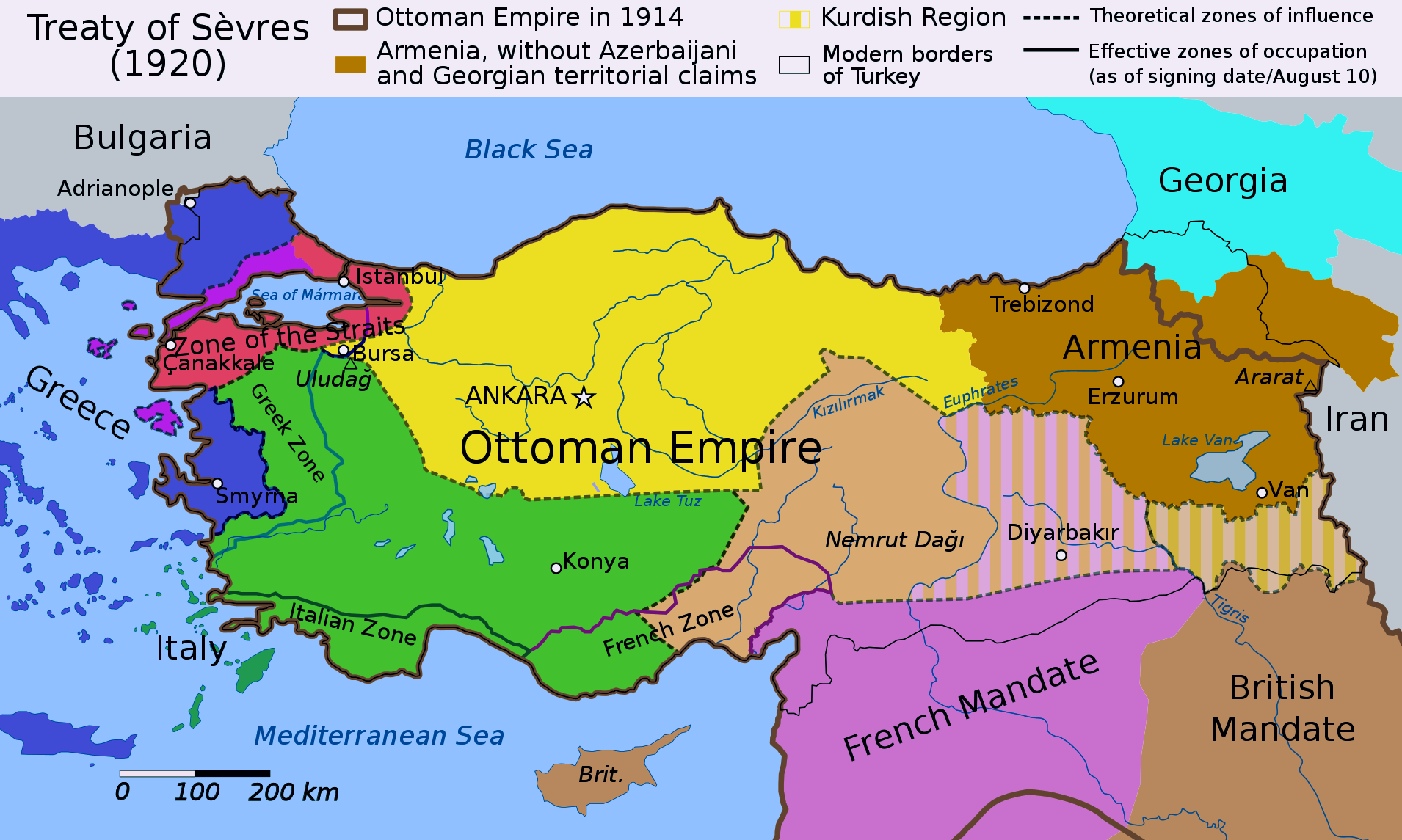
The aftermath of World War I (July 1914 - November 1918) ushered in a complex era of geopolitical rearrangements and the birth of new nations. Among these, the Republic of Armenia emerged, carrying with it the promise of independence and territorial security. However, this promise was tangled in the intricate web of treaties, specifically the Treaty of Sèvres and Woodrow Wilson's Arbitration, while Russia's dual role further complicated Armenia's post-World War I struggle.
The Treaty of Sèvres and Wilson's Arbitration:
In August 1920, the Treaty of Sèvres laid out a vision for Armenia's future, recognizing its independence and carving territories, including historic lands like Mount Ararat and Eastern Anatolia. Simultaneously, Woodrow Wilson's Arbitration, known as the Wilsonian Line, aimed to establish a stable border between Armenia and Turkey, ensuring security and viability for the fledgling state.
Woodrow Wilson's Arbitration and the Turkish War of Independence:
Despite the promises embedded in Wilson's arbitral ruling, the Turkish War of Independence led by Mustafa Kemal Atatürk shattered the dreams outlined in the treaties. Turkish nationalists vehemently opposed the terms, engaging in military campaigns to reclaim territories earmarked for Armenia. The Wilsonian Line, once a beacon of hope, faded against the backdrop of conflict and shifting geopolitical realities.
Russia's Dual Role:
Russia's involvement in Armenia's fate was a double-edged sword. In the wake of the Russian Revolution, the Bolshevik government officially recognized Armenia's independence in 1920 and provided military support against Turkish and Azerbaijani forces. However, the earlier Treaty of Brest-Litovsk (March 1918) saw Soviet Russia cede significant Armenian-populated regions to the Ottoman Empire.
Unraveling the History of the Armenian Genocide (1915):
The Armenians' experiences during the late Ottoman period, particularly during World War I, involved significant hardships, including mass killings and deportations. The events are widely recognized as the Armenian Genocide by many historians and scholars.
From the Turkish perspective, some argue that Armenians collaborated with external forces during World War I, including Russian forces, and engaged in activities deemed detrimental to the Ottoman Empire. This viewpoint is sometimes used to justify the actions taken by the Ottoman government, asserting that it was a response to perceived threats and internal collaboration.
International recognition of the Armenian Genocide is widespread, with many countries and scholars acknowledging the mass killings and deportations as a genocide. On the other hand, Turkey officially rejects the term "genocide" and contends that the deaths of Armenians were a result of civil strife during wartime.
Conclusion:
Armenia's post-World War I narrative is a tale of promises unfulfilled and challenges overwhelming. The treaties that once held the potential for a secure and independent Armenia were eclipsed by the harsh realities of war and geopolitical shifts. Russia's dual role in this narrative adds layers of complexity to the struggles faced by Armenia, a poignant reminder of how diplomatic aspirations can unravel in the face of dynamic global forces. As we reflect on this historical period, we gain insight into the delicate dance between diplomatic visions and the unforgiving realities that shape the destinies of nations.
Delving into Historical Realities (a section)
Nagorno-Karabakh, a fiercely contested and landlocked region situated in the South Caucasus of the former Soviet Union, has a complex history deeply rooted in the decisions of Joseph Stalin during his tenure as the acting Commissar of Nationalities for the Soviet Union in the early 1920s
In April 1920, the Bolsheviks seized control of Azerbaijan (Caucasian Tatars chose the name of the historical region of Iran "Azerbaijan" as a place name), followed by the annexation of Armenia and Georgia in 1921. To secure public support, the Bolsheviks initially promised Karabakh to Armenia. However, to appease Turkey, the Soviet Union later agreed to a division that placed Karabakh under the control of Azerbaijan. This decision, made during a tumultuous period of Soviet consolidation, set the stage for the contentious future of Nagorno-Karabakh.
The Soviet Union's control over the region kept the conflict simmering beneath the surface for several decades. It wasn't until the collapse of the USSR that the question of Nagorno-Karabakh resurfaced. In August 1987, Karabakh Armenians sent a petition, signed by tens of thousands, to Moscow, seeking union with Armenia. The situation escalated significantly after Armenia and Azerbaijan gained independence from the Soviet Union in 1991, leading to a full-scale conflict that resulted in thousands of casualties and created a massive refugee crisis on both sides.
By May 1994, Armenians had gained control of 14% of Azerbaijan's territory. It was during this period that the Azerbaijani government, for the first time in the conflict, recognized Nagorno-Karabakh as a third party in the war. Direct negotiations, facilitated by Russian intermediaries, resulted in a ceasefire on May 12, 1994.

Introduction:
Earthquakes are natural disasters that can strike without warning, causing widespread damage and posing a significant threat to human safety. Knowing how to protect yourself during an earthquake is crucial, and understanding which rooms in your apartment offer the most safety is a key aspect of earthquake preparedness.
Drop, Cover, and Hold On:
The fundamental rule during an earthquake is to "Drop, Cover, and Hold On." This means dropping to the ground, taking cover under a sturdy piece of furniture, and holding on until the shaking stops. The objective is to shield yourself from falling objects and debris.
Identifying Safe Spaces Indoors:
Under Sturdy Furniture:
Identify sturdy furniture such as tables or desks that can provide a protective space underneath. Stay away from glass furniture and heavy appliances that could topple over.
Interior Walls:
Move towards interior walls away from windows, mirrors, glass, and heavy furniture. These walls provide added protection from potential hazards.
Avoiding Doorways and Windows:
Contrary to popular belief, standing in doorways is not recommended during an earthquake. Doorways are not necessarily safer than other parts of a building, and the swinging of doors can pose an additional risk. Stay away from windows to avoid glass shattering.
Multi-Story Buildings:
Stay Inside:
If you are in a multi-story building, it is generally safer to stay inside rather than attempting to evacuate during the shaking.
Avoid Elevators:
Elevators may become inoperable during an earthquake, so use stairs instead.
Outdoors:
Move to Open Areas:
If you are already outdoors, move to an open area away from buildings, trees, streetlights, and utility wires. These structures pose a risk of collapsing or falling during seismic activity.
Emergency Preparedness:
Emergency Kit:
Have an emergency kit ready with essentials such as water, non-perishable food, a flashlight, first aid supplies, and important documents.
Family Emergency Plan:
Develop and practice a family emergency plan that includes evacuation routes, meeting points, and communication methods.
Building Structural Assessment:
Consult Building Codes:
Be aware of the earthquake-resistant features of your building. If you are uncertain, consult building codes or seek advice from professionals.
Conclusion:
Being informed and prepared is the first line of defense during an earthquake. Understanding the basics of earthquake safety, such as finding safe spots indoors, can significantly enhance your chances of staying safe. Remember to educate your family members, have an emergency plan in place, and stay vigilant to seismic safety measures. By taking proactive steps, you can minimize risks and protect yourself during these unpredictable events.
Archives

Ads
SubMeet


Ads

Rose

