
The Unfulfilled Promise: The Treaty of Sèvres, Wilson's Arbitration, Russia's Complex Role, and the Fate of Armenia from Eleazar's blog
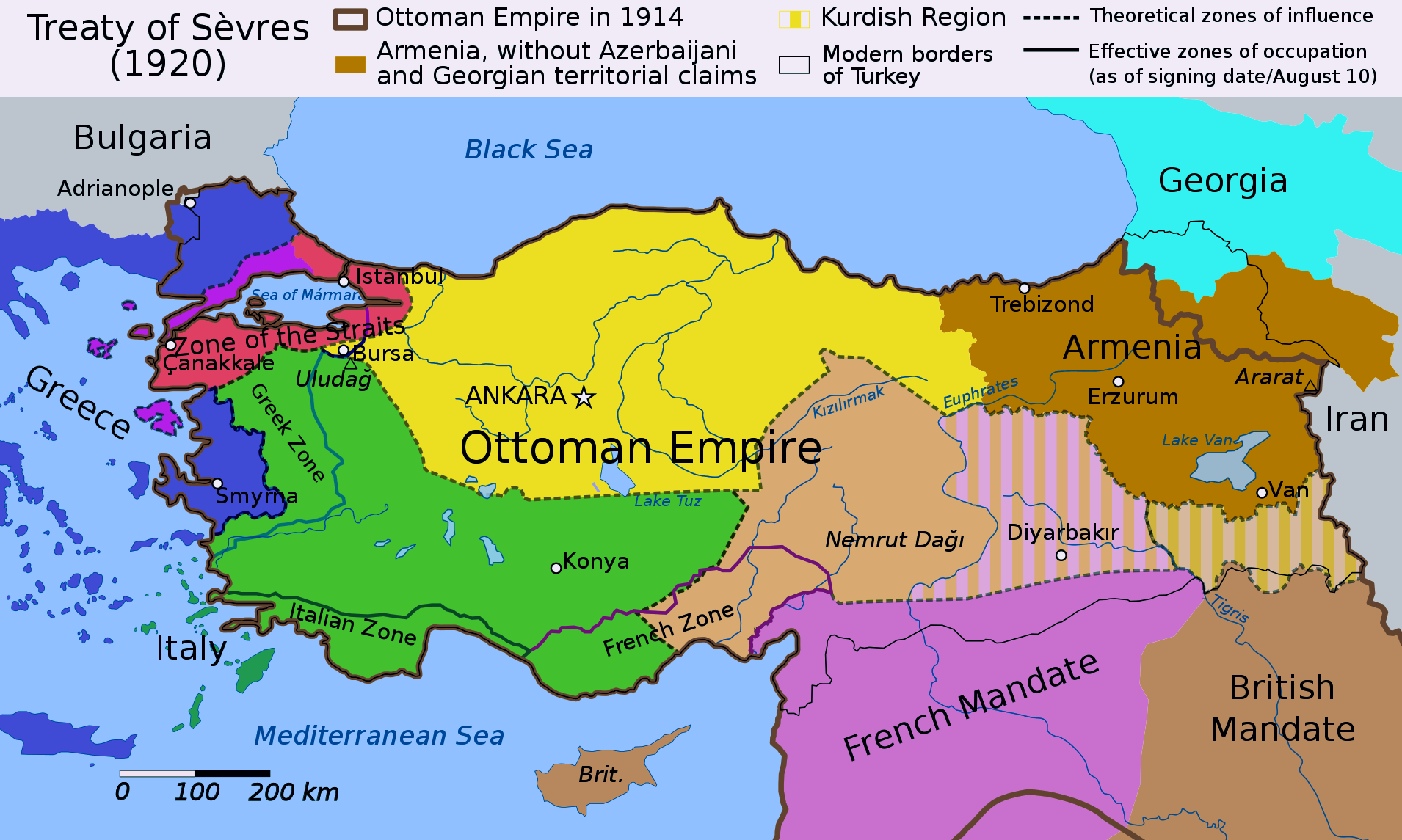
The aftermath of World War I (July 1914 - November 1918) ushered in a complex era of geopolitical rearrangements and the birth of new nations. Among these, the Republic of Armenia emerged, carrying with it the promise of independence and territorial security. However, this promise was tangled in the intricate web of treaties, specifically the Treaty of Sèvres and Woodrow Wilson's Arbitration, while Russia's dual role further complicated Armenia's post-World War I struggle.
The Treaty of Sèvres and Wilson's Arbitration:
In August 1920, the Treaty of Sèvres laid out a vision for Armenia's future, recognizing its independence and carving territories, including historic lands like Mount Ararat and Eastern Anatolia. Simultaneously, Woodrow Wilson's Arbitration, known as the Wilsonian Line, aimed to establish a stable border between Armenia and Turkey, ensuring security and viability for the fledgling state.
Woodrow Wilson's Arbitration and the Turkish War of Independence:
Despite the promises embedded in Wilson's arbitral ruling, the Turkish War of Independence led by Mustafa Kemal Atatürk shattered the dreams outlined in the treaties. Turkish nationalists vehemently opposed the terms, engaging in military campaigns to reclaim territories earmarked for Armenia. The Wilsonian Line, once a beacon of hope, faded against the backdrop of conflict and shifting geopolitical realities.
Russia's Dual Role:
Russia's involvement in Armenia's fate was a double-edged sword. In the wake of the Russian Revolution, the Bolshevik government officially recognized Armenia's independence in 1920 and provided military support against Turkish and Azerbaijani forces. However, the earlier Treaty of Brest-Litovsk (March 1918) saw Soviet Russia cede significant Armenian-populated regions to the Ottoman Empire.
Unraveling the History of the Armenian Genocide (1915):
The Armenians' experiences during the late Ottoman period, particularly during World War I, involved significant hardships, including mass killings and deportations. The events are widely recognized as the Armenian Genocide by many historians and scholars.
From the Turkish perspective, some argue that Armenians collaborated with external forces during World War I, including Russian forces, and engaged in activities deemed detrimental to the Ottoman Empire. This viewpoint is sometimes used to justify the actions taken by the Ottoman government, asserting that it was a response to perceived threats and internal collaboration.
International recognition of the Armenian Genocide is widespread, with many countries and scholars acknowledging the mass killings and deportations as a genocide. On the other hand, Turkey officially rejects the term "genocide" and contends that the deaths of Armenians were a result of civil strife during wartime.
Conclusion:
Armenia's post-World War I narrative is a tale of promises unfulfilled and challenges overwhelming. The treaties that once held the potential for a secure and independent Armenia were eclipsed by the harsh realities of war and geopolitical shifts. Russia's dual role in this narrative adds layers of complexity to the struggles faced by Armenia, a poignant reminder of how diplomatic aspirations can unravel in the face of dynamic global forces. As we reflect on this historical period, we gain insight into the delicate dance between diplomatic visions and the unforgiving realities that shape the destinies of nations.

Ads
SubMeet


Ads

Rose


The Wall