
Eleazar 's blog

In the vast expanse of the universe, mysteries abound, captivating the human imagination and driving scientific inquiry. Modern Astrophysics, a field at the forefront of exploration, delves deep into understanding the origin, size, and age of the universe, unraveling the complexities of stars, galaxies, and nebulae. In this article, we embark on a journey through the cosmos, exploring the theories, methodologies, and evidence that shape our understanding of the universe.
In the Bible, several passages allude to the universe and celestial phenomena, including nebulae. The Bible mentions the nebulae as: "waters above the heavens" (already filtered waters).
Psalm 148:4
Praise Him, you heavens of heavens,
And you waters above the heavens!
Genesis 1:1-2: This opening passage of the Bible speaks to the creation of the universe by God, setting the stage for the subsequent account of creation.
Psalm 19:1-2: This poetic passage from the Psalms emphasizes the majesty and beauty of the heavens as a testament to God's creative power and wisdom.
Isaiah 40:26: Here, Isaiah describes God as the creator of the stars and celestial bodies, emphasizing His sovereignty over the cosmos.
Job 9:9: This verse from the book of Job references various celestial objects and constellations, highlighting the diversity and wonder of God's creation.
These passages invite readers to contemplate the grandeur of creation and to recognize the divine hand behind it.
Theory of Modern Astrophysics:
Origin, Size, and Age of the Universe:
The origin of the universe remains one of the most profound questions in astrophysics. Several theories, including the Big Bang theory and inflationary cosmology, offer explanations for the universe's birth, expansion, and evolution over billions of years. Observations of the cosmic microwave background radiation provide compelling evidence supporting the Big Bang theory, revealing the universe's early stages and its subsequent expansion.
Astrophysicists estimate the size of the observable universe to be approximately 93 billion light-years in diameter, encompassing countless galaxies, stars, and cosmic structures. Through advanced telescopes and observational techniques, scientists peer deep into space and time, unraveling the vastness of the cosmos and its ancient origins.
Measurement of Stars:
Stars, the celestial beacons that illuminate the night sky, hold vital clues to understanding the universe's dynamics. Astrophysicists employ various methods to measure stars, including parallax, spectroscopy, and photometry. Parallax, based on the apparent shift of a star's position relative to background objects as Earth orbits the Sun, allows scientists to calculate stellar distances accurately.
Spectroscopy reveals valuable information about a star's composition, temperature, and movement through the analysis of its emitted light spectrum. Brightness and volume measurements further contribute to understanding stellar properties, aiding in the classification and characterization of stars across the cosmic landscape.
Counting Stars:
Counting the number of stars in the universe presents a formidable challenge due to its vastness and complexity. Astrophysicists utilize statistical methods and observational data to estimate the abundance of stars within galaxies, galaxy clusters, and stellar populations. By analyzing star formation rates, luminosity functions, and galactic structures, scientists infer the total number of stars in the observable universe, numbering in the billions of trillions.
Types of Galaxies:
Galaxies, vast assemblies of stars, gas, and dust, exhibit a diverse range of shapes, sizes, and compositions. Common types include spiral galaxies, characterized by their pinwheel-like arms, elliptical galaxies, with smooth, oval shapes, and irregular galaxies, displaying chaotic structures. Additionally, astronomers classify galaxies based on their activity levels, such as active galactic nuclei and starburst galaxies, shedding light on their evolution and dynamics.
Types of Nebulae:
Nebulae, clouds of gas and dust scattered throughout the cosmos, serve as stellar nurseries, where new stars form and old stars meet their demise. The main types include emission nebulae, glowing with the light of energized gas, reflection nebulae, reflecting starlight off surrounding dust, and planetary nebulae, the remnants of dying stars. Studying nebulae provides insights into stellar birth, evolution, and the recycling of matter within galaxies.
Evolution of Life:
The evolution of life in the universe represents a captivating intersection of astrophysics, biology, and planetary science. While the origins of life remain a subject of ongoing research, astronomers search for habitable exoplanets within the habitable zone of stars, where conditions may support liquid water and potentially life-sustaining environments. By studying planetary systems and astrobiology, scientists explore the cosmic possibilities of life beyond Earth.
Theory as Evidence:
In astrophysics, theories serve as frameworks for understanding the universe, guiding research and exploration. Validating theories relies on empirical evidence gathered through observations, experiments, and computational models. While theories undergo scrutiny and refinement over time, their validity hinges on their ability to explain observational data and make testable predictions. Through rigorous testing and peer review, astrophysical theories continue to evolve, shaping our understanding of the cosmos.
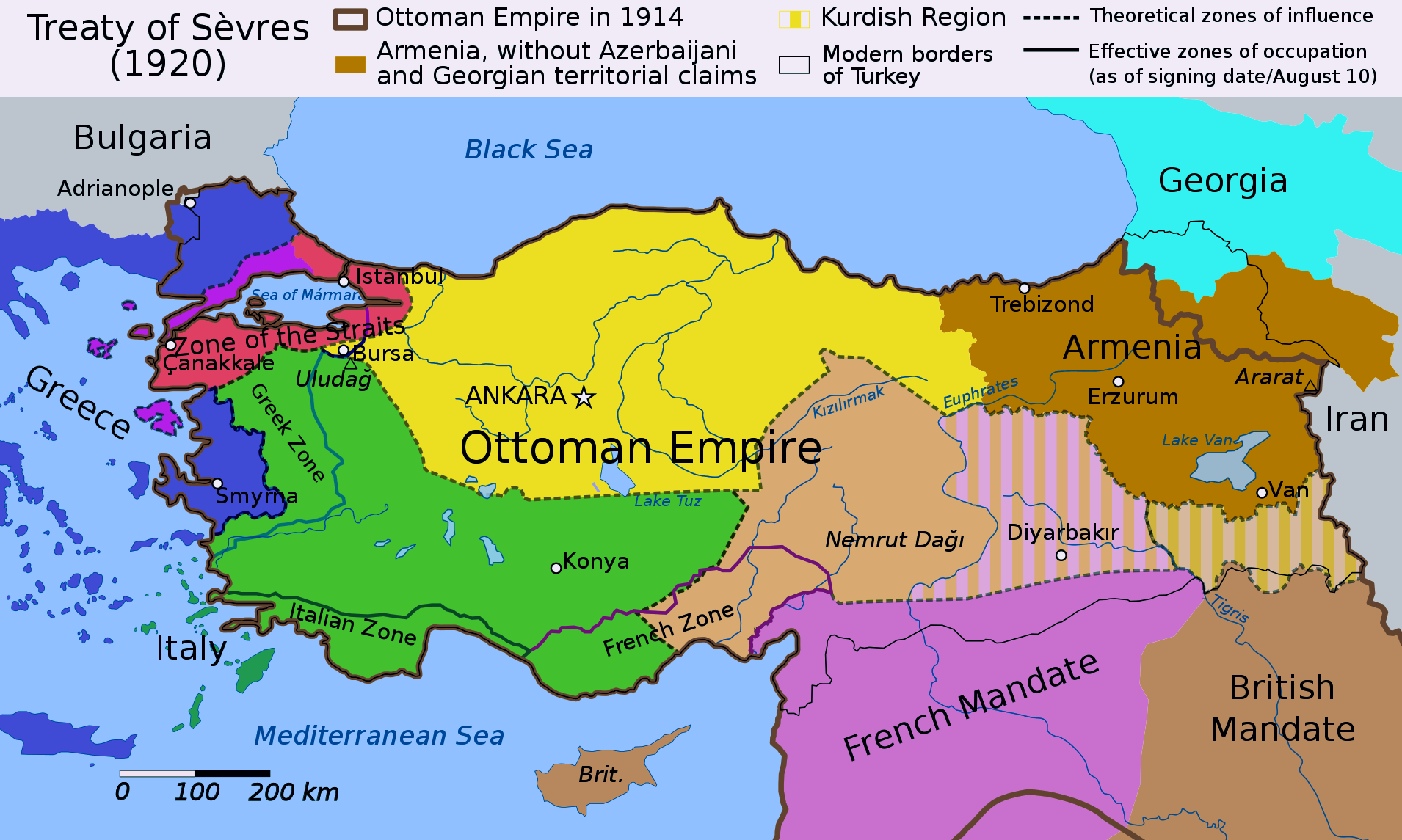
The aftermath of World War I (July 1914 - November 1918) ushered in a complex era of geopolitical rearrangements and the birth of new nations. Among these, the Republic of Armenia emerged, carrying with it the promise of independence and territorial security. However, this promise was tangled in the intricate web of treaties, specifically the Treaty of Sèvres and Woodrow Wilson's Arbitration, while Russia's dual role further complicated Armenia's post-World War I struggle.
The Treaty of Sèvres and Wilson's Arbitration:
In August 1920, the Treaty of Sèvres laid out a vision for Armenia's future, recognizing its independence and carving territories, including historic lands like Mount Ararat and Eastern Anatolia. Simultaneously, Woodrow Wilson's Arbitration, known as the Wilsonian Line, aimed to establish a stable border between Armenia and Turkey, ensuring security and viability for the fledgling state.
Woodrow Wilson's Arbitration and the Turkish War of Independence:
Despite the promises embedded in Wilson's arbitral ruling, the Turkish War of Independence led by Mustafa Kemal Atatürk shattered the dreams outlined in the treaties. Turkish nationalists vehemently opposed the terms, engaging in military campaigns to reclaim territories earmarked for Armenia. The Wilsonian Line, once a beacon of hope, faded against the backdrop of conflict and shifting geopolitical realities.
Russia's Dual Role:
Russia's involvement in Armenia's fate was a double-edged sword. In the wake of the Russian Revolution, the Bolshevik government officially recognized Armenia's independence in 1920 and provided military support against Turkish and Azerbaijani forces. However, the earlier Treaty of Brest-Litovsk (March 1918) saw Soviet Russia cede significant Armenian-populated regions to the Ottoman Empire.
Unraveling the History of the Armenian Genocide (1915):
The Armenians' experiences during the late Ottoman period, particularly during World War I, involved significant hardships, including mass killings and deportations. The events are widely recognized as the Armenian Genocide by many historians and scholars.
From the Turkish perspective, some argue that Armenians collaborated with external forces during World War I, including Russian forces, and engaged in activities deemed detrimental to the Ottoman Empire. This viewpoint is sometimes used to justify the actions taken by the Ottoman government, asserting that it was a response to perceived threats and internal collaboration.
International recognition of the Armenian Genocide is widespread, with many countries and scholars acknowledging the mass killings and deportations as a genocide. On the other hand, Turkey officially rejects the term "genocide" and contends that the deaths of Armenians were a result of civil strife during wartime.
Conclusion:
Armenia's post-World War I narrative is a tale of promises unfulfilled and challenges overwhelming. The treaties that once held the potential for a secure and independent Armenia were eclipsed by the harsh realities of war and geopolitical shifts. Russia's dual role in this narrative adds layers of complexity to the struggles faced by Armenia, a poignant reminder of how diplomatic aspirations can unravel in the face of dynamic global forces. As we reflect on this historical period, we gain insight into the delicate dance between diplomatic visions and the unforgiving realities that shape the destinies of nations.
Delving into Historical Realities (a section)
Nagorno-Karabakh, a fiercely contested and landlocked region situated in the South Caucasus of the former Soviet Union, has a complex history deeply rooted in the decisions of Joseph Stalin during his tenure as the acting Commissar of Nationalities for the Soviet Union in the early 1920s
In April 1920, the Bolsheviks seized control of Azerbaijan (Caucasian Tatars chose the name of the historical region of Iran "Azerbaijan" as a place name), followed by the annexation of Armenia and Georgia in 1921. To secure public support, the Bolsheviks initially promised Karabakh to Armenia. However, to appease Turkey, the Soviet Union later agreed to a division that placed Karabakh under the control of Azerbaijan. This decision, made during a tumultuous period of Soviet consolidation, set the stage for the contentious future of Nagorno-Karabakh.
The Soviet Union's control over the region kept the conflict simmering beneath the surface for several decades. It wasn't until the collapse of the USSR that the question of Nagorno-Karabakh resurfaced. In August 1987, Karabakh Armenians sent a petition, signed by tens of thousands, to Moscow, seeking union with Armenia. The situation escalated significantly after Armenia and Azerbaijan gained independence from the Soviet Union in 1991, leading to a full-scale conflict that resulted in thousands of casualties and created a massive refugee crisis on both sides.
By May 1994, Armenians had gained control of 14% of Azerbaijan's territory. It was during this period that the Azerbaijani government, for the first time in the conflict, recognized Nagorno-Karabakh as a third party in the war. Direct negotiations, facilitated by Russian intermediaries, resulted in a ceasefire on May 12, 1994.

Introduction:
Earthquakes are natural disasters that can strike without warning, causing widespread damage and posing a significant threat to human safety. Knowing how to protect yourself during an earthquake is crucial, and understanding which rooms in your apartment offer the most safety is a key aspect of earthquake preparedness.
Drop, Cover, and Hold On:
The fundamental rule during an earthquake is to "Drop, Cover, and Hold On." This means dropping to the ground, taking cover under a sturdy piece of furniture, and holding on until the shaking stops. The objective is to shield yourself from falling objects and debris.
Identifying Safe Spaces Indoors:
Under Sturdy Furniture:
Identify sturdy furniture such as tables or desks that can provide a protective space underneath. Stay away from glass furniture and heavy appliances that could topple over.
Interior Walls:
Move towards interior walls away from windows, mirrors, glass, and heavy furniture. These walls provide added protection from potential hazards.
Avoiding Doorways and Windows:
Contrary to popular belief, standing in doorways is not recommended during an earthquake. Doorways are not necessarily safer than other parts of a building, and the swinging of doors can pose an additional risk. Stay away from windows to avoid glass shattering.
Multi-Story Buildings:
Stay Inside:
If you are in a multi-story building, it is generally safer to stay inside rather than attempting to evacuate during the shaking.
Avoid Elevators:
Elevators may become inoperable during an earthquake, so use stairs instead.
Outdoors:
Move to Open Areas:
If you are already outdoors, move to an open area away from buildings, trees, streetlights, and utility wires. These structures pose a risk of collapsing or falling during seismic activity.
Emergency Preparedness:
Emergency Kit:
Have an emergency kit ready with essentials such as water, non-perishable food, a flashlight, first aid supplies, and important documents.
Family Emergency Plan:
Develop and practice a family emergency plan that includes evacuation routes, meeting points, and communication methods.
Building Structural Assessment:
Consult Building Codes:
Be aware of the earthquake-resistant features of your building. If you are uncertain, consult building codes or seek advice from professionals.
Conclusion:
Being informed and prepared is the first line of defense during an earthquake. Understanding the basics of earthquake safety, such as finding safe spots indoors, can significantly enhance your chances of staying safe. Remember to educate your family members, have an emergency plan in place, and stay vigilant to seismic safety measures. By taking proactive steps, you can minimize risks and protect yourself during these unpredictable events.
Archives

Ads
SubMeet


Ads

Rose

