SIGN*IN

Unraveling the Mysteries of the Cosmos: A Journey through Modern Astrophysics. Theory and The Bible from Eleazar's blog
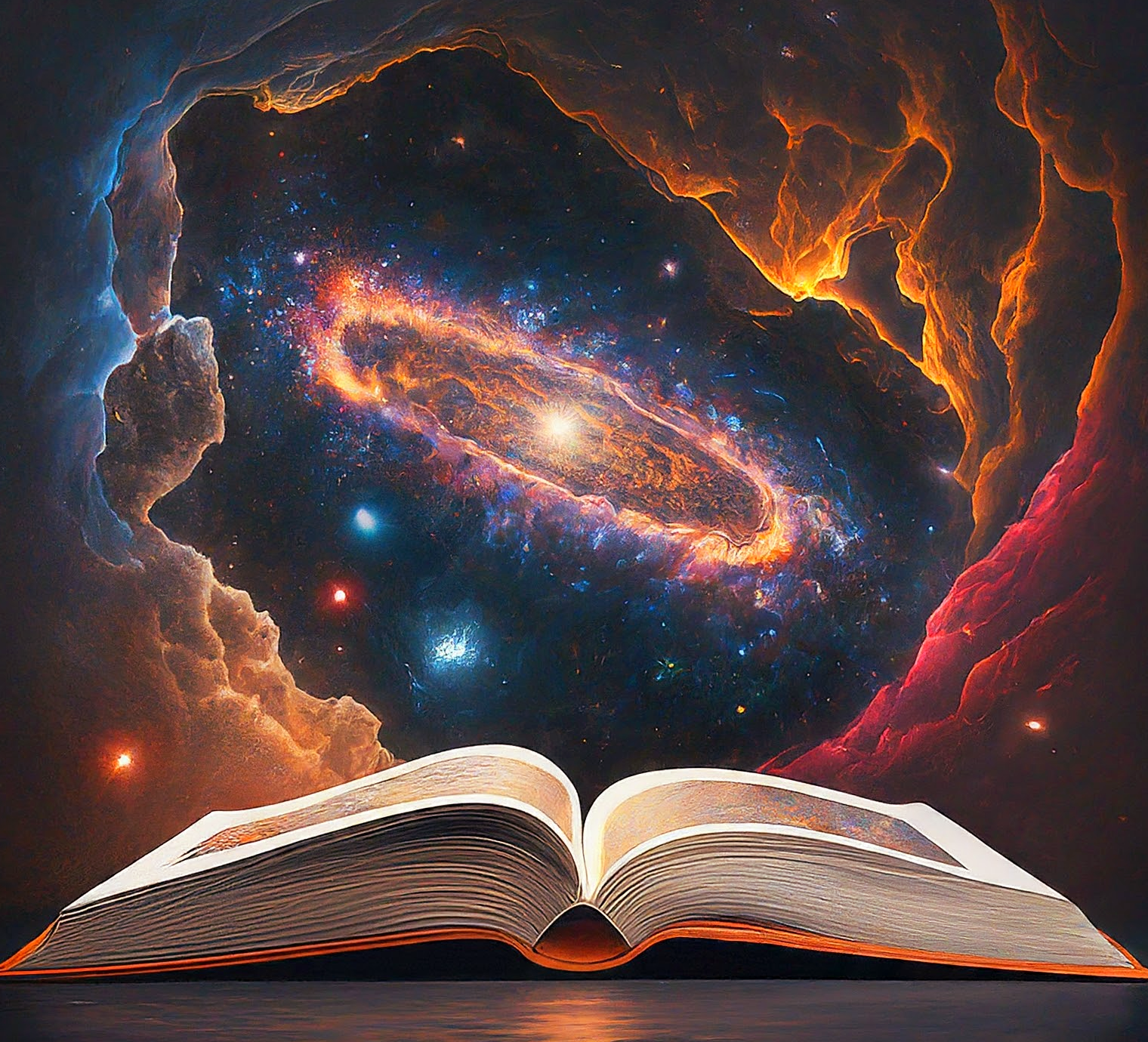
In the vast expanse of the universe, mysteries abound, captivating the human imagination and driving scientific inquiry. Modern Astrophysics, a field at the forefront of exploration, delves deep into understanding the origin, size, and age of the universe, unraveling the complexities of stars, galaxies, and nebulae. In this article, we embark on a journey through the cosmos, exploring the theories, methodologies, and evidence that shape our understanding of the universe.
In the Bible, several passages allude to the universe and celestial phenomena, including nebulae. The Bible mentions the nebulae as: "waters above the heavens" (already filtered waters).
Psalm 148:4
Praise Him, you heavens of heavens,
And you waters above the heavens!
Genesis 1:1-2: This opening passage of the Bible speaks to the creation of the universe by God, setting the stage for the subsequent account of creation.
Psalm 19:1-2: This poetic passage from the Psalms emphasizes the majesty and beauty of the heavens as a testament to God's creative power and wisdom.
Isaiah 40:26: Here, Isaiah describes God as the creator of the stars and celestial bodies, emphasizing His sovereignty over the cosmos.
Job 9:9: This verse from the book of Job references various celestial objects and constellations, highlighting the diversity and wonder of God's creation.
These passages invite readers to contemplate the grandeur of creation and to recognize the divine hand behind it.
Theory of Modern Astrophysics:
Origin, Size, and Age of the Universe:
The origin of the universe remains one of the most profound questions in astrophysics. Several theories, including the Big Bang theory and inflationary cosmology, offer explanations for the universe's birth, expansion, and evolution over billions of years. Observations of the cosmic microwave background radiation provide compelling evidence supporting the Big Bang theory, revealing the universe's early stages and its subsequent expansion.
Astrophysicists estimate the size of the observable universe to be approximately 93 billion light-years in diameter, encompassing countless galaxies, stars, and cosmic structures. Through advanced telescopes and observational techniques, scientists peer deep into space and time, unraveling the vastness of the cosmos and its ancient origins.
Measurement of Stars:
Stars, the celestial beacons that illuminate the night sky, hold vital clues to understanding the universe's dynamics. Astrophysicists employ various methods to measure stars, including parallax, spectroscopy, and photometry. Parallax, based on the apparent shift of a star's position relative to background objects as Earth orbits the Sun, allows scientists to calculate stellar distances accurately.
Spectroscopy reveals valuable information about a star's composition, temperature, and movement through the analysis of its emitted light spectrum. Brightness and volume measurements further contribute to understanding stellar properties, aiding in the classification and characterization of stars across the cosmic landscape.
Counting Stars:
Counting the number of stars in the universe presents a formidable challenge due to its vastness and complexity. Astrophysicists utilize statistical methods and observational data to estimate the abundance of stars within galaxies, galaxy clusters, and stellar populations. By analyzing star formation rates, luminosity functions, and galactic structures, scientists infer the total number of stars in the observable universe, numbering in the billions of trillions.
Types of Galaxies:
Galaxies, vast assemblies of stars, gas, and dust, exhibit a diverse range of shapes, sizes, and compositions. Common types include spiral galaxies, characterized by their pinwheel-like arms, elliptical galaxies, with smooth, oval shapes, and irregular galaxies, displaying chaotic structures. Additionally, astronomers classify galaxies based on their activity levels, such as active galactic nuclei and starburst galaxies, shedding light on their evolution and dynamics.
Types of Nebulae:
Nebulae, clouds of gas and dust scattered throughout the cosmos, serve as stellar nurseries, where new stars form and old stars meet their demise. The main types include emission nebulae, glowing with the light of energized gas, reflection nebulae, reflecting starlight off surrounding dust, and planetary nebulae, the remnants of dying stars. Studying nebulae provides insights into stellar birth, evolution, and the recycling of matter within galaxies.
Evolution of Life:
The evolution of life in the universe represents a captivating intersection of astrophysics, biology, and planetary science. While the origins of life remain a subject of ongoing research, astronomers search for habitable exoplanets within the habitable zone of stars, where conditions may support liquid water and potentially life-sustaining environments. By studying planetary systems and astrobiology, scientists explore the cosmic possibilities of life beyond Earth.
Theory as Evidence:
In astrophysics, theories serve as frameworks for understanding the universe, guiding research and exploration. Validating theories relies on empirical evidence gathered through observations, experiments, and computational models. While theories undergo scrutiny and refinement over time, their validity hinges on their ability to explain observational data and make testable predictions. Through rigorous testing and peer review, astrophysical theories continue to evolve, shaping our understanding of the cosmos.
Online Advertising

Ads
Ads
SubMeet


Ads

Rose


The Wall