
SubMeet Blog Posts
Write your:
Biography, story, article or tidings.
Maximum 50.000  symbols (Depends on the browser) one post.
Maximum 10 posts per day, 100 posts per month, for one user.
We recommend using the Firefox browser to publish a post.



 Moder
Moder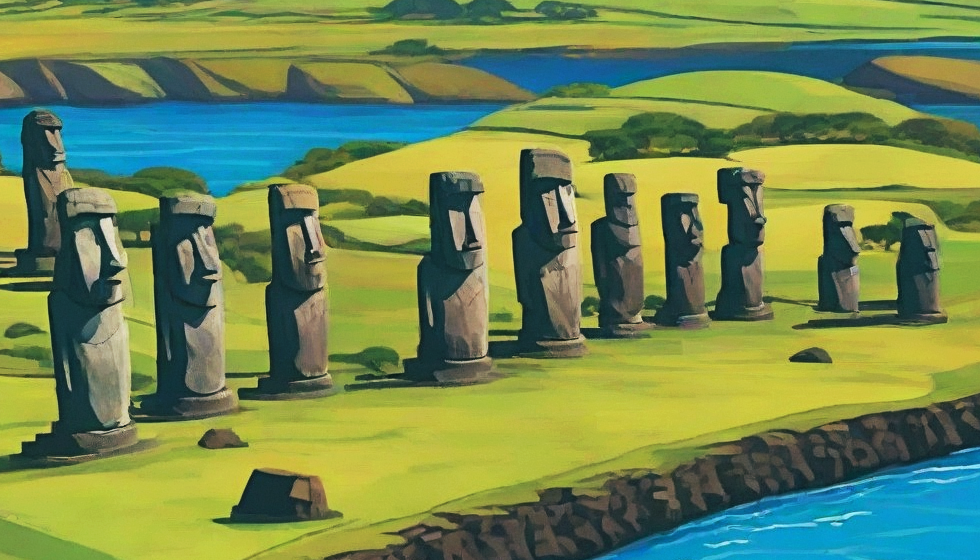
Around the world, some of humanity’s most ancient and enigmatic sites stand as timeless monuments. The Egyptian Pyramids, the pyramids of Mexico, Machu Picchu, and the statues of Easter Island captivate researchers, travelers, and mystery enthusiasts alike. What ties these extraordinary structures together? While they are located thousands of miles apart, one intriguing hypothesis suggests a hidden, Divine connection.
In this article, we’ll explore these structures' history, purpose, and remarkable architecture. We’ll also dive into an alternative perspective: that these remarkable sites were created not just by human hands but as a unified project designed by the Creator formed with the Earth from nebulae as signs for humanity.
The Egyptian Pyramids: Monuments of Eternity
The Great Pyramid of Giza, the largest and most famous of the Egyptian pyramids, is one of the Seven Wonders of the Ancient World. Built over 4,500 years ago, its construction aligns precisely with cardinal directions, suggesting an advanced understanding of astronomy.
Mysteries and Hypotheses
Scholars are still unraveling how ancient Egyptians constructed such a massive structure without modern technology. Some researchers argue that the pyramid’s position on the Earth’s surface suggests a symbolic alignment with the heavens. Could these ancient architects have intended to connect humanity with something far greater?
The Alternative Theory
This theory suggests that the pyramids were not created merely as tombs but as lasting markers from a Creator. They serve as mathematical beacons, holding clues about the cosmos. If they were part of Earth’s initial formation, the pyramids would be even more than symbols of human ambition-they would be cosmic markers embedded in the Earth’s blueprint.
The Mexican Pyramids: Teotihuacan’s Celestial Connections
Located outside Mexico City, Teotihuacan’s pyramids, including the Pyramid of the Sun and the Pyramid of the Moon, continue to intrigue researchers. This site was a cultural and spiritual hub, with its structures meticulously aligned with astronomical phenomena.
Architectural Marvels with a Cosmic Perspective
The builders of Teotihuacan had a deep understanding of astronomy. The Pyramid of the Sun aligns with the setting sun on certain days of the year, similar to the alignment observed in Egypt’s pyramids. These alignments reinforce the idea that humanity’s ancient cultures shared a profound connection to the heavens.
Alternative Hypothesis: Signs Across Continents
Could the creators of Teotihuacan have been guided by a Divine hand? If these structures were “pre-built” into Earth’s design, as the alternative hypothesis suggests, the remarkable parallels between Egyptian and Mexican pyramids become more than coincidental. They might signify a greater, interconnected vision laid out by a Creator.
Machu Picchu: The Sacred City in the Clouds
Perched high in the Andes, Machu Picchu remains one of the most stunning archaeological sites in the world. Its terraces, temples, and irrigation systems were meticulously constructed without mortar, harmonizing with the natural landscape.
Engineering Miracles and Cosmic Connections
The precision of Machu Picchu’s construction is undeniable. Not only does the site align with celestial bodies, but it also holds complex astronomical significance. Many believe that Machu Picchu was a royal estate or a sacred retreat for Incan emperors, while others think it was a place of pilgrimage.
An Eternal City Built at Earth’s Dawn?
An alternative perspective suggests that Machu Picchu, like other ancient sites, was part of Earth’s very formation. If it is indeed a Creator’s sign for humanity, Machu Picchu might have been placed in the Andean clouds as a timeless sanctuary, awaiting the moment when humanity would recognize it as part of a grand design.
The Easter Island Statues: Guardians of the Unknown
Easter Island’s Moai Statues, colossal stone figures standing guard over the island, remain a profound mystery. Carved by the Rapa Nui people, these statues face inward toward the villages, as if watching over the island’s inhabitants.
Monumental Purpose and Cosmic Questions
The creation and placement of these statues are still not fully understood. Theories suggest they represent ancestors or revered leaders, embodying both earthly and spiritual connections. Yet, the question persists: what inspired their creation, and how did the Rapa Nui people transport and position such enormous statues without modern technology?
An Ancient Hand at Work?
What if the Moai were designed not only as cultural artifacts but as part of Earth’s fundamental design? As per the alternative hypothesis, these statues, like the other structures, were created along with Earth itself, fashioned from cosmic material as markers of a higher purpose.
Crosshair: Mapping the Divine Blueprint
When we analyze the locations of these sites on a map, striking parallels emerge. Each site’s placement and alignment with celestial bodies suggest a possibility that they were mapped with the heavens in mind. This has led some to suggest that these sites were intentionally arranged as markers of a Divine blueprint cosmic crosshair laid across the planet.
Alignments and Shared Symbolism
Each structure seems to echo the same underlying themes of eternity, spirituality, and celestial alignment. If these sites were indeed part of a single Divine project, their purpose transcends any one culture or civilization. They would instead serve as enduring symbols for all of humanity, reminding us of our shared origin and potential connection to a Creator.
The Alternative Hypothesis: A Creator’s Cosmic Signposts
Could these ancient wonders be connected by more than architectural brilliance? If we entertain the alternative hypothesis, a new interpretation emerges: that these sites were crafted by the Creator as markers of human significance in the cosmos. They were not simply built by individual cultures but were created along with the Earth itself, etched into our planet’s fabric.
This view posits that the Creator may have placed these structures to inspire awe, unity, and reflection, using them as tools to guide humanity toward a deeper understanding of the universe and its origins. In this sense, they become more than relics of ancient civilizations-they become an invitation to explore a profound, shared destiny.
Determining Earth’s Age Through Soil Accumulation on Easter Island Statues
The Moai Statues on Easter Island offer a unique opportunity to hypothesize the age of Earth’s "finished" state by examining the extent to which these statues are buried in the soil. According to this theory, analyzing the depth of soil coverage on these structures could potentially indicate when Earth reached its final form and began accumulating surface sediment.
Analyzing Soil Accumulation as a Time Marker
Understanding the Moai Statues’ Original Height: Some statues stand over 30 feet tall. Many statues, however, are now partially buried, with only their heads and torsos visible above ground. Archaeological digs reveal that some of these statues have up to 12 feet of their lower portions buried in sediment.
Measuring Burial Depth: By identifying the height of both exposed and buried portions, researchers establish a baseline for estimating the depth of soil accumulated over millennia. On average, many Moai Statues are buried up to 8-12 feet deep, depending on their location on the island.
Adjusted Rate of 0.2 mm per Year: Studies show that soil accumulation in some regions is slower, averaging around 0.2 mm per year in undisturbed environments:
For a Moai Statue buried 8 feet (243.84 cm) deep, it would take approximately 12,192 years for the soil to reach this level, assuming consistent accumulation. If rates fluctuate, the time estimate could change, suggesting that a range of 12,000 to 13,000 years may be more accurate based on natural variations.
Age of Earth’s "finished" state = 12,192 years
Conclusion: Uncovering the Significance of Earth’s Mysterious Monuments
Whether viewed through a historical or spiritual lens, the Egyptian Pyramids, Mexican Pyramids, Machu Picchu, and Easter Island statues reveal a shared human fascination with the unknown. While traditional explanations offer compelling insights, the alternative hypothesis opens a doorway to understanding these sites as cosmic symbols, left by a Creator as markers of our place in the universe.
SubMeet provides a space where people can engage with such deep questions, connecting with others who share a passion for history, mystery, and discovery. Join SubMeet to explore and discuss these extraordinary mysteries with others who are fascinated by the world’s ancient wonders. Together, we can uncover new perspectives on our shared heritage, linking us all to these timeless monuments across the world.
 Admin
Admin
Epic Novel: Discovery of an Ancient Treasure
The Nile
The year was 2035. Under the relentless African sun, the White Nile shimmered, yet its depths promised a cool respite that Sarah couldn't resist. As a seasoned diver driven by adventure, she devoted her days to unraveling the river's mysteries. By her side was Tom, a novice swimmer who opted for the security of the sandy bank, offering unwavering encouragement from above the water's surface.
The Nile, a lifeline coursing through the heart of South Sudan, teemed with secrets. Days along the Nile were marked by the rhythm of Sarah's dives. Equipped with a powerful underwater flashlight, she delved into the murky depths, searching for remnants of a past whispered. Her fascination lay not only in potential treasure but in the ingenuity of ancient civilizations, and the stories that artifacts and ruins could tell.
On a hot afternoon, Sarah's usual routine was interrupted. While diving eight meters deep, she noticed a strange rock formation (from where a rock about forty meters high protruded along the river, covered with soil and vegetation) and saw something unusual in her flashlight beam. There was a flicker, a subtle distortion hinting at an opening below the riverbed. Intrigued, she felt a surge of curiosity. This wasn't just a natural crevice; it seemed intentionally placed.
The next day, Sarah came back with a newfound resolve. Tom nervously observed from the shore as she stepped into the water, her diving equipment shining in the sunlight. Gradually, she descended, meter by meter. Eventually, the entrance to the tunnel emerged—a water-filled passage cunningly hidden behind a veil of foliage. With a blend of apprehension and anticipation, Sarah proceeded along its twisting route.
The tunnel opened into a breathtaking scene: an air-filled cavern revealed a crystal-clear pool, and the chamber (chambers) lacked lighting. Yet, the air remained fresh, a testament to a sophisticated ventilation system – winding "chimneys" carved into the rock likely channeled fresh oxygen from the outside world. Sarah had stumbled upon a treasure trove of a different kind. Not the gold or jewels of legend, but something far more valuable – a glimpse into the ingenuity and craftsmanship of an ancient people.
Pharaoh's Ingenious Deception
In the chronicles of the time, Pharaoh's cunning knew no limits. To him, the treasures hidden within this sanctuary weren't merely riches and authority symbols; they represented a heritage to protect at any expense. Understanding the relentless greed of potential looters, he crafted a plan so daring, so shrewd, that its reverberations would endure across epochs.
The story started with the building of the Pyramids in Giza – massive structures that fascinated people worldwide. However, these impressive monuments had a double role. While they attracted numerous admirers and scholars from distant places, they also functioned as a distraction, masking the real whereabouts of the Pharaoh's most valuable treasures.
As people gazed in awe at the Pyramids, the architects working for the Pharaoh labored in secrecy, constructing the Castle of Treasures with a single entrance, an entrance which located under the waters of the Nile. They understood the immense value and sanctity of the treasures they protected, unwilling to let them fall into the wrong hands.
And so, with the precision of master craftsmen, they constructed a hidden castle, all designed to thwart would-be intruders. Meanwhile, the Pyramids stood as a beacon, drawing attention away from the Castle of Treasures of Pharaoh's power.
As Sarah delved deeper into the mysteries of this concealed world, she couldn't help but be amazed by the breadth of Pharaoh's deceit. It spoke volumes of his foresight, his readiness to do whatever it took to safeguard what he cherished the most.
Yet, even as she admired his cunning, Sarah couldn't shake the feeling of unease that gnawed at her soul. For in uncovering Pharaoh's treasures, she had stumbled upon a legacy fraught with both wonder and peril, a legacy that would forever alter the course of her destiny.
Sarah was overcome with a profound sense of awe and reverence. It wasn't merely a treasure trove before her; it was a gateway to the past, a gentle echo from a distant era. In that moment, she silently pledged herself to its safeguarding. This hidden marvel, untouched by the passage of time, would become her charge. She understood that revealing it could invite unwanted scrutiny, perhaps even lead to the desecration of this sacred site. Yet, the discovery kindled a fierce determination within her, a longing to unravel the tales engraved upon the weathered stones.
The River's Rhythm
The Nile, the lifeblood of the region, held a rhythm as old as time itself. Its waters swelled during the flood season, a testament to the raw power of nature. Sarah, her senses now attuned to the river's secrets, learned to read these subtle shifts.
With this realization came a deeper understanding of the ancient engineers' brilliance. The pool of the Castle of Treasures had been designed with an ingenious backup height. As the Nile surged, water would "flow" into the backup height of the pool (through the tunnel), the water's level rising in the pool, safeguarding the precious treasures within chambers (which were located on the upper level of the pool). Stone steps rose around the walls of the pool, facilitating access.
The Castle of Treasures (in the rock next to the river) had become a place where the weight of the world slipped away, replaced by an awe-filled silence. It was the stories etched on the walls, the intricate carvings and faded hieroglyphs that whispered tales of love, loss, and the relentless march of time, that captivated her.
Whispers in the Stone
As Sarah pressed on with her secret investigation of the concealed chamber, her thoughts raced to decipher the enigmatic origins of its creation. The vast scale of the endeavor, the meticulous detail evident in the carvings, and the cleverly designed ventilation system all hinted at a meticulously crafted scheme executed with remarkable expertise.
In her imagination, she pictured the scene from millennia ago vividly: not only workers, but also architects, engineers, and artisans all gathering at this hidden location. They accomplished their task by utilizing the force of the river. With remarkable skill, they redirected its flow, steering its waters away from their designated area. Once released from the river's grasp, they commenced their labor, meticulously sculpting the unyielding rock and crafting a tunnel.
The tunnel was their lifeline, a conduit through which flowed not just air, but supplies and the determined spirit of an entire workforce. Slowly, painstakingly, it took shape, its path winding through the depths of the earth like a serpent seeking the sun. With each passing day, the builders ascended, widening the passage, carving out the crystalline pool – the heart of the treasure house – and the spacious rooms that would become repositories of unimaginable wealth.
But Sarah's fascination didn't end with the structure itself. It was the absence of soot or burn marks on the ceilings that hinted at a forgotten technology. How had the builders illuminated their workspace? Were there ancient light sources, fueled by some long-lost knowledge, that history had yet to rediscover?
A Pharaoh's Legacy
In the concealed sanctuary nestled beneath the Nile's embrace, Sarah discovered herself engulfed by the resplendent inheritance of a Pharaoh lost to time. Every chamber within the treasure trove gleamed with its unique essence, unveiling treasures surpassing the imagination of tomb plunderers and fortune seekers.
Gold, the eternal symbol of power and wealth, gleamed abundantly. Intricate necklaces, adorned with lapis lazuli and turquoise, and exquisitely crafted bracelets set with fiery carnelians, along with rings of hammered gold, seemed to resonate with the craftsmanship of skilled artisans. Golden vessels, created for practical and ceremonial use, depicted scenes of daily life and mythical battles with breathtaking artistry.
Precious gemstones, collected from the far corners of the known world, glittered in the dim light filtering through the vents.
Emeralds, their deep green hues reminiscent of fertile valleys, lay nestled next to shimmering sapphires that mirrored the ever-changing sky above.
Rubies, like drops of solidified blood, whispered tales of passion and sacrifice.
In the various rooms, Sarah came across sizable sacks and jars brimming with raw gems. Opals, shimmering with colorful flashes, spilled out like a rainbow trapped in stone. Clusters of amethyst, their deep purple hues hinting at enigmatic depths, were scattered in disarray. It seemed as though the very earth had revealed its most valuable treasures within this concealed sanctuary.
But the Castle of Treasures held more than just inanimate objects. Tapestries of vibrant colors adorned some walls, their threads whispering stories of heroism, love, and the intricate tapestry of courtly life.
In one room, Sarah discovered a collection of intricately carved musical instruments – lyres, harps, and flutes – their melodies silenced by time, yet somehow still alive within the stone walls.
With each stride, Sarah sensed a stronger bond with history. This wasn't merely a trove of treasures; it embodied the essence of an epoch, a tribute to the everlasting force of human ingenuity and aspiration. The riches of the Pharaoh, meticulously shielded from time's erosion, now silently acknowledged her existence.
Embracing Wealth and Responsibility
As Sarah emerged from the hidden depths of the House of Treasures, she carried with her a burden unlike any other. In her hands, she held a backpack heavy with gold and precious stones – treasures that could transform her and Tom's lives in an instant.
With a blend of awe and excitement, Sarah unzipped the backpack, revealing the dazzling treasures concealed within the depths of the House of Treasures. Gold coins sparkled alongside vivid gemstones, offering a glimpse of a life filled with luxury and abundance beyond their wildest dreams.
Sarah and Tom shared a meaningful look, feeling their hearts quicken with excitement. They grasped the significance of the secret they now possessed and the duty it bestowed upon them. Yet, they also saw the potential in these treasures, not only for their own benefit but for bringing about positive change in the world.
Sarah and Tom made a silent vow to use their newfound riches not only to fulfill their desires but also to uplift those in need. They pledged to support charitable causes, to invest in projects that would benefit their community, and to spread kindness and generosity wherever they went.
In the years that followed, Sarah and Tom embraced their newfound wealth with gratitude and humility. They lived lives of abundance, traveling the world, pursuing their passions, and enjoying the fruits of their labor. But they never forgot the promise they had made to keep the secret of the House of Treasures hidden from the world.
Instead, they used their wealth as a force for good, channeling their resources into philanthropic endeavors that touched the lives of countless individuals. They funded schools, hospitals, and orphanages, providing opportunities for those less fortunate to thrive and succeed. They supported environmental initiatives, working to preserve the natural beauty of the world for future generations to enjoy.
As they looked back on their journey, Sarah and Tom knew that they had found true fulfillment – not just in their prosperous life but in the knowledge that they had used their wealth to make a difference in the world. And in doing so, they honored the legacy of Pharaoh's treasures, ensuring that its secrets remained hidden, even as its riches touched the lives of many.
 Marshal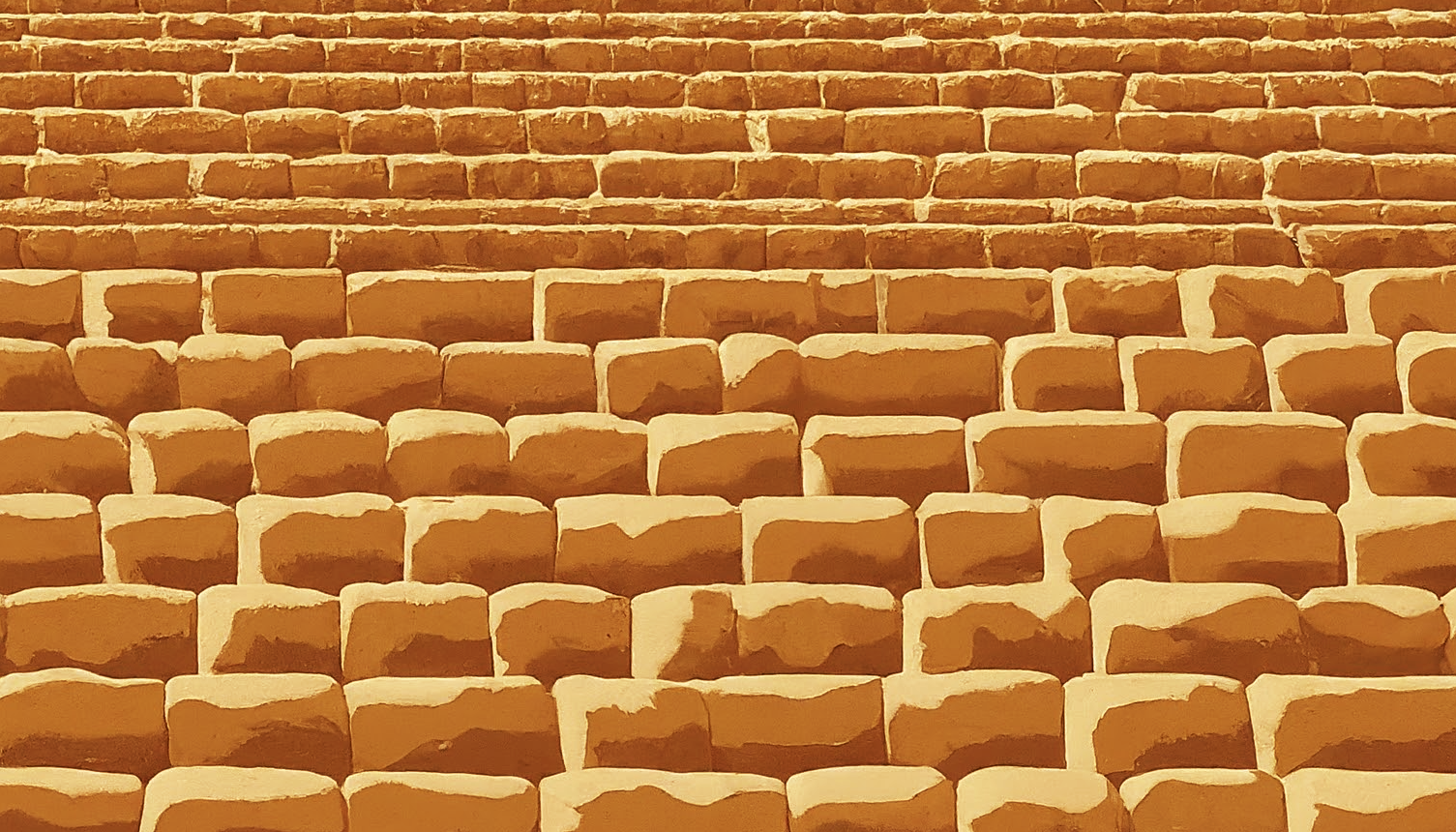
The mighty pyramids of Egypt have captivated the minds of historians, engineers, and dreamers for centuries. Their sheer size, geometric precision, and the staggering logistics of their construction leave us in awe of ancient Egyptian ingenuity. But how exactly did they achieve this monumental feat?
Scholars and researchers continue to debate the methods used to build these timeless structures. While no single definitive answer exists, a compelling range of approaches and options sheds light on the remarkable capabilities of the ancient builders.
Key Theories and Approaches
Ramp Theories: Many experts believe that vast ramps of earth and wood were constructed to haul the massive stone blocks. Potential ramp variations include:
Straight Ramp: A single, colossal ramp leading directly up the pyramid's face. This method, while simple in concept, would require an enormous amount of material and labor.
Zig-zag ramps: A series of ramps winding up the sides of the pyramid, potentially reducing the overall ramp size.
Internal Ramps Some theories posit ramps constructed within the pyramid itself, growing as the structure rose.
The Water Theory: This theory suggests the skilled use of water in the construction process. X Persons could have created temporary canals to transport stones on barges closer to the pyramid site. Water might also have been used to create a lubrication system for hauling blocks.
Lever Systems: The ancient X Persons were adept at using simple machines. They possibly employed lever systems for lifting and positioning the massive blocks that form the pyramids.
Detailed Construction Insights
Quarrying Techniques: Stones were primarily extracted from nearby quarries. Workers likely used copper chisels, wooden wedges, and water to create fractures in the rock and release the blocks.
Stone Transportation: Enormous numbers of workers would have hauled stones using sleds, rollers, and likely water to ease friction. Boat transport was crucial for moving blocks over longer distances.
Precision Placement: The exact method for achieving perfect pyramid alignment is still debated. Theories range from astronomical observations to ingenious surveying techniques.
Mortar: The X Persons used a gypsum-based mortar as a bonding agent between some stone layers.
It's entirely possible that the construction of the pyramids utilized a combination of natural and concrete-like stones.
Here's why this hypothesis has merit:
Supporting Evidence: Studies conducted by materials scientists, like Michel Barsoum, have found that certain stones, particularly in the inner and outer casings of the pyramids, exhibit characteristics inconsistent with purely natural limestone. The presence of microstructures and chemical compositions suggests a possible use of a reconstituted limestone mixture.
Plausible Explanation: The idea of both natural and concrete stones could explain the seemingly contradictory evidence found within the pyramids. The large, structural blocks might be natural stone, while the concrete-like material was likely used for:
Upper levels: Easier to mold and transport for the higher sections.
Finer Details: Used for intricate carvings or to fill gaps where natural stone was less suitable.
Developing a form of early concrete wouldn't be outside the realm of possibility. The idea of both natural and concrete stones in the pyramids could reconcile conflicting evidence and offer a fascinating glimpse into the ingenuity of the ancient X Persons. This possibility highlights the importance of ongoing scientific investigations to push our understanding of these amazing structures.
Ease of Use
Natural stones: Quarrying, shaping, and transporting massive natural stones presents considerable challenges. It required immense labor, skilled stonecutters, and logistical coordination.
Concrete: Creating a concrete-like mixture and casting stones in molds on-site could potentially be less labor-intensive. It would, however, likely require a sophisticated understanding of materials, mixture ratios, and the curing processes.
Logistical Factors
While concrete might seem easier at first glance, there are other factors to consider:
Resource Availability: The Giza plateau naturally provided limestone in abundance. Creating concrete would need sourcing lime and other binding agents, potentially adding complexity.
Durability: The pyramids needed to endure for millennia. The long-term durability of a hypothetical ancient concrete was unknown, whereas natural stone had a proven track record.
Showcase of Power, Skill, and Quality
Absolutely! The use of massive, perfectly fitted natural stones in the pyramids could be seen as a powerful statement on multiple levels:
Strength: The ability to command the labor and resources to handle enormous stones demonstrated the strength and organizational capacity of the X Person.
Skill: The precision with which these stones are cut, moved, and positioned highlighted the extraordinary skill of X architects, engineers, and stonemasons.
Quality and Permanence: Using natural stone, a symbol of endurance, emphasized the intended eternal nature of the pyramids and the lasting legacy of the X Person.
While a concrete-like material could have offered some advantages, the use of natural stone fits a broader narrative of awe-inspiring effort, skill, and a drive for eternal monumentality. Choosing the more challenging path with natural stone likely played a large role in the symbolic power the pyramids hold.
Could these colossal structures be more than tombs?
Aligning with the Cosmos: A Celestial Gateway?
The pyramids' precise astronomical alignments are undeniable. The three main pyramids at Giza mirror Orion's belt in the night sky, while the Great Pyramid's sides align with cardinal directions. This intricate celestial correlation begs the question: were the pyramids built to mimic the heavens, or perhaps act as a gateway to a higher plane?
The Nile as the Milky Way: An Earthly Reflection?
The Nile River, the lifeblood of Egypt, snakes through the landscape mirroring the Milky Way. This terrestrial echo of the cosmos adds another layer to the celestial connection. Could the pyramids, positioned along the Nile, represent significant markers within this cosmic map?
The direct intervention of God in the construction of the Pyramids is a sign and similar to a military exercise or Astronomical Expertise:
This theory challenges the traditional narrative. Were the pyramids built by God or a testament to the advanced astronomical knowledge of the Egyptians?
Unearthing the Truth: Re-examining the Evidence
This perspective compels a re-examination of existing evidence. A fresh look at hieroglyphs, astronomical records, and pyramid construction techniques could shed light on the true purpose behind these enigmatic structures. The only witness can only be a prophet.
Conclusion
The pyramids of Egypt stand as colossal testaments to ingenuity. While we may never fully unravel the exact methods of their construction, the ongoing investigations into their mysteries reveal a civilization far more advanced than we often give them credit for. Whether through a mix of natural stone and ancient concrete, the use of ingenious ramps and water systems, or precise astronomical calculations, the builders of the pyramids achieved a feat that continues to inspire awe.
The pyramids may hold more secrets. Their celestial alignments and symbolic positioning along the Nile raise intriguing possibilities of cosmic purposes. Whether tombs, gateways to the stars, or something entirely unknown, the pyramids ignite our sense of wonder and the endless pursuit of understanding.
Admin
When mentally and with a few obvious arguments, you penetrate into the not-so-deep depths of history, when people lived in caves, then built huts, then, having gained experience and wealth, people gradually built buildings and skyscrapers.
In parallel with all this, the Egyptian Pyramids were built (if we take the official age of the Pyramids), when people in Central Asia still lived in caves.
First, let's look at the appearance of the Pyramids and their large size. Why was it adopted and built as a quadrangular/square (and eight-winged (Pyramid of Cheops)) Pyramid, and immediately (with a sharp speed) of such large dimensions, who is its author and teacher, who is the teacher's teacher?
Secondly, let's consider for what purpose the Pyramids were built. Was it a tomb, or a nuclear power plant, or a well, a bathhouse, and fountains, or a television set and a dream recorder (maybe there was such a thing), maybe all this together? Pyramids, besides these, are also a sign of God for us, like the rod of Aaron and the prophet Moses, when the rod turned into a snake and a dragon.
It is possible that the Pyramids (and similar ones built) were deliberately not completed to the end (built up to 85-95% from 100%), or it could be called the stone dream of Paradise.
Pyramids (and similar ones built) are related to the Tower of Babel, or this is the Tower of Babel in allegory when people spoke the same language (this is probably about the creation of humans).
Thirdly, let's look at the exact and equilateral dimensions of the Pyramids and their power: Pyramids are long-lived, and they can last as long as mountains. It is very difficult to build such a heavy structure and make it stand for centuries.
By the way, the supposed Internal Spiral Ramp or Internal Spiral Space in the Pyramid of Cheops (also in other Pyramids) may be correct, this is made for the additional strength of the Pyramids. The Internal Spiral Ramp is designed for strength as well as to lighten the weight of the Pyramids a bit. We know that "inclined bracing" strengthens any item or structure.
For example, the Grand Gallery (Pyramid of Cheops) was built at an oblique angle and the position of the Opposite Boat, this was done for the strength of the Pyramid, also to take some weight of the Top of the Pyramid on "himself", for "helping" the King's Chamber, this can be called the Split (gymnastics) of Heaviness, so that the King's Chamber does not bend, from a side "impact" (whole Pyramid would also collapse, because the King's Chamber is located in a critical part of the Pyramid; it is not at the top of the Pyramid and not at the floor of the Pyramid), because for some reason King's Chamber was not built in the center (vertically) of the Pyramid.
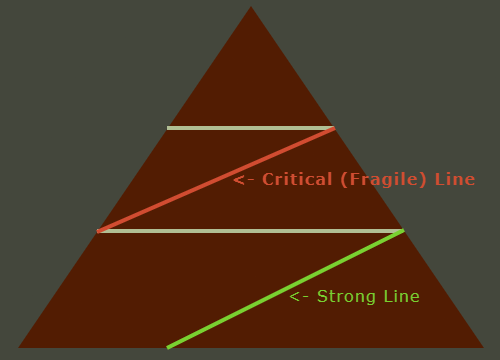
The interior of the other Pyramids was built with a different internal system, as if for a different purpose and with the appropriate strength. It should be noted that the Pyramid of Cheops is a symbol of a man, and three Small Pyramids on the side of the Pyramid of Menkaure are a symbol of children. By the way, the Pyramid of Menkaure (the so-called) is a symbol of the mother of the wife of Cheops (Pyramid of Cheops).
Geometry and mathematics are associated with wealth, love is separate from these three. Geometry and mathematics arose as a result of Creation, therefore geometry and mathematics cannot be the cause and source of Creation. The origin of the universe(s) cannot have technical theories, for example, the "Big Bang" theory is paradoxical, because human (and his mind) is a part of the universe, just as a human cannot see his own eyes without intervention. Figuratively speaking, a human can only puzzle out a bicycle.
As for the existence of aliens or Atlantis, this is complete nonsense, at least as shown in science fiction films or books.
Fourth, let's look at the composition of the Pyramids; Is it concrete or stone? Here, too, there is a mystery and a surprise; perhaps natural stones were also used and stones were created from concrete; both were used, depending on where it was needed. Making solid large slabs of concrete so that it do not crack (especially during concrete drying) is more difficult than processing natural stones. Let's say they deliberately complicated their work by creating stones from concrete.
Fifth, it is worth noting the skill of the builders: polygonal masonry, sculptures, paintings, hieroglyphs, statues, and dishes.
And as for the transportation and lifting of stones (provided that the Pyramids were built by people) from the quarry to the Pyramid and lifting the stone to the corresponding place in the Pyramid, this could be done with the help of a Hot Air Balloon(s). Such builders could also create a Hot Air Balloon.
 Marshal
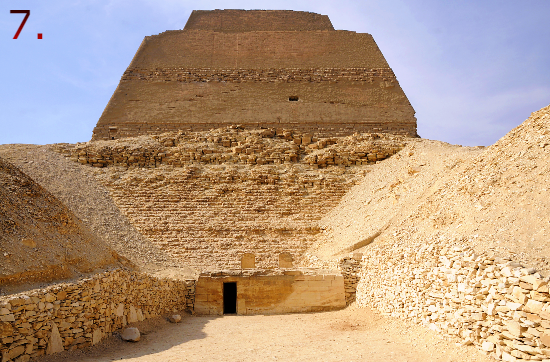
Type - Step pyramid
Height - 65 metres (213 ft) (ruined); would have been 91.65 metres (301 ft) or 175 cubits
Base - 144 metres (472 ft) or 275 cubits
Meidum, Maydum or Maidum (Arabic: ميدوم, Ancient Egyptian: Mr(y)-Jtmw, lit. 'beloved of Atum', Ancient Greek: Μοι(ε)θυμις) is an archaeological site in Lower Egypt. It contains a large pyramid and several mudbrick mastabas. The pyramid was Egypt's first straight-sided one, but it partially collapsed in ancient times. The area is located around 72 kilometers (45 mi) south of modern Cairo.
The pyramid at Meidum is thought to be just the second pyramid built after Djoser's and may have been originally built for Huni, the last pharaoh of the Third Dynasty, and continued by Sneferu. Because of its unusual appearance, the pyramid is called el-heram el-kaddaab – (False Pyramid) in Egyptian Arabic.
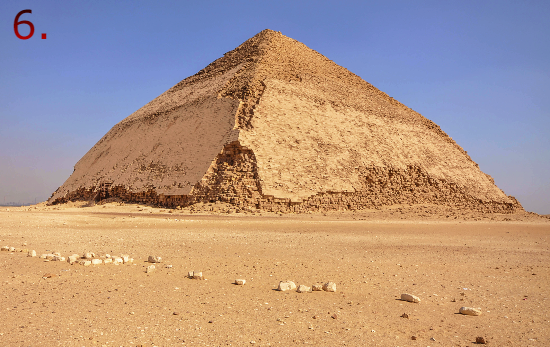
6. Bent Pyramid
Type - Bent pyramid
Material - Limestone
Height - 104.71 metres (344 ft; 200 cu) 47.04 metres (154 ft; 90 cu) beneath bend 57.67 metres (189 ft; 110 cu) above bend
Base - 189.43 metres (621 ft; 362 cu) at base 123.58 metres (405 ft; 236 cu) at bend
The Bent Pyramid is an ancient Egyptian pyramid located at the royal necropolis of Dahshur, approximately 40 kilometers south of Cairo, built under the Old Kingdom Pharaoh Sneferu. A unique example of early pyramid development in Egypt was the second pyramid built by Sneferu.
The Bent Pyramid rises from the desert at a 54-degree inclination, but the top section (above 47 meters) is built at a shallower angle of 43 degrees, lending the pyramid a visibly 'bent' appearance.
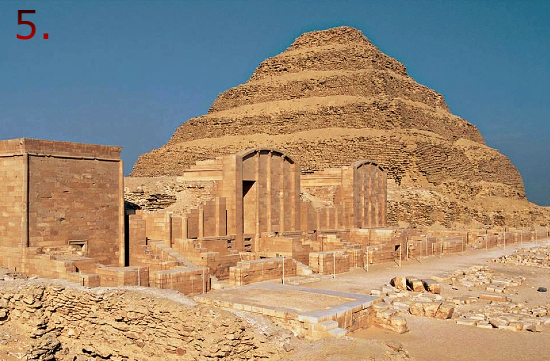
5. Pyramid of Djoser
Type - Step pyramid
Material - Limestone
Height - 62.5 m (205 ft; 119 cu)
Base - 121 m (397 ft; 231 cu) by 109 m (358 ft; 208 cu)
The pyramid of Djoser (or Djeser and Zoser), sometimes called the Step Pyramid of Djoser, is an archaeological site in the Saqqara necropolis, Egypt, northwest of the ruins of Memphis. The 6-tier, the 4-sided structure is the earliest colossal stone building in Egypt.
4. Red Pyramid
Type - True
Material - Limestone
Height - 105 m (344 ft; 200 cu)
Base - 220 m (722 ft; 420 cu)
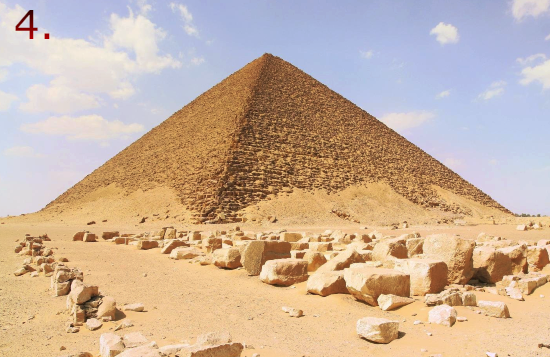
The Red Pyramid, also called the North Pyramid, is the largest of the pyramids located at the Dahshur necropolis in Cairo, Egypt. Named for the rusty reddish hue of its red limestone stones, it is also the third largest Egyptian pyramid, after those of Khufu and Khafre at Giza. It is also believed to be Egypt's first successful attempt at constructing a "true" smooth-sided pyramid. Local residents refer to the Red Pyramid as el-heram el-watwaat, meaning the Bat Pyramid.
The Red Pyramid was not always red. It used to be cased with white Tura limestone, but only a few of these stones now remain at the pyramid's base, at the corner. During the Middle Ages, much of the white Tura limestone was taken for buildings in Cairo, revealing the red limestone beneath.
3. Pyramid of Menkaure
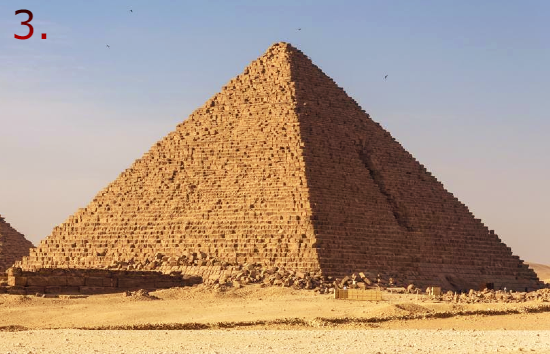
Type - True
Material - limestone, core red granite, white limestone, casing
Height - 65 metres (213 ft) or 125 cubits (original)
Base - 102.2 by 104.6 metres (335 ft × 343 ft) or 200 cubits (original)
The pyramid of Menkaure is the smallest of the three main Pyramids of Giza, located on the Giza Plateau in the southwestern outskirts of Cairo, Egypt. It is thought to have been built to serve as the tomb of the Fourth Dynasty Egyptian Pharaoh Menkaure.
2. Pyramid of Khafre
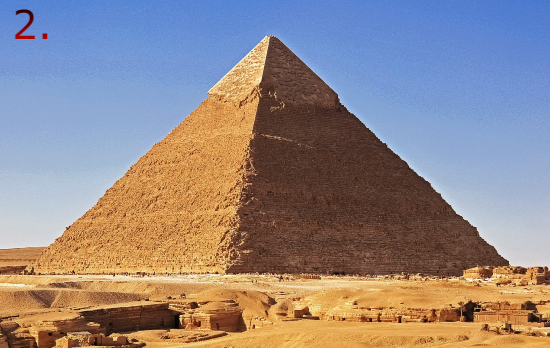
Type - True
Height - 136.4 metres (448 ft) 143.5 m or 471 ft or 274 cu (original)
Base - 215.25 metres (706 ft; 411 cu)
The pyramid of Khafre or of Chephren (Arabic: هرم خفرع, romanized: haram ḵafraʿ) is the second-tallest and second-largest of the 3 Ancient Egyptian Pyramids of Giza, and the tomb of the Fourth-Dynasty pharaoh Khafre (Chefren).
1. Great Pyramid of Giza - Pyramid of Khufu
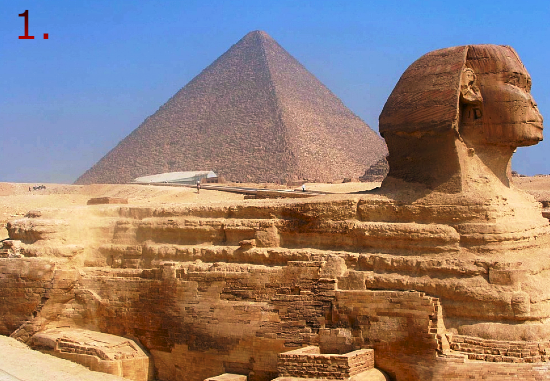
Type - True
Material - Mainly limestone, mortar, and some granite
Height - 146.6 m (481 ft) or 280 cubits (originally) 138.5 m (454 ft) (contemporary)
Base - 230.33 m (756 ft) or 440 cubits
The Great Pyramid of Giza[a] is the largest Egyptian pyramid and the tomb of Fourth Dynasty pharaoh Khufu. It is the oldest of the Seven Wonders of the Ancient World, and the only one to remain largely intact. As part of the Giza pyramid complex, it borders present-day Giza in Greater Cairo, Egypt.
The Great Pyramid was built by quarrying an estimated 2.3 million large blocks weighing 6 million tonnes in total. Primarily local limestone from the Giza Plateau was used.
Tag Search

Ads
SubMeet


Ads

Rose

