
SubMeet Blog Posts
Write your:
Biography, story, article or tidings.
Maximum 50.000  symbols (Depends on the browser) one post.
Maximum 10 posts per day, 100 posts per month, for one user.
We recommend using the Firefox browser to publish a post.



 Marshal
Let’s explore 12 essential organs, 6 vital biological substances, and the fascinating connection between the heart and the brain. For each organ and substance, we will suggest one fruit or vegetable as part of a healthy diet, making the information easier to remember without becoming overwhelmed by too many details.
🫀 12 Essential Organs
🧠 1. Brain
The brain controls thinking, memory, movement, emotions, and sensory perception.
🫐 Nutritional support: blueberries.
❤️ 2. Heart
The heart pumps blood throughout the body, delivering oxygen and nutrients to tissues.
🍎 Nutritional support: pomegranate.
🫁 3. Lungs
The lungs enable the exchange of oxygen and carbon dioxide, helping supply the body with the oxygen it needs.
🍏 Nutritional support: apples.
🧪 4. Liver
The liver processes nutrients, produces bile, participates in metabolism, and helps transform and eliminate many substances from the body.
🥬 Nutritional support: beetroot.
🫘 5. Kidneys
The kidneys filter the blood, regulate fluid and electrolyte balance, and help control blood pressure.
🍒 Nutritional support: cranberries.
🥣 6. Stomach
With the help of stomach acid and digestive enzymes, the stomach processes food and begins the digestion of proteins.
🥬 Nutritional support: cabbage.
🌿 7. Intestines
The intestines absorb nutrients and water, support the gut microbiome, and help eliminate undigested waste.
🍌 Nutritional support: bananas.
🩸 8. Pancreas
The pancreas produces digestive enzymes and hormones, including insulin, which helps regulate blood glucose levels.
🥗 Nutritional support: spinach.
🛡️ 9. Spleen
The spleen filters the blood, removes old blood cells, and plays an important role in immune defense.
🍠 Nutritional support: sweet potatoes.
⚡ 10. Adrenal Glands
The adrenal glands produce hormones such as cortisol and adrenaline, which help regulate the body's response to stress and support other essential functions.
🥑 Nutritional support: avocados.
🦋 11. Thyroid Gland
The thyroid gland produces hormones that regulate metabolism, energy use, and body temperature.
🧄 Nutritional support: garlic.
✨ 12. Skin
The skin is the body's largest organ. It protects us from external influences, helps regulate body temperature, and provides sensory information.
🍅 Nutritional support: tomatoes.
💧 Six Vital Biological Substances
These six biological substances and tissues contribute to the transport of materials, the maintenance of internal balance, and the body's essential functions.
🩸 1. Blood
Blood transports oxygen, nutrients, hormones, and metabolic waste products throughout the body.
🍇 Nutritional support: grapes.
🦴 2. Bone Marrow
Bone marrow is a tissue found inside many bones. It produces red blood cells, white blood cells, and platelets.
🥦 Nutritional support: broccoli.
💚 3. Lymph
Lymph transports immune cells and helps return excess fluid from body tissues to the bloodstream.
🍋 Nutritional support: lemons.
🧠 4. Cerebrospinal Fluid
Cerebrospinal fluid surrounds the brain and spinal cord, cushions them against mechanical impact, and supports the normal functioning of the central nervous system.
🍉 Nutritional support: watermelon.
📨 5. Hormones
Hormones are chemical messengers that regulate metabolism, growth, reproduction, sleep, and many other biological processes.
🥕 Nutritional support: carrots.
💧 6. Interstitial Fluid
Interstitial fluid surrounds the body's tissue cells and enables the exchange of nutrients, oxygen, and metabolic waste products.
🥒 Nutritional support: cucumbers.
🌱 The main idea: Human health depends on the cooperation of many body systems, not on a single food or individual organ.
🤝 The Connection Between the Heart and the Brain
The heart has its own network of nerve cells, known as the intrinsic cardiac nervous system. This network regulates heart function and communicates with the brain. For this reason, the heart is sometimes called the “second brain.”
🧠 Approximately 40,000 neurons. These neurons process sensory signals and help regulate cardiac activity.
🔄 Two-way communication. The heart and brain constantly exchange signals. Signals traveling from the heart to the brain can influence brain functions.
⚡ Some popular accounts claim that the heart's electrical field is approximately 60 times stronger than the brain's and that its magnetic field is up to 5,000 times stronger. They also suggest the heart's field can extend beyond the body, potentially reaching 1.5 to 2 meters, and can be detected with specialized equipment.
❤️ A deeper insight: The heart and brain are not competitors. They are essential parts of one biological system, and their interaction influences our physical and emotional state.
🌟 Conclusion: Small Habits, An Extraordinary Body
The human body is an extraordinary system of organs, tissues, fluids, and signals. Its health depends on the cooperation of these systems, a balanced diet, regular physical activity, and sufficient sleep.
Marshal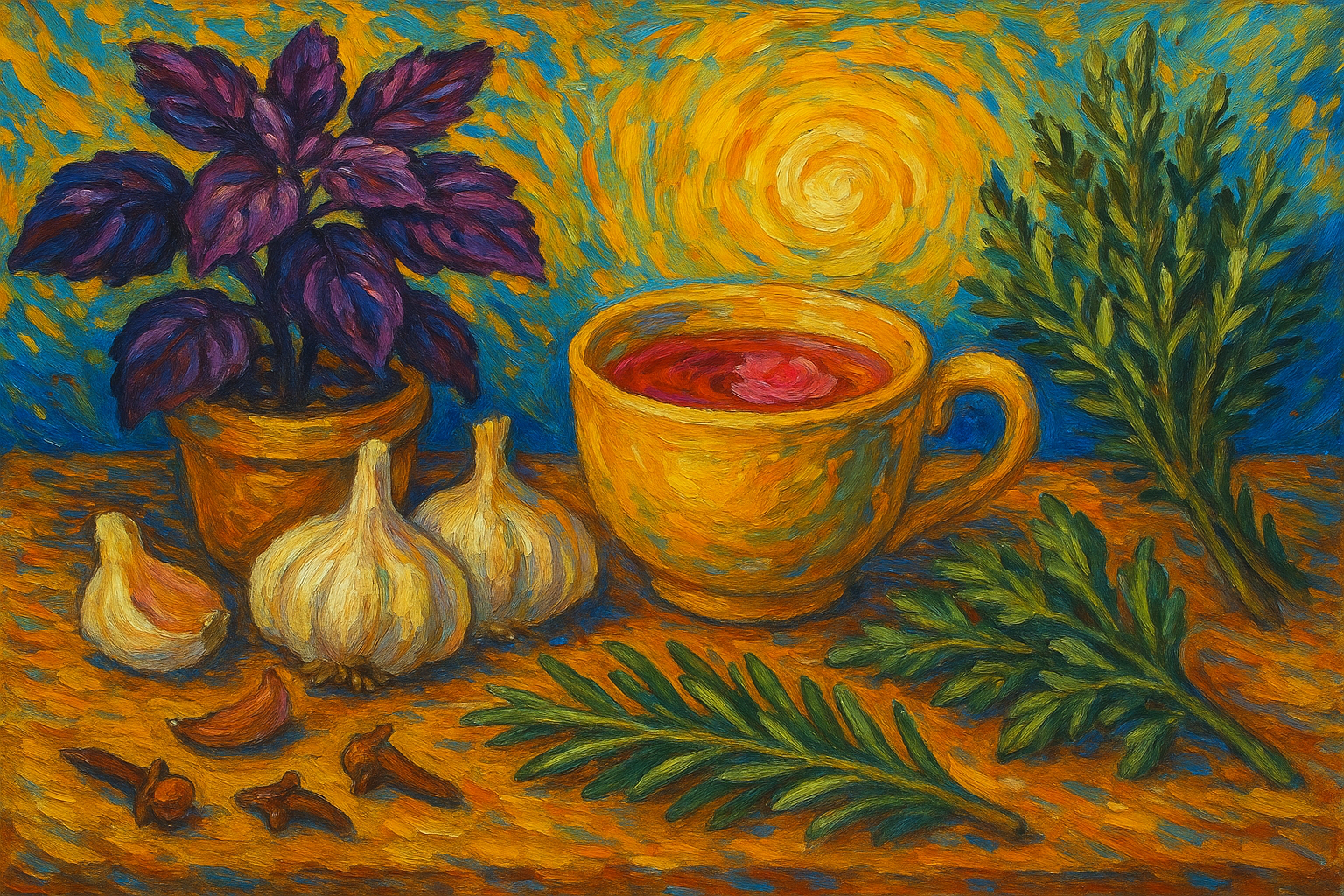
Health Benefits of Purple Basil, Garlic, Cloves, Oregano, Rosemary, and Rose Tea
Discover the incredible healing powers of purple basil, garlic, cloves, oregano, rosemary, and rose tea—six natural ingredients that have been used for centuries across different cultures for their medicinal properties. From improving digestion and reducing stress to boosting heart health and fighting microbes and parasites, these herbs and spices deserve a spot in your daily wellness routine.
In this article, you’ll explore their scientifically supported benefits, compare their effectiveness, and learn how to incorporate them into teas and recipes to maximize their health benefits.
Health Benefits of Each Ingredient
1. Purple Basil (Tulsi / Ocimum sanctum)
Known as Tulsi in Ayurvedic medicine, purple basil is rich in antioxidants like eugenol and ursolic acid.
Key Benefits:
Digestive Support: Stimulates digestive enzymes, reduces bloating, and soothes the stomach.
Stress Relief: Acts as a natural adaptogen—lowering cortisol and promoting mental balance.
Heart Health: Improves circulation and reduces oxidative stress on blood vessels.
Liver & Kidneys: Protects liver cells and acts as a gentle diuretic.
Antimicrobial: Fights bacteria (Staphylococcus aureus) and fungi (Candida albicans).
2. Garlic (Allium sativum)
Garlic is a potent medicinal food because of allicin—its primary sulfur compound.
Key Benefits:
Digestive Support: Aids digestion but may cause irritation in sensitive stomachs.
Stress Reduction: Indirectly lowers stress through reducing inflammation.
Heart: Lowers blood pressure, reduces cholesterol, and boosts circulation.
Liver & Kidneys: Enhances detox pathways and shields against oxidative damage.
Antimicrobial/Antiparasitic: Effective against E. coli, Candida, and Giardia.
3. Cloves (Syzygium aromaticum)
Cloves are rich in eugenol, providing powerful aromatic and therapeutic effects.
Key Benefits:
Digestive Comfort: Relieves gas and encourages enzyme flow.
Stress Relief: Mildly sedative via aroma and chemical compounds.
Heart: Supports circulation and helps maintain healthy cholesterol levels.
Liver: Acts as a liver-protective antioxidant.
Antiparasitic: Targets parasite eggs and fungi.
4. Oregano (Origanum vulgare)
A staple in Mediterranean diets, oregano contains potent oils like carvacrol and thymol.
Key Benefits:
Digestive Support: Reduces bloating and calms intestinal irritation.
Heart & Liver: Rich in antioxidants supporting cardiovascular and liver health.
Kidneys: Acts as a natural diuretic to help prevent UTIs.
Antimicrobial: Highly effective against Salmonella, Listeria, and Candida.
5. Rosemary (Rosmarinus officinalis)
Rosemary enhances focus and overall wellness with rosmarinic acid and carnosol.
Key Benefits:
Digestive Aid: Eases indigestion and gas.
Stress & Mental Clarity: Boosts alertness while providing a mild calming effect.
Heart: Improves blood flow and reduces inflammation.
Liver & Kidneys: Protects organs from toxins and oxidative stress.
6. Rose Tea (Rosa canina / Rosa damascena)
Delicate and fragrant, rose tea is packed with vitamin C and bioflavonoids.
Key Benefits:
Digestive Relief: Eases bowel movements, especially with rose hips.
Stress Reduction: Aromatherapeutic and calming.
Heart: Supports capillary and blood vessel health.
Liver & Kidneys: Offers mild detoxifying and diuretic effects.
Top Recipes to Harness Their Healing Power
Recipe 1: Immune-Boosting Herbal Tea
Ingredients:
0.5 tsp dried purple basil (Tulsi)
2–3 whole cloves
0.5 tsp dried oregano
0.5 tsp dried rosemary
0.5 tsp dried rose petals or 1 tbsp rose hips
1 cup boiling water (temperature ~ 90 °C)
Optional: 1 tsp raw honey
Instructions:
Combine herbs and cloves in a teapot or heat-safe mug.
Pour boiling water and steep for 3–5 minutes.
Strain and add honey if desired.
Drink in the evening to unwind and help digestion (it is recommended to drink tea at 50-55 °C (and even coffee, or meals, snacks), as oral cavity heartburn is harmful). Also, take breaks; your body will remind you. For example, after drinking tea for three days, take a two-day break (breaks are also an important part of treatment).
Benefits:
Supports relaxation, digestion, immunity, and gentle antimicrobial effects.
Note: Avoid adding fresh garlic to the tea; instead, consume 1–2 raw cloves daily for maximum antiparasitic and immune benefits.
Recipe 2: Garlic-Herb Roasted Chicken
Ingredients (4 servings):
1 whole chicken or 4 thighs
4 garlic cloves, minced
1 tbsp dried purple basil
1 tbsp dried oregano
1 tbsp dried rosemary
2 tbsp olive oil
1 tsp salt, ½ tsp black pepper
1 lemon, juiced
Optional: ¼ tsp ground cloves
Instructions:
Preheat oven to 375°F (190°C).
Mix garlic, herbs, oil, lemon, salt, and pepper.
Rub over chicken; marinate for 15–30 minutes if possible.
Bake for 1–1.5 hours until golden and internal temperature reaches 165°F (74°C).
Rest for 10 minutes before serving.
Benefits:
This dish promotes heart and liver health, digestion, and immunity—ideal for a nutritious dinner.
Recipe 3: Aromatic Herbal Rice
Ingredients (4 servings):
1 cup basmati rice
2 cups water or vegetable broth
½ tsp dried oregano
½ tsp rosemary
¼ tsp ground cloves
1 garlic clove, minced
½ tsp salt
Optional: 1 tbsp chopped purple basil or rose petals (for garnish)
Instructions:
Rinse rice until the water runs clear.
Sauté garlic in a little olive oil.
Add rice, water, herbs, and salt. Bring to a boil.
Cover, reduce heat, and simmer for 15 minutes.
Garnish with herbs or petals.
Benefits:
A tasty, antioxidant-rich side dish that pairs well with proteins and vegetables.
Conclusion: Let Nature Nourish You
Integrating these natural remedies into your meals and teas is a powerful way to support digestion, manage stress, and protect vital organs. Garlic, purple basil, cloves, oregano, rosemary, and rose tea each offer unique benefits, and when used together, they create a holistic shield for your body and mind.
Whether you sip a warm herbal tea or enjoy a hearty garlic-herb chicken, these ingredients invite health, balance, and resilience into your daily life.
Tag Search

Ads
SubMeet


Ads

Rose

