
SubMeet Blog Posts
Write your:
Biography, story, article or tidings.
Maximum 50.000  symbols (Depends on the browser) one post.
Maximum 10 posts per day, 100 posts per month, for one user.
We recommend using the Firefox browser to publish a post.


 Admin
AdminThis model is not based on abstract theory but on direct observation and divine mechanics. It proposes that the universe operates like an intricate clockwork, designed by a Creator. The key to understanding its motion is the spiral, a fundamental pattern found in nature, from the DNA double helix to the whorl of a seashell.
The Core Principles of a Geocentric Spiral Cosmos
This model is built on a series of interconnected principles that offer a more coherent explanation for the movements of the heavens.
1. The Sun's Spiral Orbit: The Sun revolves around the Earth not in a simple circle or ellipse, but in a precise spiral trajectory. It completes one full spiral cycle annually.
2. Annual Ascent and Descent: For six months, the Sun spirals "upward" toward the northern celestial pole (bringing summer to the northern hemisphere), and for the subsequent six months, it spirals "downward" toward the south (bringing winter to the northern hemisphere).
3. Stable Proximity to the Poles: As the Sun approaches the northern and southern limits of its journey, its spiral path adjusts slightly (the diameter of the spiral ring decreases), maintaining a consistent average distance from Earth and preventing extreme temperature fluctuations.
4. A Stable, Upright Earth: The Earth’s axis is not tilted. The seasons are caused exclusively by the Sun's annual ascent and descent along its spiral path, which changes the angle and intensity of sunlight reaching the hemispheres.
5. The Planetary Dance of Mercury and Venus: Mercury and Venus are not orbiting the Sun in the conventional sense. They are the Sun's natural satellites (Mercury and Venus are very small), performing a complex "dance" between the Earth and the Sun as they are carried along by the Sun's primary spiral motion.
6. The Outer Planets' Orbits: Mars, Jupiter, Saturn, and the other outer planets also revolve around the central Earth. Their more complex movements are secondary motions influenced by the Sun’s powerful spiral trajectory.
7. The Moon's Constant Path: The Moon's size and orbit remain as observed. It follows its consistent, stable monthly revolution around the Earth, independent of the Sun's more complex path.
8. Beyond Conventional Gravity: The force of gravity as described by Newton is an incomplete concept. If the Sun were as massive as mainstream science claims, its gravitational pull would have consumed Mercury and Venus in seconds. The cosmos is instead governed by a system of divine mechanics and equilibrium, not a single, dominant force.
9. The Spiral as a Universal Signature: The Sun's spiral motion is a reflection of a universal design principle. This pattern is seen in the vortex of water, in hurricanes, and most importantly, in the double helix of DNA, the blueprint of life itself.
10. DNA as a Cosmic Analogy: Just as DNA's spiral structure encodes the instructions for life, the Sun’s spiral path encodes the rhythms of time, seasons, and cosmic order for the Earth.
11. Consistent Apparent Size: The Sun's apparent size in the sky remains stable throughout the year, confirming that its spiral path maintains a relatively constant distance from Earth.
12. A Challenge to Heliocentrism: This model posits that Copernicus, Galileo, and Newton, by focusing only on linear and circular motions, missed the elegant, three-dimensional spiral solution that governs the heavens. Their models were based on incomplete geometric assumptions.
13. The Lag of the Stars: All the stars revolve around the Earth. As the Sun spirals on its annual journey, it appears to move against the backdrop of the Zodiac. The stars also complete a full rotation around Earth, but they lag behind the Sun's daily motion by approximately four minutes. This slight lag causes the stars to complete their full 360-degree cycle in one sidereal year.
Rethinking Cosmic Scale: The True Size of Celestial Bodies
The established model of an immense universe with colossal stars is a mathematical abstraction, not an observed reality. In this new framework:
— The Sun and Moon are Proportional: The Sun is not a gigantic star but is only moderately larger than the Moon, positioned at a comparable distance from Earth. This explains their similar apparent sizes in the sky.
— Stars are Nearby Lights: The stars are not distant suns millions of light-years away. They are smaller, self-luminous bodies scattered within our cosmos at much more modest distances (the average star is the size of Earth and has an average distance of 150 million kilometers from Earth (the distance of 390 Moon)).
— Galaxies are Not Spiral Universes: The objects called "galaxies" are not vast, independent island universes. They are simply unique clusters of scattered stars, floating like jellyfish in the celestial sea. The idea that they are spiral is an incorrect interpretation that has been used to support a flawed heliocentric model.
— Dark Matter, Dark Energy, and Black Holes - should be considered as a natural "part" of the universe with non-exaggerated properties.
The True Nature of Nebulae: The Waters of Creation
Modern astronomy misunderstands the nature of nebulae. They are not merely clouds of gas and dust but are the fundamental substance of creation.
— Nebulae as Celestial Waters: Nebulae are the "frozen waters" of the cosmos, primordial reservoirs from which stars are periodically born.
— Cosmic Origins in Genesis: In the beginning, the Creator made the original nebula out of nothing. This primordial substance was composed of waters, gases, and proto-land. From this, He formed the Earth (and the planets - cold stars) by separating the terrestrial land and waters. The filtered waters that were drawn from the nebula became the rivers, seas, and oceans of Earth. The Earth itself is a condensed and perfected form that "fell" from this celestial nursery.
— Our universe has a more distant oval-shaped "shell", beyond which lies the inexplicable universe of the Creator.
Conclusion: A Universe of Divine Clockwork
This model restores Earth to its rightful place at the center of a divinely ordered and mechanically precise universe. It is a cosmos that functions like a grand symphony, where the Sun performs a graceful spiral dance, the planets follow in harmony, and the stars complete their majestic procession.
It is a framework where observation, mathematics, and theology unite, revealing a universe woven with purpose, rhythm, and mystery, a universe designed as a perfect home for humanity, under the watch of its Creator.
 Career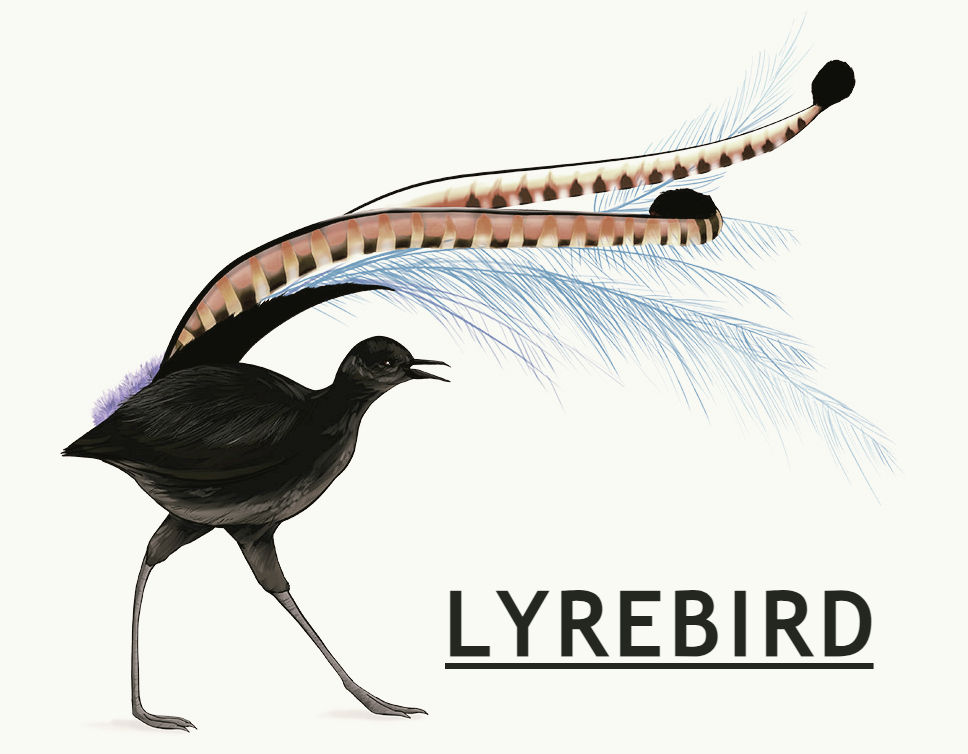
Embark on a journey into the untamed realms of our world, where the air is alive with the ethereal melodies of creatures both peculiar and wondrous. Beyond the familiar calls of avian chorales and the thunderous roars of mighty beasts lies a realm of auditory marvels. We shall traverse the landscapes of Earth to discover ten extraordinary beings, each with its own unique voice, painting the canvas of nature's symphony with strokes of unparalleled beauty.
Sound: "Hoo-pop-pop-pop" Greater Sage-Grouse: Amidst the rugged expanses of the western United States, where the sagebrush whispers secrets to the wind, the Greater Sage-Grouse emerges as a poet of the prairie. Picture the vastness of the high plains adorned with the resonant "hoo-hoo" of courtship, punctuated by the percussive pops of passion as these avian maestros dance beneath the expansive western skies.
Sound: "Whirr-rrr-click-click" Lyrebird: Venture into the emerald depths of Australia's ancient rainforests, where the canopy teems with life and the earth pulses with primordial rhythms. Here, amidst the verdant tapestry of flora and fauna, the Lyrebird reigns supreme as the virtuoso of mimicry. Its repertoire spans the gamut of sound, from the metallic whirr of industrial machinery to the staccato clicks of human invention, weaving a tapestry of sound that echoes through the ages.
Here are some additional sounds that Lyrebirds can mimic:
Camera shutter: "Click-click-click"
Chainsaw: "Rrr-rrr-rrr"
Car alarm: "Beep-beep-beep"
Mobile phone ringtone: "Ring-ring-ring"
Siren: "Woo-woo-woo"
Cry of a human infant: "Wah-wah-wah"
Laser gun: "Pew-pew-pew"
Kookaburra laughter: "Koo-koo-koo-ha-ha-ha"
Whip crack: "Snap-crack"
Human laughter: "Ha-ha-ha-ha"
Dog bark: "Woof-woof-woof"
The Lyrebird's ability to mimic such a diverse range of sounds is a testament to its remarkable vocal talent and adaptability.
Sound: "Who-cooks-for-you-all" Barred Owl: In the heart of North America's woodlands, where the twilight dances upon the boughs of ancient trees, the Barred Owl casts its spell with a haunting refrain. Listen closely, and you shall hear the whispered incantation of "who-cooks-for-you, who-cooks-for-you-all," a nocturnal serenade that weaves through the shadows like a wisp of moonlight.
Sound: "Boom...boom...boom" Kakapo: Across the mist-shrouded hills and valleys of New Zealand's remote islands, the Kakapo emerges from the depths of obscurity with a resonant boom. Amidst the fern-fringed forests and rugged coastlines, this enigmatic parrot proclaims its presence with a deep, sonorous call that reverberates through the misty realm of Aotearoa.
Sound: "Click-click-click" Axolotl: Descend into the azure depths of Mexico's ancient lakes, where the waters teem with life and mystery. Here, amidst the submerged labyrinth of submerged caves, the Axolotl performs a silent ballet, punctuated only by the soft click-click-click of its jaws as it navigates the hidden recesses of its aquatic sanctuary.
Sound: "Click-buzz-buzz" Star-nosed Mole: Beneath the verdant carpet of North America's forests, where the earth is alive with the unseen ballet of subterranean life, the Star-nosed Mole orchestrates a symphony of sensation. Through a delicate ballet of clicks and buzzes, this enigmatic creature navigates the hidden realm of darkness with unparalleled grace and precision.
Sound: "Quack-quack-honk" Barnacle Goose: Along the windswept shores of the Arctic, where the icy waters meet the endless expanse of sky, the Barnacle Goose takes flight with a chorus of honks and quacks. Amidst the frozen landscapes of the far north, these avian wanderers paint the skies with their timeless melodies, weaving a tapestry of sound that echoes across the tundra.
Sound: "Chatter-growl-hiss" African Civet: Beneath the cloak of darkness that shrouds Africa's savannahs, the African Civet prowls with silent grace, punctuated only by the guttural growls and hisses that echo through the night. Amidst the golden grasslands and shadowy thickets, this elusive creature weaves a nocturnal symphony of mystery and intrigue.
Sound: "Rustle-rustle" Pink Fairy Armadillo: Across the sun-scorched deserts of Argentina, where the sands shimmer with the heat of the day, the Pink Fairy Armadillo emerges as a ghostly apparition. Though silent in its movements, the gentle rustle of its passage through the dunes whispers of ancient secrets and forgotten dreams.
Sound: "Hiss-growl-chatter" Fossa: Amidst the tangled jungles of Madagascar, where the emerald canopy teems with life and the earth pulses with primal energy, the Fossa prowls with a primal grace. Through a symphony of hisses, growls, and chattering calls, this apex predator weaves a tapestry of sound that reverberates through the ancient forests like a primal heartbeat.
In the grand tapestry of existence, the voices of these extraordinary creatures serve as a reminder of the boundless beauty and diversity that grace our planet. From the windswept steppes to the shadowy depths of the forest floor, each melody adds its own unique hue to the symphony of life, painting a portrait of unparalleled wonder and majesty. So let us listen, dear wanderer, and marvel at the harmonies of the wild, for within their ethereal refrains lies the true essence of our shared existence.
Tag Search

Ads
SubMeet


Ads

Rose

