
SubMeet Blog Posts
Write your:
Biography, story, article or tidings.
Maximum 50.000  symbols (Depends on the browser) one post.
Maximum 10 posts per day, 100 posts per month, for one user.
We recommend using the Firefox browser to publish a post.



 Free
FreeIf you're new to the world of fixed-income investing, understanding how government debt instruments work is essential before you put your money on the line. This guide on US Bonds Explained will walk you through everything from the basics of how they function to the different types available, so you can decide whether they belong in your portfolio.
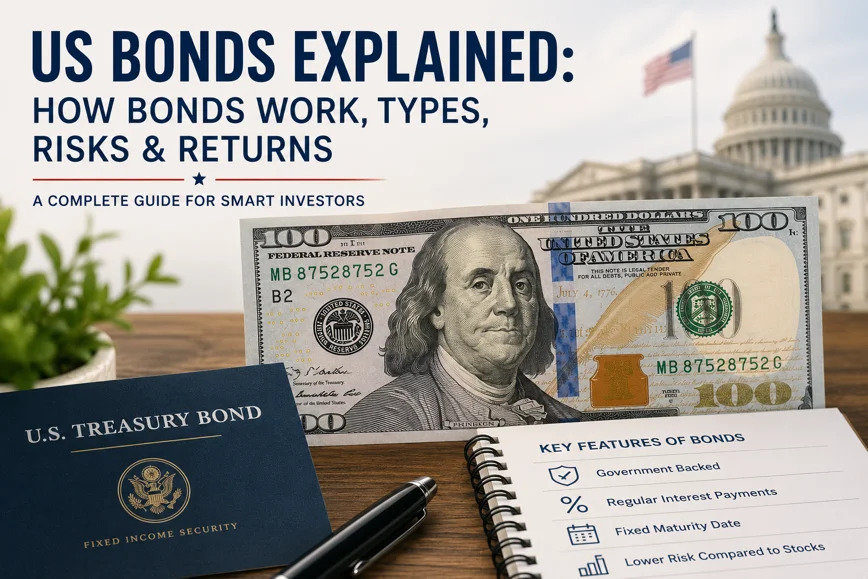
At their core, US bonds are loans. When you buy one, you are lending money to the federal government for a set period of time. In return, the government promises to pay you regular interest, known as the coupon, and to return your original investment (the principal) once the bond matures. Because the US government backs these instruments with its full faith and credit, they are widely considered one of the safest investments available to the public.
This is why so many beginners look into the basics before diving into the stock market. Bonds offer a level of predictability and stability that equities simply cannot match, making them a cornerstone of conservative investment strategies.
How Do US Bonds Work?The mechanics are fairly straightforward. The Treasury Department issues bonds through auctions, and investors can purchase them directly through TreasuryDirect.gov or through a brokerage account. Once purchased, the bondholder receives periodic interest payments, typically every six months, until the bond reaches its maturity date. At that point, the investor receives the full face value back.
The price of a bond can fluctuate before maturity based on interest rate movements. When rates rise, existing bond prices tend to fall, and when rates drop, bond prices typically rise. This inverse relationship is one of the most important concepts to grasp when learning about fixed-income securities.
Types of US BondsThere isn't just one type of government bond. The Treasury offers several varieties, each designed for different investment horizons and goals.
Treasury Bills (T-Bills)These are short-term instruments that mature in a year or less. T-Bills don't pay periodic interest; instead, they are sold at a discount and pay their full face value at maturity, with the difference representing your return.
Treasury Notes (T-Notes)Notes have maturities ranging from two to ten years and pay interest every six months. They strike a balance between short-term T-Bills and long-term bonds, making them popular among moderate-risk investors.
Treasury Bonds (T-Bonds)These are long-term securities with maturities of twenty or thirty years. Because of their extended timeframe, they generally offer higher yields to compensate investors for locking up their money for so long.
Treasury Inflation-Protected Securities (TIPS)TIPS are designed to protect investors from inflation. The principal value adjusts based on changes in the Consumer Price Index, ensuring your purchasing power isn't eroded over time.
Savings BondsSeries EE and Series I savings bonds are popular for gifting and long-term saving goals. They are non-marketable, meaning they cannot be traded on secondary markets, but they offer a simple way for everyday savers to earn interest.
Why Invest in US Bonds?There are several compelling reasons investors turn to government debt securities as part of a balanced portfolio strategy.
Safety: Since these instruments are backed by the government, the risk of default is extremely low compared to corporate debt or equities.
Predictable income: Regular interest payments provide a steady income stream, which can be especially valuable for retirees or those seeking passive income.
Diversification: Bonds often move differently than stocks, so holding both can help smooth out portfolio volatility during market downturns.
Tax advantages: Interest earned on federal bonds is exempt from state and local taxes, though it is still subject to federal income tax.
Risks to ConsiderWhile government bonds are considered low risk, they aren't entirely risk-free. Inflation risk is a real concern, since fixed interest payments can lose purchasing power over time if inflation rises faster than expected. Interest rate risk is another factor; if rates climb after you purchase a bond, its market value will likely decline if you try to sell before maturity. There's also opportunity cost to weigh, since the returns on these conservative instruments are often lower than what stocks might deliver over the long run.
How to Buy US BondsGetting started is easier than many people expect. You can purchase them directly from the government through TreasuryDirect, where you can buy T-Bills, T-Notes, T-Bonds, TIPS, and savings bonds without a middleman. Alternatively, many brokerage platforms allow you to buy and sell these securities, and you can also gain exposure through bond mutual funds or exchange-traded funds that hold a basket of government debt.
Bonds vs. Stocks: Where Do They Fit?A common question among new investors is how bonds compare to stocks. While equities offer higher growth potential, they also come with greater volatility. Government bonds, on the other hand, provide stability and income, making them ideal for balancing riskier holdings. Financial advisors often recommend adjusting your bond-to-stock ratio as you age, shifting toward safer instruments as retirement approaches.
Final ThoughtsUnderstanding the fundamentals covered in this US Bonds Explained overview can help you make more informed decisions about where to place your money. Whether you're saving for retirement, building an emergency fund, or simply looking to diversify away from stock market volatility, government bonds offer a reliable, time-tested option. As with any investment, it's wise to consider your financial goals, time horizon, and risk tolerance before committing your capital, and consulting with a financial advisor can help ensure your bond investments align with your broader financial plan.
 Marshal
Taiko: Unveiling the Mystery - https://taiko.xyz
Taiko is shrouded in a bit of mystery. Unlike many cryptocurrencies that launch with public sales, information about Taiko's initial offering is scarce. Some sources suggest a private or pre-sale might have taken place, but details remain elusive.
TAP Protocol (TAP): Bridging the Gap - https://trac.network/tap/
TAP Protocol (TAP) aims to bridge the gap between blockchains. By facilitating seamless communication and asset transfer across different blockchain networks, TAP could unlock a new era of interoperability in crypto. While the exact price of TAP remains unclear, its potential to revolutionize cross-chain transactions is certainly intriguing.
zkSync (ZK): Scaling the Heights - https://zksync.io
zkSync (ZK) tackles the scalability challenges faced by the Ethereum blockchain. By leveraging zero-knowledge proofs, zkSync promises faster and cheaper transactions without compromising security. With Ethereum's popularity soaring, zkSync's solution could be a game-changer. While the exact price of zkSync (ZK) remains unclear.
Mystiko Network (XZK): Privacy at the Forefront - https://mystiko.network
Mystiko Network (XZK) focuses on privacy-preserving transactions. In a world where financial transparency is increasingly valued, XZK allows users to conduct transactions without compromising anonymity. While the price of XZK is yet to be determined, the growing demand for privacy in the digital age makes Mystiko Network a project to watch.
Why Should You Care?
These emerging cryptocurrencies represent a glimpse into the future of blockchain technology. While their initial prices might be unclear, their innovative approaches to solving real-world problems hold immense potential. By staying informed about these projects, you can position yourself to make informed decisions as the crypto landscape continues to evolve.
 Moder
Moder
Are you looking for ways to supplement your income online? Check out these nine websites offering various earning possibilities, from skill development to microtasks.
Learn and Earn: Blockchain Education
bitdegree.org: Expand your knowledge in blockchain, crypto, and web development with their courses and learning paths. While the primary focus is education, they sometimes offer scholarships and paid opportunities for skilled individuals. This is best for those who want to build a career in the Web3 space.
Web3 Bounties and Tasks
soquest.xyz: Earn rewards by completing promotional quests for Web3 projects. These can involve social media tasks, testing new games, or providing feedback.
taskon.xyz: Similar to soquest.xyz, this platform lets you tackle microtasks within the Web3 world to earn cryptocurrency rewards.
layer3.xyz: Discover various bounties offered by Web3 projects. These bounties might involve larger tasks with more substantial rewards, appealing to those with some experience in the field.
Microtask Platforms
jumptask.io: Complete surveys, engage on social media, or perform data entry and get paid in JumpTask's (JMPT) cryptocurrency. This platform is good for those who want to earn small amounts in their spare time.
Crypto and Web3 Analytics
dappradar.com: Monitor and analyze decentralized applications (dApps) across blockchains. While not a direct earning platform, it's an invaluable tool for those who want to invest in dApps or potentially contribute to projects with high earning potential.
cryptorank.io: Track cryptocurrency performance, rankings, and data. Like dappradar.com, this is primarily for research purposes but can help you identify potentially lucrative crypto investments.
Web3 Credentials and Learning
galxe.com: Participate in learning campaigns and complete quizzes to earn NFTs on Galxe. These NFTs act as credentials, showcasing your knowledge or participation in projects. While they may not directly offer income, the NFTs could gain value or open future earning opportunities.
Passive Income (Limited Potential)
honeygain.com: Share unused internet bandwidth through the Honeygain app. Keep in mind that earnings tend to be very small for most users and depend on your location and internet usage.
Important Considerations:
Earnings vary wildly: Income potential differs greatly between platforms and often depends on your skills, time invested, and market conditions.
Research is key: Before committing to a platform, research its reputation, payment methods, and the potential rewards.
Microtasks vs. skill development: Microtask platforms offer small, quick payments, while platforms like bitdegree.org focus on long-term skill acquisition with better future income potential.
In conclusion, the world of online earning opportunities is incredibly diverse. Whether you're keen on upskilling in the Web3 sector, tackling microtasks for quick rewards, or strategically analyzing the crypto market, there's a website tailored to your needs. Be sure to choose a platform that aligns with your skills, time commitment, and desired income level.
 VIP
VIP
The world of e-commerce is rapidly evolving, and the rise of cryptocurrencies is a game-changer. As a website owner, integrating a cryptocurrency wallet into your platform can offer your customers an innovative, secure, and simplified payment experience. This comprehensive guide delves into four crucial aspects of incorporating a crypto wallet into your website: selecting the right cryptocurrency, creating a gas-fee-free wallet experience, and utilizing Polygon (Matic) for wallet creation.
1. Selecting the Right Cryptocurrency for Your Website Wallet
When it comes to choosing a cryptocurrency for your website wallet, factors like innovation, security, accessibility, and simplicity play a pivotal role. The frontrunners in this realm include Bitcoin (BTC), Ethereum (ETH), Binance Coin (BNB), Cardano (ADA), and Solana (SOL).
Bitcoin (BTC), the first cryptocurrency, sets the benchmark in blockchain technology, offering robust security and widespread recognition.
Ethereum (ETH), known for its smart contract capabilities, provides a secure and user-friendly platform with broad support.
Binance Coin (BNB) and Cardano (ADA), with their innovative features and growing popularity, offer lower transaction fees and user-friendly experiences.
Solana (SOL) stands out for its high-speed transactions, making it ideal for applications requiring swift processing.
Each cryptocurrency offers unique benefits, and the choice depends on your customer demographic, business needs, and the regulatory landscape.
2. Gas Fee Management in Crypto Wallets
A major concern for website owners is the management of gas fees associated with cryptocurrency transactions. Gas fees, a form of transaction fee, can be a barrier for users. However, there are strategies to mitigate or eliminate these fees:
Subsidizing Gas Fees: This approach involves the website covering the cost of gas fees, either as a promotional activity or a permanent feature.
Layer 2 Solutions: Platforms like Polygon provide solutions that significantly reduce gas fees by handling transactions off the main Ethereum chain.
One-Time Fee Model: Implementing a fee or subscription model can cover the cost of gas fees, provided it's transparently communicated to the users.
Batch Transactions and Pre-Paid Gas Fees: These methods optimize the fee structure, either by batching multiple transactions or by allowing users to pre-pay for their transactions.
3. Creating a Wallet Using Polygon (Matic)
Polygon (Matic) offers a compelling solution for creating a crypto wallet, thanks to its scalability and low transaction fees. Here's a step-by-step guide to creating a wallet using Polygon:
Step 1: Understand how Polygon works and familiarize yourself with its documentation.
Step 2: Set up your development environment, including Node.js and a suitable code editor.
Step 3: Create and configure a MetaMask wallet to support the Polygon network.
Step 4: Acquire MATIC tokens for transactions.
Step 5: Initialize your project, installing necessary libraries like web3 or ethers.js.
Step 6: Integrate wallet functionality into your website, both on the backend and frontend.
Step 7 (Optional): Develop and test smart contracts on the Polygon network.
Step 8: Thoroughly test your wallet integration before going live.
4. Why Polygon (Matic) Stands Out for Crypto Wallets
Polygon is increasingly favored for wallet integration due to its compatibility with Ethereum, enhanced scalability, and lower gas fees. It simplifies the transaction process while maintaining security and efficiency. Polygon’s Layer 2 scaling solutions are particularly beneficial for e-commerce platforms, offering faster and cheaper transactions without compromising on security.
Integrating a crypto wallet into your website is a forward-thinking step that can enhance your customers' shopping experience. By carefully selecting the right cryptocurrency, managing gas fees effectively, and utilizing platforms like Polygon, you can provide a secure, efficient, and user-friendly payment system. Remember, the key to a successful integration lies in understanding your customers' needs and staying updated with the latest in blockchain technology.
Tag Search

Ads
SubMeet


Ads

Rose

