
The Eight Famous Cleopatras and Their Royal Husbands: A Historical Examination from Vinci's blog
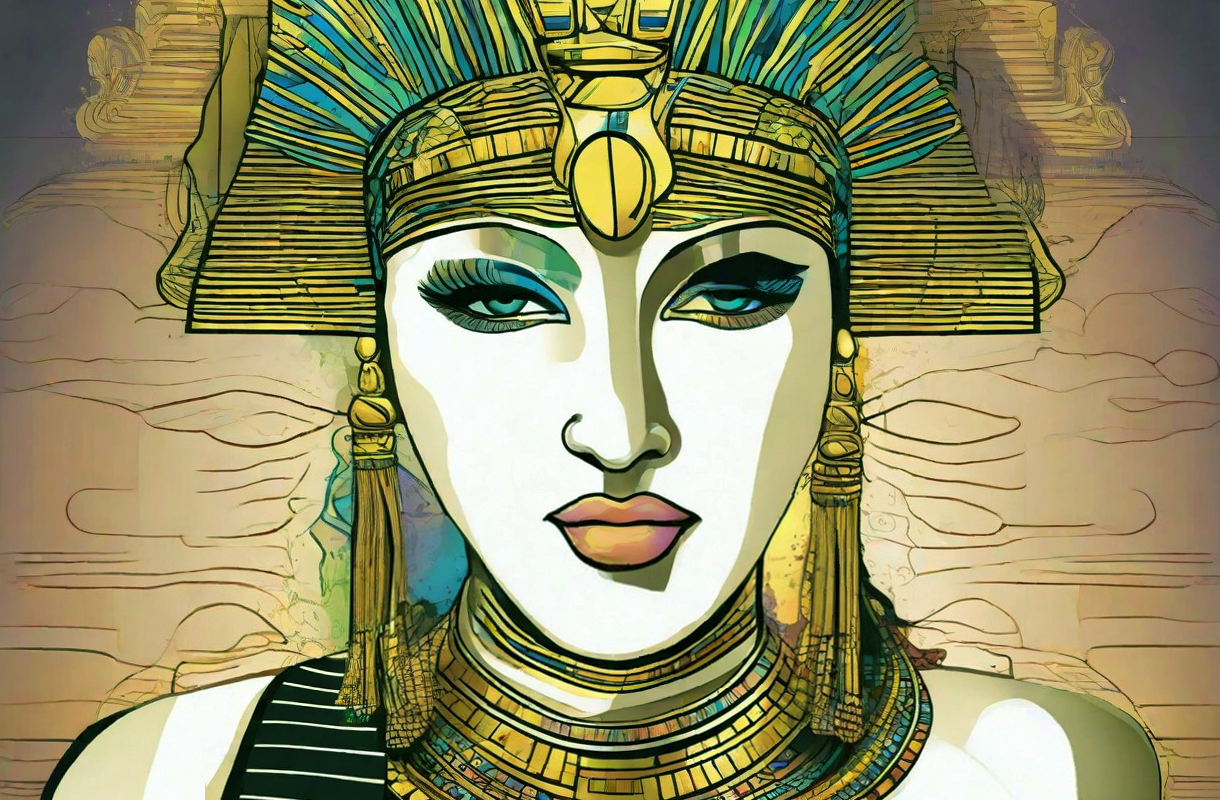
Throughout ancient history, particularly in the Hellenistic and Roman eras, the name "Cleopatra" has echoed through the annals of time. The Ptolemaic dynasty, which ruled Egypt after the death of Alexander the Great, saw a series of queens who bore this name, each with significant political roles and notable royal marriages. This article explores eight famous Cleopatras and their marriages to some of the most powerful kings and rulers of their time. We’ll also delve into historical sources, ranging from classical historians to biblical texts, to trace the influence and legacy of these queens.
1. Cleopatra I Syra (c. 204–176 BC)
Husband: Ptolemy V Epiphanes
Source: Historians such as Polybius and the ancient Egyptian records detail the marriage of Cleopatra I to Ptolemy V Epiphanes. She was the first Ptolemaic queen of non-Egyptian origin, as the daughter of Antiochus III the Great of the Seleucid Empire. Their union symbolized a political alliance between Egypt and the Seleucid kingdom.
Polybius writes of the strategic marriage arranged to secure peace between the two empires after the Fifth Syrian War. Cleopatra I ruled as regent for her son after her husband's death, cementing her influence in Egypt’s politics.
2. Cleopatra II (c. 185–116 BC)
Husbands:
Ptolemy VI Philometor (her brother)
Ptolemy VIII Physcon (another brother)
Source: Classical texts, especially those of Appian and Justin, describe Cleopatra II’s complicated family dynamics and her political marriages to her two brothers. Her marriage to Ptolemy VI was harmonious initially, but later, when he died, she was forced to marry their brother Ptolemy VIII, with whom she had a contentious relationship.
Cleopatra II was a pivotal figure in Egypt’s internal struggles, known for taking control during turbulent periods.
3. Cleopatra III (c. 160–101 BC)
Husband: Ptolemy VIII Physcon
Source: Diodorus Siculus, a Greek historian, discusses Cleopatra III, daughter of Cleopatra II and Ptolemy VI. She married her uncle, Ptolemy VIII, after a period of internal conflict. This marriage was full of intrigue and violence, as Cleopatra III vied for power alongside her husband and later her sons.
4. Cleopatra IV (c. 138–112 BC)
Husbands:
Ptolemy IX Soter II (her brother)
Antiochus IX Cyzicenus (King of the Seleucid Empire)
Source: Ancient sources, including the work of Justin, highlight Cleopatra IV’s role in the Ptolemaic dynasty. She first married her brother Ptolemy IX, but after their divorce, she became the wife of Antiochus IX Cyzicenus, a rival claimant to the Seleucid throne.
Her marriage to Antiochus IX brought her into the complex Seleucid struggles, which historians such as Josephus (in Antiquities of the Jews) also mention in their writings.
5. Cleopatra V (c. 95–69 BC)
Husband: Ptolemy XII Auletes
Source: The marriage of Cleopatra V to Ptolemy XII Auletes is documented in Strabo’s Geography, as well as inscriptions from the period. Cleopatra V was the mother of Cleopatra VII, the most famous Cleopatra. Little is known about Cleopatra V’s personal influence, but her marriage helped stabilize Ptolemy XII’s tumultuous rule.
6. Cleopatra VI (uncertain existence)
Source: There is significant debate about whether Cleopatra VI actually existed. Some ancient historians, including Strabo, mention a queen named Cleopatra VI, but other records are unclear. It is possible she was a sister of Cleopatra VII or a co-ruler for a short time, but historical evidence remains scarce.
7. Cleopatra Thea - Cleopatra (c. 164–121 BC)
Husbands:
Alexander I Balas - King Alexander (King of the Seleucid Empire)
Demetrius II Nicator (Seleucid King)
Antiochus VII Sidetes (Seleucid King)
Source: Cleopatra Thea is a central figure in the Books of Maccabees, where she is described as the wife of Alexander Balas, a pretender who seized the Seleucid throne. Historical texts, including Josephus’s Antiquities, detail her marriages to two other kings, Demetrius II Nicator and his brother Antiochus VII Sidetes.
Her role as queen in the Seleucid dynasty highlights the complex political alliances between Egypt and the Seleucid kingdom during this period. Her marriages were strategic, consolidating power and aligning the Ptolemaic and Seleucid realms.
8. Cleopatra VII (69–30 BC)
Husbands:
Ptolemy XIII (her brother and co-ruler)
Ptolemy XIV (her younger brother)
Lovers:
Julius Caesar (Roman general)
Mark Antony (Roman politician and general)
Source: Cleopatra VII is the most famous Cleopatra. Her relationships with Julius Caesar and Mark Antony have been the subject of countless retellings, including in Shakespearean drama.
Conclusion
The Cleopatras were not merely symbols of beauty and charm but powerful queens who married influential kings and rulers to secure political alliances and maintain power. Their marriages were often at the center of political intrigue, civil wars, and shifting alliances across the Hellenistic and Roman worlds. From Cleopatra I’s union with Ptolemy V to Cleopatra VII’s famed relationships with Julius Caesar and Mark Antony, these women shaped the course of history in ways that are still studied today.

Ads
SubMeet


Ads

Rose


The Wall