SIGN*IN

Unraveling the Sphinx's Gaze: Precession of the Zodiac and Cosmic Alignment from Dora's blog
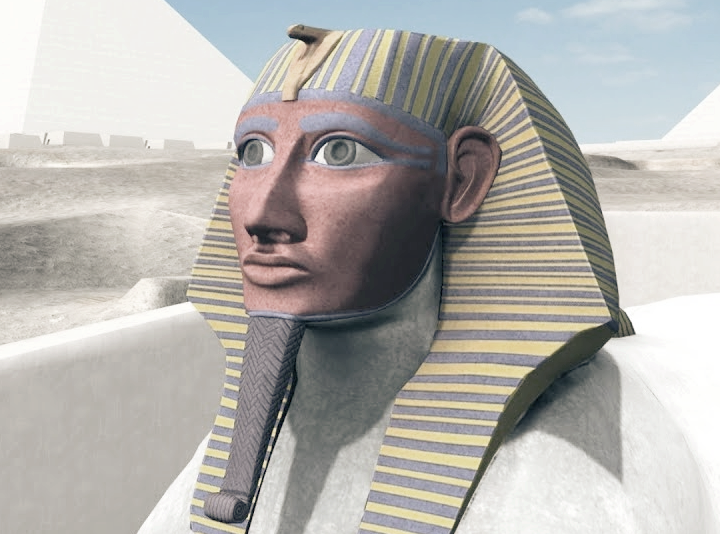
The enigmatic Sphinx of Egypt, with its majestic lion's body and human head, has long fascinated archaeologists, astronomers, and dreamers alike. One of the enduring mysteries surrounding this ancient monument is its eastward orientation, seemingly gazing toward the rising sun. Could this be a clue to a deeper cosmic connection?
The Sphinx's Gaze and Astronomical Speculation:
The Sphinx's eastward orientation has led to intriguing speculation about its alignment with celestial events or astronomical phenomena.
Some researchers have posited that the Sphinx's orientation may be linked to the precession of the zodiac-a slow westward shift of the vernal equinox point along the ecliptic, taking approximately 25,800 years to complete a full cycle.
Understanding the Precession of the Zodiac:
The precession of the zodiac is a gradual process driven by the gravitational forces of the Sun and the Moon on Earth's equatorial bulge.
This celestial phenomenon causes the position of the Sun at the vernal equinox to gradually move through the 12 constellations of the zodiac over millennia.
The Sphinx's Possible Connection to the Precession:
Speculations suggest that the Sphinx's gaze might have been intended to align with specific stars or constellations, potentially marking significant points in the precession of the equinoxes.
For example, some researchers propose that the Sphinx's alignment could have been directed toward the constellation Leo, possibly highlighting the star Regulus, the brightest star in Leo, during certain epochs of the precession cycle.
A Mystery That Continues to Intrigue:
While these hypotheses are intriguing, it's important to emphasize that they remain speculative and have not been definitively proven.
The study of archaeoastronomy, which examines the relationships between ancient structures and celestial phenomena, continues to shed light on the possible astronomical significance of the Sphinx's alignment.
Understanding the Difference: Solar Year vs. Precession of the Zodiac
Solar Year (12 Months):
This year is divided into 12 months, the Sun appears to move through Zodiacal Signs, spending approximately one month in each.
Precession of the Zodiac (25,800 Years):
The precession of the zodiac, often referred to as "precession," is a much slower and grander astronomical phenomenon and it is also visible as a result of the Earth's seasons. Precession results from the gradual westward shift of the vernal equinox point along the ecliptic plane. This means that the Earth, Sun, and Moon (as a whole) in their turn revolve (rotate around its common axis) in 25,800 years.
The Current Zodiacal Position:
Today's vernal equinox is in the constellation of Pisces and it is slowly moving towards Aquarius. The specific constellation that marks the vernal equinox may change approximately every 2,160 years.
In conclusion, the Sphinx's gaze toward the east and its potential connection to the precession of the zodiac remains a captivating mystery. While the alignment theories offer thought-provoking insights, they are part of ongoing research in the field of archaeoastronomy. These enduring questions remind us of the timeless allure of ancient monuments and their possible links to the cosmos, inviting us to explore the depths of history and the wonders of the universe.
Online Advertising

Ads
Ads
SubMeet


Ads

Rose


The Wall