

If you're just starting to learn about investing, you've probably heard people talk about "bonds" but weren't quite sure what they meant. Don't worry — this guide on US Bonds Explained will break everything down in simple terms, so by the end, you'll understand exactly how these investments work and why so many people trust them.
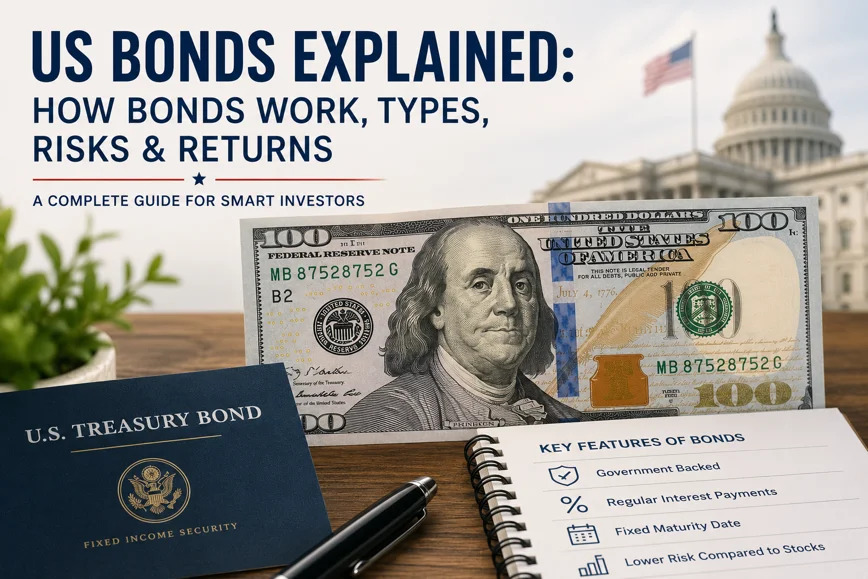
Think of a bond like a loan — but instead of you borrowing money from a bank, you're the one lending money to the government. When you buy a US bond, you're giving the government your money for a set amount of time. In return, they pay you interest along the way, and at the end, they give you your original money back.
Because it's the US government making this promise, bonds are seen as one of the safest places to put your money. That's a big reason beginners often start their investing journey here before moving into riskier things like stocks.
How Do They Actually Work?Here's the simple version: the government sells these bonds through auctions. You can buy them yourself through a website called TreasuryDirect.gov, or through a regular brokerage account, just like buying stocks.
Once you own a bond, you'll get interest payments — usually every six months — until the bond "matures," which just means it reaches its end date. At that point, you get your full original investment back.
One thing to keep in mind: bond prices can go up and down before they mature. If interest rates rise, older bonds (with lower rates) become less attractive, so their price drops a bit. If rates fall, the opposite happens. You don't need to worry about this too much if you plan to hold your bond until maturity, but it's good to understand.
The Different Types of US BondsNot all bonds are the same. The government offers a few different types depending on how long you want to invest.
Treasury Bills (Short-Term)These are for people who don't want to wait long — they mature in a year or less. Instead of paying interest along the way, you buy them at a lower price and get the full amount back at the end. The difference is your profit.
Treasury Notes (Medium-Term)These last between 2 and 10 years and pay interest twice a year. They're a nice middle option if you don't want something too short or too long.
Treasury Bonds (Long-Term)These stick around for 20 or 30 years. Since you're locking your money away for so long, they usually pay a bit more interest to make it worth your while.
TIPS (Inflation-Protected)TIPS are special because they adjust with inflation. If prices go up in the economy, the value of your TIPS goes up too, so your money doesn't lose its purchasing power.
Savings BondsThese are great for beginners or for gifting to kids or grandkids. Series EE and Series I savings bonds are simple, low-risk, and easy to buy in small amounts.
Why Would Someone Invest in Bonds?There are a few simple reasons people like bonds:
- They're safe. The chances of the US government not paying you back are very low.
- They give steady income. You know exactly when and how much interest you'll get.
- They balance out riskier investments. If you also own stocks, bonds can help smooth out the ups and downs.
- Tax benefits. You won't pay state or local tax on the interest, though federal tax still applies.
Yes, nothing is perfect. Here are a few things to watch for:
- Inflation risk — if prices rise faster than your bond's interest rate, your money doesn't stretch as far.
- Interest rate risk — if you need to sell before maturity and rates have gone up, you might get less than you paid.
- Lower returns — compared to stocks, bonds usually grow your money more slowly over time.
It's easier than most people think! Here are your main options:
- TreasuryDirect.gov — buy directly from the government, no middleman needed.
- A brokerage account — many popular investing apps let you buy and sell bonds just like stocks.
- Bond funds or ETFs — if you don't want to pick individual bonds, you can buy a fund that holds a mix of them.
This isn't really an "either-or" question — most smart investors use both. Stocks tend to grow your money faster over time, but they can be bumpy along the way. Bonds are calmer and more predictable, which is why many people add more bonds to their portfolio as they get older or closer to retirement.
Final ThoughtsHopefully this simple breakdown of US Bonds Explained has helped clear things up. Bonds might not sound as exciting as stocks, but they play an important role in keeping your money safe while still earning something extra. Whether you're saving for retirement, building an emergency fund, or just want a low-risk way to grow your savings, bonds are worth considering. As always, think about your own goals and comfort with risk, and don't hesitate to talk to a financial advisor if you're not sure where to start.


